

Correct posture affects more than just your back
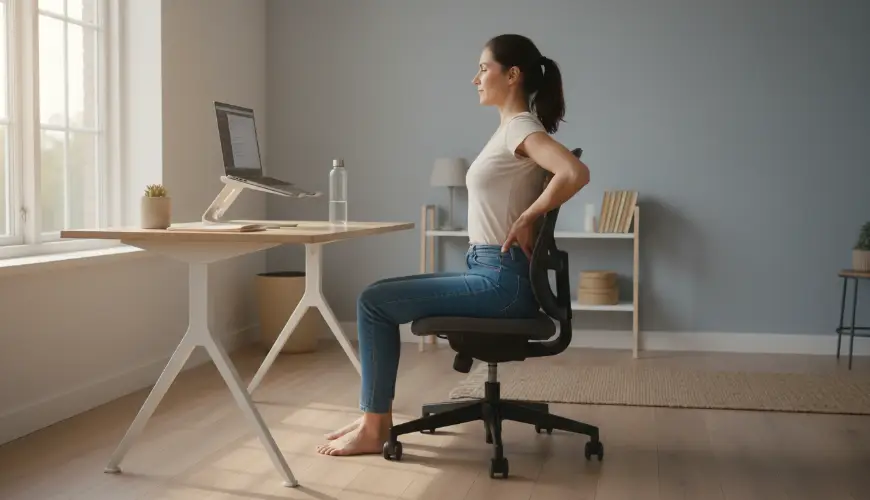
Most people only think about their posture when their back or neck starts to hurt. Yet by that point, many years have often passed during which the body silently suffered under the weight of bad habits. Daily sitting at a computer, looking at a phone, inappropriate footwear, or simple inattentiveness – all of this leaves its mark on the spine and muscles in a way that initially seems harmless, but can develop into chronic problems over time. The good news is that good posture is not a matter of perfect discipline or an hour of exercise every day. It is precisely the small, subtle changes that have the greatest impact.
When people hear "good posture," many picture a soldier standing at attention with a straight back and chin up. In reality, it is something far more natural. Healthy posture means that the spine maintains its natural curves – cervical lordosis, thoracic kyphosis, and lumbar lordosis – and that the muscles surrounding it are in balance. The body then does not expend unnecessary energy compensating for incorrect positions and moves efficiently. As physiotherapist and musculoskeletal specialist Pavel Kolář says: "Movement is medicine, but only when it is properly guided and stems from a quality foundation – that is, from correct posture."
Try our natural products


Why posture matters more than we think
The connection between posture and back pain is obvious, but few people realise how far the consequences of poor posture reach. Research shows that a chronically forward-tilted head – so-called "text neck" – increases pressure on the cervical spine by up to five times. In a natural head position, the average human head weighs about five kilograms, but when tilted forward by just 15 degrees, the load increases to approximately 12 kilograms. That is an enormous difference that muscles and discs must compensate for every day, hour after hour.
Less obvious, however, are the effects on breathing, digestion, or even mood. A study published in the journal Health Psychology found that people who sat upright showed higher self-confidence, better mood, and lower stress levels compared to those who sat hunched over. Other research from Harvard Business School showed that so-called "power poses" – upright, open postures – influence not only how others perceive us, but also how we perceive ourselves. The body and mind are connected far more closely than we have previously acknowledged.
The digestive system is no different. In a hunched position, the abdominal organs become compressed, which can slow peristalsis and contribute to feelings of heaviness or bloating. The lungs then do not have enough space to fully expand, so breathing remains shallow. And it is precisely shallow breathing that activates the sympathetic nervous system – the one responsible for the stress response. In other words, poor posture can literally keep the body in a state of chronic stress without us even being aware of it.
Recognising these connections is the first step towards change. And that is what is most valuable about this entire topic: exercising for an hour a day is not enough if you spend the rest of the day slumped at a desk. What matters is what we do during all sixteen waking hours.
Small habits that change everything
Changing posture does not happen overnight. It is a gradual process of retraining neuromuscular patterns that requires patience and consistency. But that is precisely why small, repeated habits are so powerful – they require neither great willpower nor extra time, yet their effects accumulate over weeks and months.
Take an example from everyday life. Jana, a thirty-three-year-old graphic designer, spent eight to ten hours a day at her computer. She considered neck and shoulder pain to be part of her job. It was only when her physiotherapist pointed out the position of her monitor – it was lower than it should have been – and recommended raising it so that the top edge of the screen was at eye level, that things began to change. She added a short break every hour during which she stood up and stretched. Within six weeks, the pain had significantly subsided. No dramatic exercise programmes, no expensive equipment. Just two simple changes.
Monitor height and keyboard position are among the most underestimated factors when working at a computer. Equally important is the position of the feet – they should rest flat on the floor or on a footrest, with the knees at approximately a right angle. The seat should support the lower back, making a lumbar support not a luxury but a necessity.
Outside the office, the way we carry things plays a crucial role. A heavy bag over one shoulder causes asymmetric loading of the spine, which with daily repetition manifests as muscular imbalances. A backpack worn on both shoulders is significantly more biomechanically sound – and if it is also ergonomically shaped with a firm back panel, all the better.
Walking is another quiet player. Most people look down at their phone or at the ground while walking, their chin pointing towards their chest and their shoulders rounding forward. Simply consciously lifting your gaze, relaxing your shoulders and letting them drop down and back – and the entire body pattern changes instantly. This change costs zero money and zero extra time, yet it is one of the most effective there is.
Sleep deserves special attention. The position in which we spend six to eight hours a day has a fundamental effect on the spine. Sleeping on your stomach is the most problematic for the cervical spine, because the head must be turned to one side for the entire duration of sleep. Sleeping on your side or on your back with a suitable pillow – one that follows the natural curves of the spine and keeps the head in a neutral position – is significantly more regenerative for the body. The choice of mattress also plays a role: a mattress that is too soft does not allow the spine to maintain its natural curvature, while one that is too firm creates pressure points.
Movement throughout the day is more important than intense exercise every now and then. The World Health Organization recommends that adults engage in at least 150 minutes of moderate-intensity physical activity per week, but equally important is breaking up long periods of sitting. The so-called "sitting disease" – a term increasingly appearing in the scientific literature – describes the health risks associated with prolonged sitting regardless of whether we otherwise exercise. Standing up once every 30 to 45 minutes, taking a walk, stretching, or at least changing position – these are simple interventions with measurable results.
Stretching and strengthening exercises targeting the deep spinal stabilisation system – the muscles that surround and stabilise the spine from within – are an investment that pays off. Pilates, yoga, or targeted physiotherapy exercises help activate and strengthen these muscles. This is not strength training in the conventional sense, but rather conscious work with the body that retrains movement patterns.
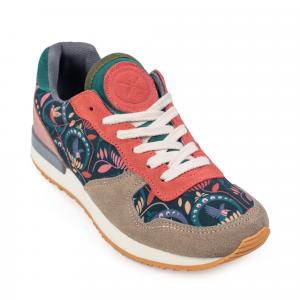
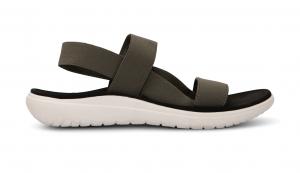
Footwear choice influences posture from the ground up – literally. High heels shift the body's centre of gravity forward and the spine must compensate for this imbalance through increased lumbar curvature. Minimalist footwear or shoes with a natural anatomical insole, on the other hand, allow the foot to function as evolution intended. On the website of the Czech Society for Orthopaedics and Traumatology, recommendations can be found regarding the selection of appropriate footwear depending on individual musculoskeletal needs.
How to start – without overwhelm and without excuses
The biggest mistake is trying to change everything at once. Research in behavioural psychology, such as the work of James Clear described in his book Atomic Habits, shows that lasting changes arise from small, repeated actions, not from short-lived enthusiasm. One new habit anchored in a daily routine has greater value than ten habits that last three days.
A practical approach might look like this: in the first week, focus exclusively on monitor position and seat height. In the second week, add hourly breaks with stretching. In the third week, begin paying attention to walking and the position when carrying a bag. One small change each month – and after a year, that is twelve new habits which together represent a significant shift.
Tools can support this process. Ergonomic pillows, lumbar supports, standing desks, or simple balance boards under the feet while sitting – these are all aids that facilitate correct positioning without the need for constant conscious monitoring. The key, however, is that these tools complement conscious habits rather than replace them.
Posture is, in a sense, a reflection of how we live. Rounded shoulders and a forward-tilted head are not merely an aesthetic problem – they are the result of how we spend our time, how we sit, how we walk, how we sleep, and how we move. And that is precisely why changing posture is such a deeply personal matter that extends beyond the physical. To stand tall does not only mean correcting the position of the spine. It also means changing the way we present ourselves to the world and to ourselves. And that is why it is worth doing.