

# Why Twitches and Irregular Breathing Wake Us Up When Falling Asleep Have you ever been just about
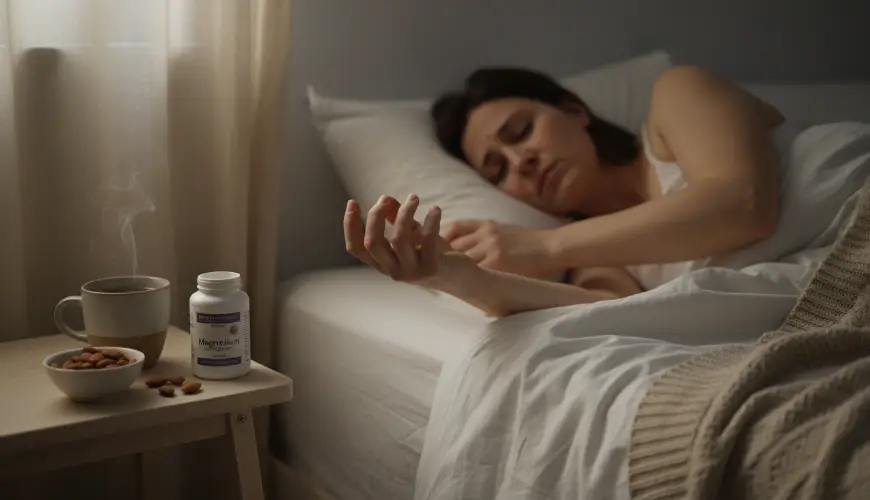
Everyone has experienced it at some point. Sleep finally seems to be coming, the body relaxes, thoughts dissolve – and then suddenly a sharp jolt through the entire body, as if stepping into thin air. Or, on the contrary, a person notices that their breathing is strange, irregular, sometimes barely there at all. These moments on the border between wakefulness and sleep are fascinating, somewhat mysterious, and for many people, unsettling. In reality, these are completely natural phenomena that science can explain fairly well – though not always completely.
Try our natural products

What are hypnic jerks and why do they occur
Hypnic jerks – technically known as hypnic jerks or myoclonic jerks – are sudden, involuntary muscle contractions that occur precisely when a person is transitioning from wakefulness to sleep. They can affect the entire body or just part of it: a leg, an arm, the head. Sometimes they are accompanied by a feeling of falling, a flash of light, or a brief dream. They affect an estimated 60 to 70 percent of people, so they are definitely not an unusual anomaly – rather, they are part of the human sleep experience that simply isn't talked about enough.
But why do they occur at all? Scientists don't yet have a single definitive answer, but several compelling theories exist. One of the most widespread suggests that the brain, during the process of falling asleep, interprets the gradual relaxation of muscles as a fall, and sends a reflex signal to "save" the body. It is a kind of evolutionary safeguard, a remnant from the time when our ancestors slept in trees and muscle relaxation could genuinely signal danger. Another theory speaks of a transitional state of the nervous system – the brain is switching between different modes, and this transition isn't always smooth. The result is precisely that unexpected jolt that briefly pulls us out of the beginning stages of sleep.
It is important to know that hypnic jerks are not in themselves a symptom of any illness. However, they can occur more frequently and intensely under certain circumstances. Fatigue, stress, excessive consumption of caffeine or alcohol, and an irregular sleep schedule are factors that demonstrably increase their occurrence. Some people experience them only occasionally, others nearly every night – and the intensity can range from a barely noticeable twitch to such a violent movement that it wakes a partner in bed.
Petra, a thirty-year-old graphic designer from Brno, describes her experience like this: she had been working on a demanding project for several weeks, sleeping little and drinking more coffee than usual. The jerks when falling asleep began to intensify to the point where she was almost afraid of sleep in the evenings. Once the project ended, she returned to a regular routine and cut back on caffeine – within two weeks, the jerks had practically disappeared. Her story is a textbook example of how lifestyle directly affects the quality of the transition into sleep.
If the jerks are very frequent, painful, or accompanied by other symptoms such as muscle cramps during the day, night sweats, or significant fatigue, it is appropriate to consult a doctor. In such cases, it may be a different type of myoclonus that deserves the attention of a specialist. The American Academy of Sleep Medicine offers detailed information about various types of sleep disorders and their diagnosis for those who want to explore the topic more deeply.
Irregular breathing when falling asleep: when is it normal and when is it not
Alongside jerks, there is another phenomenon associated with falling asleep that surprises or unsettles many people – irregular breathing. A person suddenly notices that their breath has slowed, then it seems to stop for a moment, and then comes back deeply. Or breathing becomes shallow, rapid, then slow again. What is actually happening?
During the transition from wakefulness to light sleep, the body undergoes a whole range of physiological changes. Body temperature drops, heart rate slows, muscles relax – and the way the body controls breathing also changes. In the waking state, breathing is largely under conscious control. As consciousness begins to recede, the autonomic nervous system takes over control, and this transition can be temporarily unstable. The result is precisely that irregular breathing when falling asleep, which under normal circumstances is completely physiological and transient.
There is a specific pattern of irregular breathing called Cheyne-Stokes breathing – an alternation of deep and shallow breaths with brief pauses. In healthy people, it can appear in the light phases of sleep and is not a cause for panic. The situation is different when repeated, longer pauses in breathing occur – this can be a symptom of sleep apnea, a disorder that, according to the World Health Organization, affects hundreds of millions of people worldwide and has serious impacts on cardiovascular health, concentration, and overall quality of life.
But how can one tell whether it is an innocent transitional irregularity or something that deserves attention? The key warning signs are loud snoring, repeated waking with a feeling of choking or lack of air, morning headaches, and persistent daytime sleepiness even after spending a sufficiently long time in bed. If a partner observes that the sleeping person has regular pauses in breathing lasting ten seconds or more, this is a strong reason to visit a doctor. Diagnosing sleep apnea is relatively straightforward today – it is done using polysomnography or portable monitoring devices.
Conversely, mild, transient changes in breathing rhythm that resolve on their own and do not significantly disturb the person are part of the normal process of falling asleep. The body is simply finding a new rhythm at that moment, adapting to a different state of consciousness. It is similar to changing gears – there is a brief rumble, but then the car drives on smoothly.

How to support a calm transition into sleep
Understanding what happens when falling asleep is in itself reassuring. But there is also a practical dimension: there are things that can reduce hypnic jerks and irregular breathing when falling asleep, and make the entire transition into sleep smoother.
The foundation is sleep hygiene – a term that sounds a little clinical, but encompasses a set of very practical habits. A regular time for falling asleep and waking up helps set the biological clock so that the transition into sleep proceeds smoothly. Avoiding caffeine in the afternoon and evening hours reduces the frequency of jerks, because caffeine keeps the nervous system on higher alert. Alcohol has a similar effect – even though it may initially induce drowsiness, it disrupts sleep architecture and increases the likelihood of disruptive phenomena when falling asleep.
The environment in which a person falls asleep also plays a major role. A dark, quiet, and cooler room supports the natural drop in body temperature that is part of the body's preparation for sleep. Blue light from phone and computer screens, on the other hand, suppresses the production of melatonin – the hormone that induces sleep – and the brain thus remains in a waking state for longer, which can complicate the transition into sleep and intensify jerks.
Breathing techniques are another tool worth mentioning. Slow, conscious breathing before sleep – for example, the 4-7-8 method, where the inhale is held for four seconds, breath is retained for seven, and the exhale lasts eight – activates the parasympathetic nervous system and helps the body transition into a resting mode. This also reduces the instability of breathing during the actual process of falling asleep. As sleep scientist Matthew Walker says in his book Why We Sleep: "Sleep is not a luxury. It is a biological necessity."
Overall stress levels and psychological wellbeing also have a significant impact. Anxiety and mental overload are among the most common reasons why jerks when falling asleep are more intense. Meditation, yoga, walks in nature, or simply consciously "disconnecting" from work and personal concerns at least an hour before sleep can significantly improve the quality of the transition into sleep. Both body and mind need time to slow down – one cannot switch from full performance to deep sleep like turning off a light.
Diet and hydration also play a role, even if they are often underestimated. Magnesium deficiency is associated with muscle irritability and an increased occurrence of myoclonic jerks. Foods rich in magnesium – such as nuts, seeds, leafy greens, or whole grains – can contribute to calmer sleep. Heavy meals immediately before bed, on the other hand, burden digestion and can disrupt the natural physiological processes that accompany falling asleep.
Hypnic jerks and irregular breathing when falling asleep are therefore phenomena that belong to life just as naturally as dreams or waking in the morning. Most of the time they are harmless, transient, and manageable through lifestyle adjustments. At the same time, they can – in exceptional cases – be a signal that the body needs greater attention. Being able to distinguish between the two situations, listening to one's own body, and not underestimating the quality of sleep are abilities that, in the long run, pay off more than most of us are willing to admit.