

Tigernut milk from chufa is a nut-free plant-based alternative
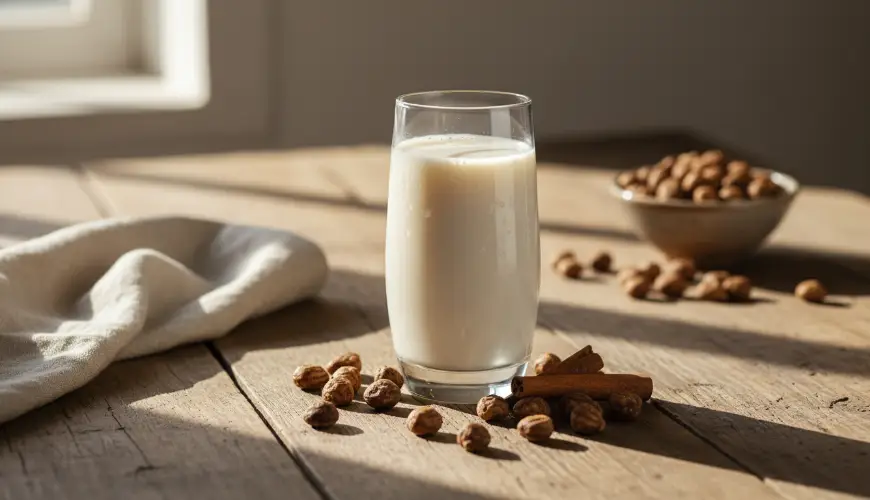
Plant-based milks have gained enormous popularity in recent years. Oat, almond, soy, rice – the selection today is truly diverse, and the shelves of health food stores are literally bending under their weight. Yet there is one option that still remains somewhat in the shadows, even though it deserves far more attention. Milk made from tigernut (Cyperus esculentus), also known as tigernut milk, offers something that other plant-based milks cannot – it is naturally free of nuts, gluten, and soy, while being surprisingly nutritious and delicious. For many people with food allergies or intolerances, it is nothing short of a revelation.
Tigernut (Cyperus esculentus) is not actually a nut, as its English name might suggest. It is a small tuberous plant from the sedge family, growing primarily in Africa, Spain, and parts of the Mediterranean. Its small, hard tubers have a naturally sweet, nutty flavour reminiscent of a combination of coconut and almonds – and it is from these that the popular drink is made. Yet it bears no botanical relation whatsoever to any actual nut. From a botanical standpoint, tigernut is more closely related to grass than to almond or cashew trees.
Try our natural products





Horchata de chufa: a millennia-old tradition from Valencian cuisine
To be clear – tigernut milk is certainly not a modern invention of the foodie community. Its roots run deep into history. In Spain, specifically in the Valencia region, it has been produced and consumed for centuries under the name horchata de chufa. This traditional drink even holds a protected designation of origin, and Valencian producers take great care to maintain its quality and authenticity. According to historical records, the drink made from tigernut was popular in ancient Egypt and reached Europe through Moorish traders during the Middle Ages. Today, horchata de chufa is an inseparable part of Valencian gastronomic identity – served chilled in summer, often alongside traditional sweet pastry sticks called fartons.
This deep historical rootedness is one of the reasons why tigernut deserves our trust. It is not a laboratory-invented product or a passing trend, but a food with a millennia-long tradition of consumption, on which entire generations were raised without any health issues. This is an argument that carries considerable weight in an era of growing distrust towards industrially processed foods.
So how is this milk actually made? The process is surprisingly simple. Dried tigernut tubers are soaked in water, usually for several hours or overnight, then blended and strained through a fine cloth or nut milk bag. The result is a creamy, naturally sweet drink with a delicate nutty aroma. Some producers add a pinch of cinnamon or vanilla, which deepens the flavour even further. Home preparation is therefore accessible to anyone who obtains quality dried tigernuts or tigernut flour – and the result is often far richer in flavour than anything supermarkets have to offer.

Why tigernut milk is also interesting from a nutritional standpoint
Taste and tradition are one thing, but what does science say? The nutritional profile of tigernut is truly remarkable. Tigernut tubers are rich in fibre, particularly resistant starch and inulin – types of prebiotic fibre that serve as food for beneficial bacteria in the gut. Modern research links gut microbiome health to a wide range of aspects of overall wellbeing – from immunity and mood to metabolism. Studies published in the peer-reviewed journal Journal of Agricultural and Food Chemistry confirm that tigernut contains an exceptionally high amount of fibre compared to other plant-based sources.
In addition to fibre, tigernut contains healthy unsaturated fats, primarily oleic acid – the same type of fat that made olive oil famous. It also provides vitamin E, magnesium, phosphorus, potassium, and iron. It thus naturally ranks among genuinely nutritious foods, rather than merely fashionable alternatives with little actual substance. It is true that during the straining process when making milk, some of the fibre remains in the solid residue – known as tigernut okara, which can be used in baking or smoothies – but the milk itself retains a portion of the nutritional value of the original ingredient.
For those who monitor their blood sugar levels, it is worth noting that despite its natural sweetness, tigernut has a relatively low glycaemic index. The fibre content slows the absorption of sugars, meaning tigernut milk does not cause the sharp blood sugar spikes typical of, for example, rice milk. This makes it an interesting choice for people with insulin resistance or those trying to maintain stable energy levels throughout the day.
A particularly noteworthy aspect is the question of allergies. Tigernut milk is naturally free of nuts, almonds, soy, gluten, and lactose. For parents of children with food allergies, for people with coeliac disease, or for those who suffer from tree nut allergies, this represents an extraordinarily valuable alternative. Consider, for example, the situation of a parent whose child has a nut allergy and also cannot tolerate soy or oat milk due to sensitivity to avenin. Finding a suitable plant-based milk in such cases becomes a genuine challenge – and tigernut milk may be precisely the missing piece of the puzzle.
It is important to mention one thing, however: despite its name, tigernut is not a nut, but some manufacturers process tigernut in the same facilities where actual nuts are processed. People with severe nut allergies should therefore always read labels carefully and contact the manufacturer if in doubt. As a general rule, quality certified products include this information.
In terms of taste, tigernut milk will surprise many people. Unlike oat milk, which tends to be neutral to mildly malty, tigernut milk has a more pronounced, almost caramel-like sweetness with a subtle hint of coconut. It works beautifully in morning coffee, where it creates a creamy texture without the need to add sugar. It is excellent in smoothies, porridge, or as a base for desserts. Some chefs also use it in savoury recipes – for instance as a base for creamy sauces, where its mild sweetness creates an interesting contrast with herbs and spices.
As Spanish gastronome and writer Jaume Fàbrega once noted: "Horchata de chufa is not just a drink – it is the liquid memory of the Valencian land." This poetic description carries an important truth – foods with such history and cultural rootedness have generally passed through a natural filter of time. They survived centuries not because anyone aggressively promoted them, but simply because people enjoyed them and found them beneficial.
On the ecological front, tigernut performs very well compared to some other sources of plant-based milk. Almond cultivation, which forms the basis of one of the most popular plant-based milks, is criticised in the dry regions of California for its high water consumption – according to data from WWF, almonds are among the agricultural crops with the highest water footprint per kilogram of production. Tigernut, by contrast, grows in more humid conditions, tolerates a variety of soil types well, and its cultivation does not require intensive chemical treatment. For environmentally conscious consumers, this is yet another argument in favour of tigernut milk.
The availability of tigernut products in the Czech Republic is gradually improving. Dried tubers, tigernut flour, and ready-made tigernut milk in powder or Tetra Pak form can now be found in health food stores and at specialist online shops focused on alternative foods and sustainable lifestyles. The price is somewhat higher than oat or soy milk, but comparable to premium almond alternatives – and the nutritional value and uniqueness of the product fully justify this cost.
For those who want to prepare tigernut milk at home, the process is truly straightforward. Simply soak a handful of dried tigernut tubers in water overnight, drain in the morning, blend the tubers with fresh water in a ratio of approximately 1:3, add a pinch of salt and optionally some dates or vanilla for extra sweetness, then strain everything through a nut milk bag or fine cloth. The resulting milk keeps in the refrigerator for two to three days, and the solid residue can be used as an ingredient in biscuits, granola, or pancakes. Nothing is thrown away, nothing is wasted – an approach that resonates with the values of a sustainable lifestyle.
The world of plant-based milks continues to grow and innovate, but not every novelty is truly worthwhile. Tigernut milk – milk made from tigernut (Cyperus esculentus) – is an exception that combines a millennia-old tradition with modern nutritional knowledge and practical benefits for people with food allergies. Whether you are looking for an alternative to nut-based milks, seeking variety in your diet, or simply curious about what the world's cuisines have to offer, tigernut milk is a choice well worth trying.