

# How to Set Boundaries Without Feeling Guilty and Say No ## Why Is It So Hard to Say No? Many peo

Saying "no" is one of the hardest things a person can do. Not because it's technically difficult, but because behind that word lies a whole spectrum of emotions – fear of rejection, worry about what others will think, or a deeply rooted feeling that being a good person means always being available. Yet setting healthy boundaries is one of the most important foundations of mental health and everyday wellbeing. So how do you start setting boundaries without being haunted by guilt?
First, it's important to understand where that guilt actually comes from. Psychologist Nedra Tawwab, author of Set Boundaries, Find Peace, explains: "Boundaries are not about what we do to others. They are about what we do for ourselves." This idea is key, because most people perceive setting boundaries as an attack on others, a selfish act that will damage a relationship or cause conflict. In reality, it's quite the opposite. Clear boundaries don't destroy relationships – they deepen them and give them a solid foundation.
Modern psychology speaks of the phenomenon known as the "fawn" response, which is the tendency to adapt to others' wishes in order to avoid conflict. This response very often develops in childhood, when a person learns that peace in the family depends on their willingness to give way. The result is an adult who cannot say no, feels responsible for everyone else's feelings, and gradually loses touch with their own needs. It's no wonder that setting any boundary then triggers an immediate sense of guilt – the brain simply interprets this situation as dangerous.
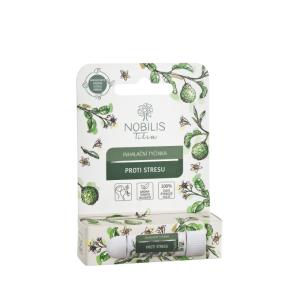
Try our natural products
Why Boundaries Are the Foundation of a Healthy Lifestyle
In public discourse, a healthy lifestyle is most commonly associated with exercise, nutrition, or quality sleep. These are undoubtedly important pillars, but without psychological wellbeing and emotional health, they are merely a façade. A person can eat organic vegetables, practice yoga, and sleep eight hours, and still feel exhausted and empty – if every day they take on commitments they don't want, comply with demands that are destroying them, and suppress their own needs for the sake of others.
Research repeatedly confirms that chronic stress caused by overload and the inability to say no has a direct impact on physical health. According to the World Health Organization, mental health is an integral part of a person's overall health, and neglecting it manifests, among other things, in a weakened immune system, sleep disorders, or cardiovascular problems. Boundaries, therefore, are not a luxury for sensitive souls – they are a necessity for everyone.
Let's take a specific example. Jana works as a project manager, has two children, and cares for an ill parent. Every week she takes on new tasks from her superiors because she fears that refusing will be seen as incompetence. She says yes to every request from her friends because she doesn't want them to think she's selfish. The result? Jana suffers from chronic headaches, sleeps poorly, and constantly feels on the verge of exhaustion. Yet she is ashamed to say she needs help, or even simply – that she can't keep up. Jana's story is not exceptional. It is the story of millions of people who have learned that their worth lies in their usefulness to others.
Changing this mindset doesn't require a dramatic turnaround. It requires gradual, conscious steps – a small guide to starting to set boundaries without guilt and how to sustain this process over time.
The first and perhaps most important step is naming your own needs. This sounds simple, but for many people it is a genuine challenge. Most of us know what others need, but have lost touch with what we ourselves need. It helps to sit quietly and ask yourself: What exhausts me? What gives me energy? Where do I feel I am exceeding my limits? The answers may not come immediately, but the very act of asking the question is a beginning.
The second step is distinguishing between what is a real obligation and what is a learned obligation. A real obligation stems from values and commitments a person has consciously chosen – caring for a child, completing a work task, being there for a friend in a difficult moment. A learned obligation is one that arose from fear, habit, or a desire for approval. "I have to go to that dinner, otherwise they'll be disappointed." "I have to help, even when I don't have time." "I have to be available at all times." This distinction is crucial, because boundaries are set precisely where learned obligation exceeds one's own capacity.
The third step – and the one where most people hesitate – is communicating the boundary. Many people think that setting a boundary means dramatically declaring that from now on they will live differently. In reality, it can be far more subtle. "I can't help you this time, but I'd be happy to next time." "I need my evenings for myself, so I won't be available after eight o'clock." "I can't take on this project – I'm at full capacity." The key is clarity without apology. A person doesn't need to explain why, nor apologize for having needs. Explanations and apologies are polite, but they also signal that the boundary is conditional – and that weakens it.

How to Handle the Guilt That Will Come Anyway
Even when a person sets a boundary confidently and kindly, guilt will almost certainly follow. And that's all right. The guilt that comes after setting a boundary is not a signal that a person has done something wrong – it is merely a reflection of an old pattern that is changing. Guilt is information, not a command. It says: "This is new and uncomfortable for you." It does not say: "You made a mistake."
It helps to be aware of the difference between guilt and shame. Guilt says "I did something wrong," shame says "I am a bad person." Setting a boundary leads neither to guilt nor to shame – it leads to temporary discomfort that fades over time as the brain adjusts to a new way of functioning. Research in the field of neuroplasticity shows that the brain is capable of changing established patterns of behaviour – it simply takes repeatedly and consciously replacing them with new ones.
Another effective tool is self-compassion – an inner voice that, instead of criticism, offers understanding. Rather than "I'm selfish for refusing," try "it's normal to have limits and it takes courage to name them." This shift in inner dialogue is slow but effective. It is also supported by simple daily rituals – a moment of quiet in the morning, journaling, meditation, or simply conscious breathing when anxiety arises.
It is also worth noting that the reactions of those around us to newly set boundaries vary. Some people will accept them without issue, others will be surprised, and some may even be angry. And it is precisely this possibility of a negative reaction that causes many people to avoid boundaries altogether. But it's worth asking: are relationships that function only on the condition of unlimited availability and a willingness to sacrifice one's own needs truly healthy relationships? Lasting friendships, partnerships, or working relationships can withstand boundaries – and if they cannot, that is valuable information in itself.
Changing habits takes time and repetition. It won't happen overnight, and there will be plenty of moments when a person slips back into old patterns – says yes when they wanted to say no, apologises for having needs, or gives in under pressure. That is not failure. It is part of the process. What matters is noticing these moments without self-criticism and trying differently next time.
In practical terms, a small guide to setting boundaries requires no special tools or courses. It's enough to start with small things – declining one request that exceeds your capacity, taking an evening just for yourself, not responding to work messages at the weekend. Each such small step strengthens the ability to act in accordance with your own needs and gradually reduces the intensity of the guilt that accompanies it.
A healthy lifestyle in its deepest sense means living in alignment with yourself – with your own values, needs, and limits. Boundaries are not a wall that separates a person from others. They are a natural part of every functional relationship – with oneself and with others. And those who learn to set them with kindness and without unnecessary guilt will find that they suddenly have more energy, more joy, and – paradoxically – more space for genuine closeness with the people who matter to them.