
# Effective Tips for Cleaning and Refreshing a Fabric Sofa
The sofa is the heart of every living room. It's the place where the family gathers for an evening film, where children jump and bounce, where pets comfortably settle in despite all prohibitions, and where after a demanding day one can finally collapse into the comfort of cushions. Yet this daily intensive use takes a greater toll on a fabric sofa than many people realise. Coffee stains, the smell of pets, accumulated dust and sweat – all of this settles deep into the textile fibres over months and years. And that is precisely why it is worth knowing how to properly clean and freshen a fabric sofa without having to call a professional cleaning service or consider buying a new one.
Surprisingly many households never thoroughly clean their sofa. Surveys repeatedly show that the sofa is among the most neglected pieces of furniture in terms of hygiene, even though the average person spends hours on it every day. British microbiologist and science communicator Professor Charles Gerba of the University of Arizona points out that upholstered furniture can contain more bacteria than a toilet seat – and that is an argument few people can ignore.
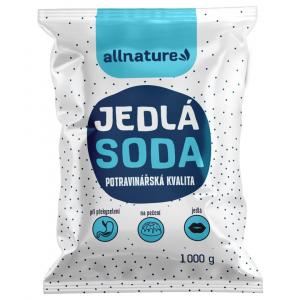
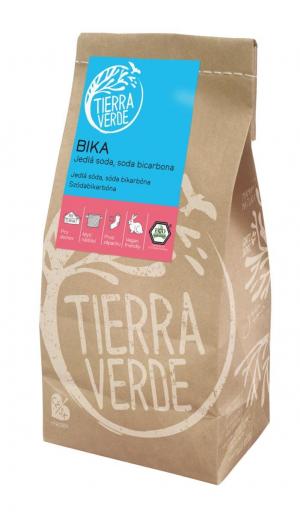
Try our natural products

Before you start cleaning: preparation and identifying the material
The first and absolutely essential step before the actual cleaning is to find out what material the sofa's upholstery is made from. Every fabric requires a different approach, and using an unsuitable cleaning product can cause irreversible damage – colour fading, shrinkage or deformation of the fibres. Most manufacturers include a care label with the sofa, typically hidden under the cushions or on the underside of the seat. These labels usually feature the letters W, S, WS or X. The letter W means the fabric can be cleaned with water and water-based solutions, S indicates cleaning with solvents only, WS indicates a combination of both methods, and X signals that the sofa can only be cleaned mechanically – that is, by vacuuming or brushing.
If the label is missing or illegible, it is recommended to carry out a test in an inconspicuous area, such as on the back or under a cushion. Apply a small amount of the chosen cleaning product and wait a few minutes. If the fabric does not change colour, shrink or show any negative reaction, the product can safely be used on the entire surface.
The next preparatory step is thorough vacuuming. Before reaching for any wet cleaning product, it is essential to remove all surface dust, pet hair, crumbs and dirt. A vacuum cleaner fitted with a special upholstery attachment – a soft brush or flat nozzle that can reach into folds and crevices – is ideal for this. If the vacuum cleaner does not have a suitable attachment, a brush with soft bristles can be used successfully. This seemingly simple step is in fact crucial: wet cleaning dirt that has not been vacuumed up first will cause dust and crumbs to be absorbed deeper into the fabric, making the situation even worse.
Home recipes that actually work
Once the sofa is prepared, the actual cleaning can begin. The good news here is that effective home care for a fabric sofa does not require any expensive chemicals or special equipment. Sodium bicarbonate, or baking soda, is one of the most versatile helpers that every household has on hand.
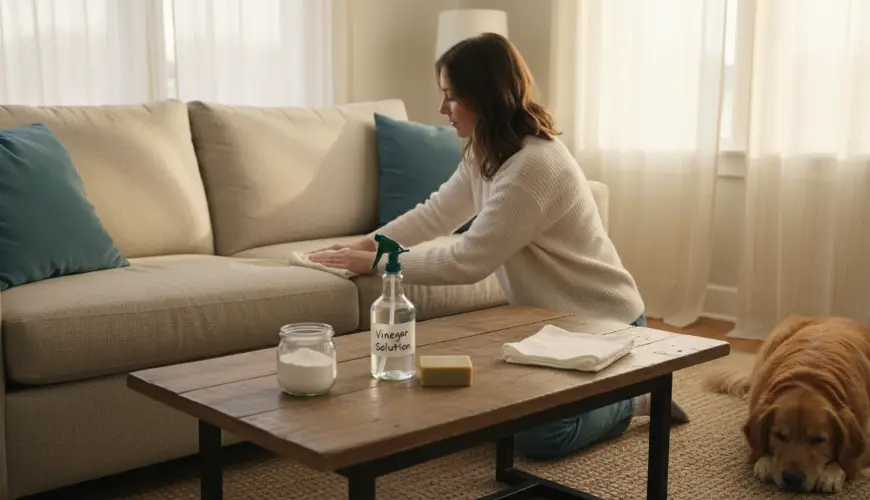
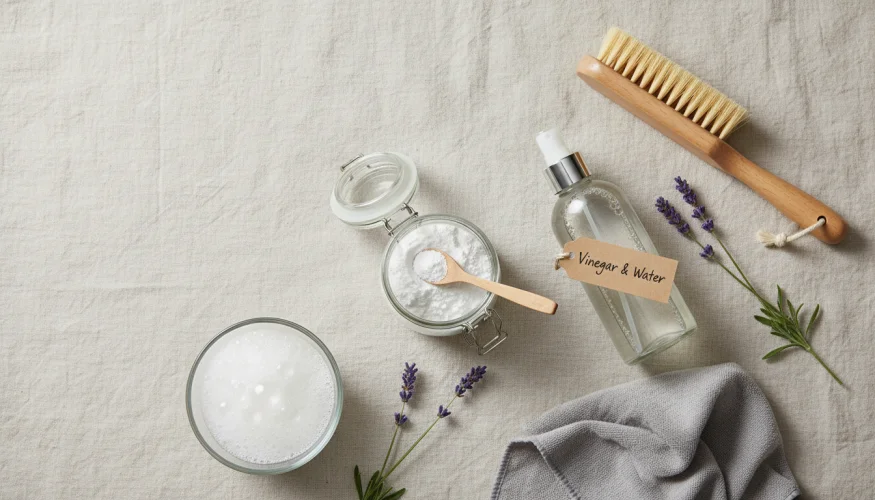
The process is very straightforward. It is enough to sprinkle baking soda evenly over the entire surface of the sofa – including the cushions and side panels – and leave it to work for at least 20 minutes, but ideally an hour or even longer. Baking soda has a natural ability to absorb odours and bind greasy particles. After the time has elapsed, the powder is simply vacuumed up. The result is surprisingly refreshing, and this process can be safely repeated every few weeks as a preventive measure.
For deeper cleaning and stain removal, a mixture of warm water, liquid soap and optionally a little white vinegar comes in handy. The exact proportions depend on the degree of soiling, but a mix of one teaspoon of liquid soap per half a litre of warm water works as a starting point. This mixture can be whisked into a foam and the resulting lather applied to the fabric using a clean microfibre cloth. The key rule is to work from the edges of the stain towards the centre, not the other way around – working in the opposite direction would spread the stain over a larger area. After applying the foam, the surface is gently wiped with a clean damp cloth and left to dry thoroughly.
White vinegar is an excellent helper particularly for removing odours. Diluted in a 1:1 ratio with water and sprayed from a spray bottle, it can neutralise smells from pets, sweat or food. It is true that vinegar itself initially has quite an intense smell, but once it has dried its scent disappears completely – and with it, the original unpleasant odour.
Consider a practical example: a young family with a two-year-old child and a golden retriever has a sofa that over two years has been through everything imaginable – from nappy changes to spilled juice to a wet dog. Instead of throwing the sofa out or calling a cleaning company, they tried a combination of baking soda and soapy foam. The result? The sofa did not look brand new, but the smell disappeared almost completely and the light juice stains were largely removed. The entire process took an afternoon and the cost did not exceed a hundred crowns.
How to tackle stubborn stains and regular care going forward
Some stains are a tougher challenge and require a more specific approach. Red wine, coffee, blood or grease tend to work their way quickly into fabric fibres, and the longer cleaning is delayed, the more difficult they are to remove. The number one general rule is therefore to act immediately. A fresh stain is always easier to clean than a dried one.
For red wine stains, mineral water or sparkling water helps, as its bubbles mechanically push the dirt out of the fibres. Coffee stains can be treated with cold water – never hot, which would fix the proteins in the coffee into the fabric. Greasy stains respond well to being sprinkled with baking soda or kitchen salt, which absorb the grease before it has a chance to penetrate deep into the textile structure.
Cleaning more specific types of fabric, such as velvet or microplush, requires even stricter rules. Velvet must always be brushed in the direction of the fibres, and excessive moisture should be avoided as it could cause permanent damage to the surface. Microplush tolerates wet cleaning better, but here too it is not advisable to soak the fabric – wet textile takes longer to dry and during the drying process may develop an unpleasant smell or even become mouldy.
Regular care is ultimately the most effective tool for keeping a sofa in good long-term condition. Experts in the care of home textiles recommend thorough vacuuming at least once a week and comprehensive cleaning with baking soda or a suitable cleaning product approximately every three months. If there are pets or small children in the household, it is advisable to increase the frequency.
It can also help to use protective textile products that create an invisible layer repelling liquids and dirt. These impregnation sprays are now available in more eco-friendly variants without aggressive chemicals, which is an excellent choice particularly for households where allergy sufferers or small children live. When choosing such a product, it is worth opting for those with Ecolabel certification or a similar ecological designation, which guarantees that the product is gentle on both the environment and human health.
As Danish designer and pioneer of sustainable design Arne Jacobsen once aptly remarked: "Good design should last. But to last, it must be cared for." This thought applies equally well to designer furniture and to an ordinary family sofa – caring for the things we use every day is an expression of respect both for the objects themselves and for the environment, because it prevents unnecessary disposal and the purchase of new items.
An interesting alternative to home remedies is also provided by ecological cleaning products based on natural ingredients, which can be found in the range of online shops focused on sustainable living. These products combine effectiveness with consideration for nature and are typically produced without synthetic fragrances, phosphates and other substances that burden the environment. For households seeking to reduce the amount of chemicals in their everyday lives, this is a logical and natural step.
A clean and fresh sofa is ultimately not just a matter of aesthetics. It is a question of hygiene, wellbeing and also economics – a well-maintained sofa lasts significantly longer and postpones the need to invest in a new one. And at a time when sustainable thinking is increasingly penetrating everyday decisions, this very ability to care for the things we already own is one of the most meaningful expressions of a responsible approach to life and to the world around us.