

Beluga lentils with grilled zucchini and lemon taste great
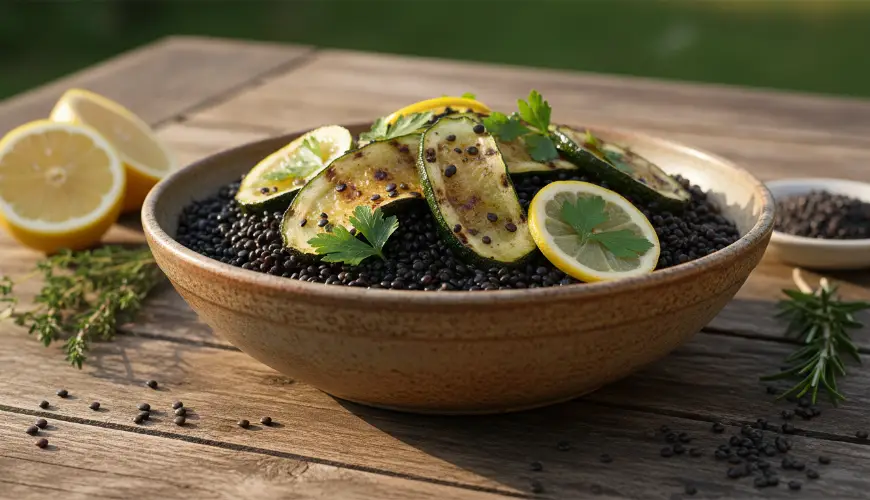
There are dishes that look modest but surprise with depth of flavor and a satisfying feeling at the very first bite. Beluga lentils with grilled zucchini and lemon is exactly that kind of dish. Unassuming, yet exceptional. Simple to prepare, but sophisticated enough to be served without embarrassment in a modern bistro restaurant. It is precisely this combination that makes it a favorite recipe among people who want to eat deliciously, healthily, and without unnecessary compromise.
Beluga lentils – also known as black lentils – got their poetic name from their striking resemblance to beluga caviar. Tiny, glossy, dark black grains look elegant on the plate and, unlike other types of lentils, retain their firm shape during cooking. This makes them an ideal base for both warm and cold dishes where not only flavor matters, but also the resulting texture. While red lentils cook down into a smooth purée and green lentils can sometimes be floury, beluga stays firm, grainy, and pleasantly al dente. Exactly as it should be.
Try our natural products




Why beluga lentils?
From a nutritional standpoint, lentils in general rank among the most valuable legumes in the world. Beluga lentils contain approximately 26 grams of protein per 100 grams of dry weight, placing them on a level comparable to meat – but without saturated fats and with a significantly lower ecological footprint. According to data from the World Health Organization, legumes are a key component of a balanced diet that reduces the risk of cardiovascular disease, type 2 diabetes, and certain forms of cancer. Lentils are also rich in iron, folic acid, magnesium, and fiber, which supports healthy digestion and a long-lasting feeling of fullness.
For people who are reducing their meat intake or eliminating it altogether, beluga lentils represent one of the most reliable sources of plant-based protein. But even for those who eat meat regularly, incorporating lentils into their diet is an excellent step toward a more varied and healthier way of eating. It's not about deprivation – it's about discovering new flavors that give the body what it needs.
It is also interesting that black lentils are among the foods with a high antioxidant content, specifically anthocyanidins, which are responsible for their dark color. These compounds help protect cells from oxidative stress and have anti-inflammatory effects. Research published in the scientific journal Nutrients suggests that regular consumption of foods rich in anthocyanins may contribute to the health of both the heart and the brain. So a jar of black lentils in the pantry isn't just practical – it's an investment in health.
Grilled zucchini enters this story as a natural summer partner. Zucchini is a vegetable that in summer literally overruns the garden – anyone who grows their own knows what that's like. The harvest is abundant, zucchini is accessible and affordable, and yet it offers a surprisingly valuable nutritional profile: it is a source of vitamin C, potassium, manganese, and the antioxidants lutein and zeaxanthin, which are important for eye health. Grilling gives zucchini a lightly smoky, caramelized flavor that contrasts beautifully with the gentle earthiness of the lentils.
And then there is the lemon. An apparently simple addition, but in reality a key player in the entire dish. Fresh lemon juice and grated zest can awaken the whole meal, lighten it, and add that freshness which transforms a dish from merely nutritious to something more. Lemon also helps the body absorb iron from plant-based sources more effectively – the combination of lentils and lemon is therefore not only a matter of taste, but also nutritionally well-considered.
Step-by-step preparation
Preparing this dish requires neither culinary training nor hours spent standing at the stove. The foundation is quality beluga lentils, which simply need to be rinsed under cold water and cooked in salted water or vegetable broth for approximately 20 to 25 minutes. The important thing is not to overcook the lentils – once they are firm but easy to bite through, they are done. Drain any excess water and allow the lentils to cool slightly.
Meanwhile, prepare the zucchini. Smaller, firm specimens work best; slice them into rounds about half a centimeter thick or into lengthwise strips. Drizzle with olive oil, season with salt and pepper, and place on a preheated grill pan or outdoor grill. Grill each side for approximately 2 to 3 minutes, until characteristic grill marks appear and the vegetable softens slightly. Overgrilled zucchini falls apart and loses its character – which is why keeping an eye on the timing is essential.
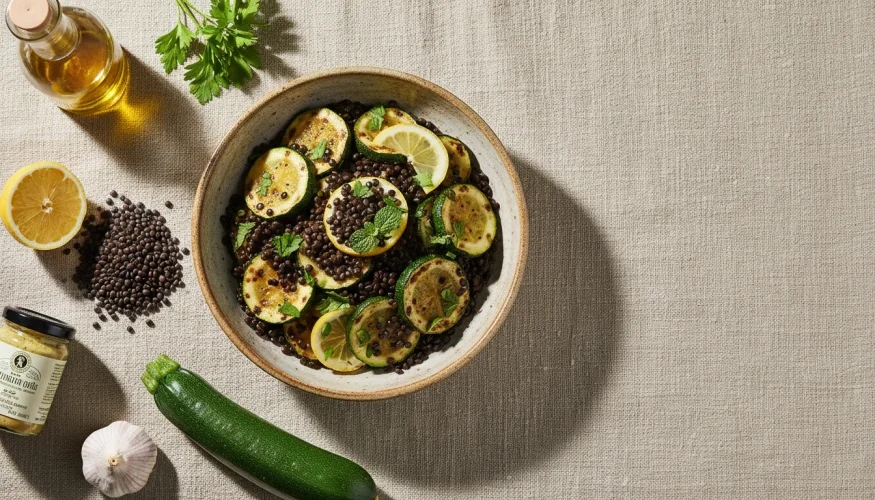
The finished dish is then assembled simply: mix the lentils with a little olive oil, freshly squeezed lemon juice, and grated lemon zest. Add a spoonful of Dijon mustard, a clove of crushed garlic, and optionally a handful of fresh herbs – parsley, mint, or cilantro all work wonderfully, depending on personal preference. Layer the grilled zucchini on top of this lentil base and garnish the dish with thin lemon slices, a drizzle of extra virgin olive oil, and coarse salt.
If you want to enrich the dish further, crumbled feta or goat cheese pairs beautifully with it, adding creaminess and a lightly tangy note. Vegans can reach for sautéed walnuts or toasted almonds, which provide the necessary contrast in texture. Some cooks also add grilled halloumi – and the result is truly impressive.
Imagine a specific scenario: it's a hot July evening, a group of friends is gathering in the garden. Nobody wants to spend a long time at the stove, but nobody wants to serve just chips and lemonade either. This is precisely when beluga lentils with grilled zucchini and lemon prove to be the ideal choice. Much of the preparation can be done in advance – the lentils can be cooked in the morning, the dressing mixed ahead of time, and the zucchini grilled on the spot, perhaps on an outdoor grill alongside meat. The result looks impressive, tastes wonderful, and guests regularly ask for the recipe.
As British chef Yotam Ottolenghi, whose cooking draws on Middle Eastern and Mediterranean traditions, once said: "Vegetables are not a side dish. They are the main event." And it is precisely this philosophy that underlies the popularity of dishes like this one – meals that don't need meat to be complete.
Sustainability on the plate and beyond
Incorporating lentils into a regular diet has implications that extend beyond personal health. Legumes in general are among the most ecologically friendly foods – their cultivation requires significantly less water and energy than meat production, and they also enrich the soil with nitrogen, thereby contributing to its natural fertility. According to a report by the Food and Agriculture Organization of the United Nations (FAO), legumes can play a key role in building more sustainable food systems around the world.
Zucchini is also a typically seasonal vegetable that in summer comes from domestic or regional sources. Buying it directly from a local farmer or at a farmers' market means supporting local agriculture, reducing emissions associated with transportation, and at the same time obtaining vegetables of the finest quality – fresh, full of flavor, and without unnecessary travel across half of Europe. Making conscious ingredient choices is one of the simplest ways to contribute to a more sustainable lifestyle, without needing to radically overhaul one's entire diet.
Olive oil, which plays an important role in this recipe, is worth choosing carefully. Extra virgin olive oil, cold-pressed, retains the maximum amount of health-beneficial compounds, including polyphenols with anti-inflammatory effects. The difference in flavor compared to refined oils is noticeable – a good olive oil will elevate the dish, while a cheap substitute will weigh it down.
Beluga lentils are not always easy to find in Czech supermarkets, but they can be found without difficulty in health food stores or in online shops focused on healthy living. It is worth buying them in organic quality, which guarantees that no synthetic pesticides were used during cultivation. The taste difference between organic and conventional lentils may not be dramatic, but the awareness of a product's origin and the way it was grown is a value in itself.
The dish works wonderfully both as a main course and as a hearty salad served alongside grilled meat or fish. It can be prepared by a kitchen beginner and an experienced cook alike, with the latter perhaps looking for new inspiration. It can be served warm, at room temperature, or cold – and honestly, the next day from the refrigerator it often tastes even better, because the lentils have had time to absorb the flavor of the dressing. This makes it an ideal dish to prepare in advance, to pack in a lunchbox for work, or to bring on a picnic.
At a time when more and more people are interested in what they eat, where their food comes from, and what impact their choices have on their health and the planet, a dish like beluga lentils with grilled zucchini and lemon arrives as a natural answer to many questions at once. One doesn't need to be a vegetarian, an environmentalist, or a food connoisseur to appreciate what such a meal has to offer. All it takes is a little curiosity – and a willingness to try something new.