

# What is vulvodynia and why is it so difficult to diagnose Vulvodynia is a chronic pain condition
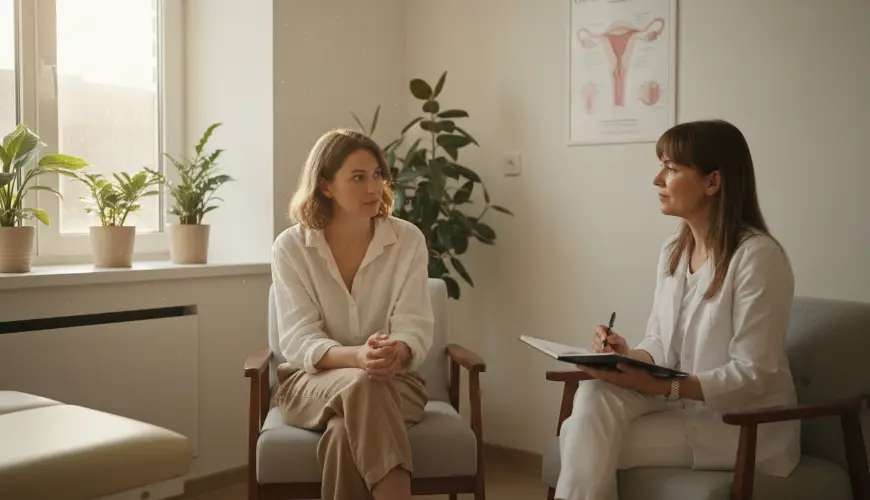
There are pains that go unspoken. Pains that women describe to their doctors again and again, only to hear that "everything looks normal" or that it's "probably psychological." Vulvodynia falls precisely into this category – chronic vulvar pain that affects an estimated 10 to 28% of women during their lifetime, yet remains one of the least diagnosed gynecological conditions altogether. It is not an exaggeration to say that this is a health problem that medicine as a whole has long ignored, and continues to ignore in many practices to this day.
Vulvodynia manifests as persistent burning, cutting, stabbing, or pressure in the vulvar area – the external female genitalia – without any apparent infection, skin condition, or other clearly identifiable cause. The pain may be constant or come in episodes, may be localized to a specific area, most commonly the vestibule (the entrance to the vagina), or may permeate the entire region. For many women, it is so intense that it makes sexual intercourse, wearing tight clothing, sitting on a hard chair, or cycling impossible. And yet the average time from first symptoms to correct diagnosis is, according to some estimates, four to six years.
Try our natural products





Why doctors so often miss vulvodynia
Part of the answer lies in the very nature of the pain. Vulvodynia is a diagnosis per exclusionem – it is established once all other causes have been ruled out. A doctor must first rule out candidiasis, bacterial vaginosis, herpes, lichen sclerosus, contact dermatitis, and a whole range of other conditions. The problem arises, however, when all tests come back negative. Rather than leading the doctor to a diagnosis of vulvodynia, this too often leads to the conclusion that the patient is fabricating or exaggerating her pain.
Behind this attitude lies a deeply ingrained tendency in medicine to underestimate pain in women. Research published in The Journal of Pain repeatedly shows that women are less frequently prescribed adequate analgesic treatment and their pain is more often assessed as psychosomatic. In the case of vulvodynia, this is compounded by the fact that the area of female genitalia has historically been taboo even in scientific discourse – gynaecology as a field focused primarily on reproductive function for decades, rather than on pain or sexual health as such.
The result is that many women go through a revolving door of appointments – a general practitioner refers the patient to a gynaecologist, the gynaecologist finds no infection and recommends a dermatological examination, the dermatologist finds no skin lesion and suggests a psychological consultation. Each step in this chain is logical in itself, but the whole fails because no one says aloud: "What you are describing has a name. It is called vulvodynia and there are ways to help you."
Consider the example of a thirty-year-old teacher from Brno who had been dealing with chronic pain in the vestibular area for three years. She visited four different gynaecologists, underwent repeated swabs, cultures, and colposcopy – all without findings. One doctor advised her to "relax more," another implied the problem might lie in her relationship with her partner. Only after searching the internet herself did she come across the term vulvodynia and personally requested a referral to a pelvic floor specialist. Her story is not exceptional – it is, unfortunately, typical.
An important factor is also the lack of education in vulvar conditions during medical training. According to surveys among medical students and junior doctors, vulvodynia is mentioned in curricula only marginally, if at all. Doctors thus enter practice without the tools that would enable them to recognise this diagnosis and communicate appropriately with patients.
What vulvodynia actually looks like and what can be done about it
Vulvodynia is not a uniform condition. Experts divide it by localisation into generalised (pain affecting the entire vulva) and localised (most commonly vulvar vestibulitis, now referred to as provoked vestibulodynia). It is also divided according to whether the pain is spontaneous or triggered by touch or pressure. These distinctions are not merely academic – they fundamentally influence the choice of treatment.
The causes of vulvodynia are likely multifactorial. Research suggests that changes in the nerve fibres supplying the vulva, immune system dysregulation, hormonal factors (particularly low oestrogen levels), genetic predisposition, or previous recurrent infections that may have triggered a persistent inflammatory response could all play a role. According to the National Vulvodynia Association, current research also focuses on the role of central sensitisation – a state in which the nervous system amplifies pain signals beyond the scope of the original stimulus.
Treatment of vulvodynia is individual and often requires a combination of approaches. The most commonly used include topical anaesthetics (most often lidocaine gel), tricyclic antidepressants or anticonvulsants in low doses (which act on neural pain transmitters, not on the psyche), pelvic floor physiotherapy, cognitive-behavioural therapy focused on managing chronic pain, and in some cases a surgical procedure called vestibulectomy. None of these methods is universally effective, but combined care from a multidisciplinary team – a gynaecologist, physiotherapist, and psychologist – yields demonstrable results.
Pelvic floor physiotherapy is an area that remains relatively inaccessible and little known in the Czech Republic. Muscular hypertonicity in the pelvic floor area – that is, excessive muscle tension that can intensify and sustain pain – is very common in women with vulvodynia. Targeted physiotherapy can release this tension and significantly reduce the intensity of pain without the need for pharmacological treatment. As physiotherapist and author of professional texts Lori Forner noted: "The pelvic floor is not just a functional structure – it is a place where the body stores tension, stress, and painful memory."
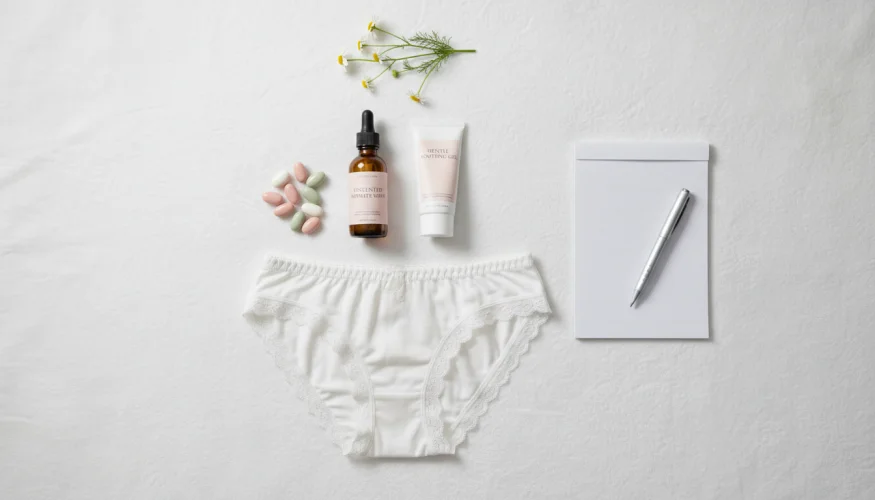
Alongside specialist care, everyday intimate hygiene also plays a role. Women with vulvodynia should avoid fragranced hygiene products, irritating synthetic fabrics in underwear, and aggressive cleansing agents. Gentle, fragrance-free intimate hygiene products and cotton underwear are not merely a trend in sustainable cosmetics – for women with sensitive vulvas, they are a medical necessity. Similarly, a lukewarm bath without additives or the application of pure coconut oil as a natural moisturiser may help.
Diet and overall lifestyle have a greater influence on chronic pain conditions than was long assumed. Some women with vulvodynia report a worsening of symptoms after consuming foods high in oxalates – such as spinach, nuts, or chocolate – although the scientific evidence for this connection remains inconclusive. What is certain, however, is that chronic stress, lack of sleep, and the overall inflammatory burden on the body can increase the perception of pain. Therefore, caring for the nervous system – whether through movement, mindfulness, or quality rest – is not a peripheral concern in vulvodynia, but part of comprehensive treatment.
An important aspect increasingly emphasised in the professional literature is the impact of vulvodynia on mental health and intimate relationships. Chronic pain that is invisible to those around the sufferer and long unrecognised even by doctors leads to feelings of isolation, shame, and hopelessness. Many women stop talking about their difficulties because they encounter incomprehension or trivialisation. Relationships suffer because painful intercourse – or its complete avoidance – creates tension that is difficult to overcome without open communication and professional support. Sex therapy or couples therapy can be just as valuable in this context as pharmacological treatment.
It is also necessary to name the systemic dimension of the problem. Vulvodynia is not merely an individual medical diagnosis – it is a symptom of a broader failure of the medical system in its approach to women's pain. Research into chronic pelvic pain and vulvar conditions is chronically underfunded. Specialist centres that would address these conditions comprehensively are rare in the Czech Republic. Patients are left to their own initiative, to recommendations in online communities, or to a chance encounter with a doctor who happens to know about vulvodynia. This is not an acceptable state of affairs for a condition affecting one in ten to one in four women.
The situation is nevertheless slowly changing. The International Society for the Study of Vulvovaginal Disease ISSVD publishes updated recommendations for diagnosis and treatment that are gradually making their way into European practice. The number of physiotherapists specialising in the pelvic floor is growing. And above all, the voices of women themselves are growing louder – in online communities, in the media, and in consulting rooms – women who refuse to accept "I can't find anything" as a final verdict.
Vulvodynia exists. The pain that women describe is real, measurable, and treatable. Every woman who struggles with persistent pain in the intimate area and has encountered incomprehension has the right to insist on further examination, to seek a second opinion, and to request a referral to a specialist. And every doctor who encounters such symptoms has a responsibility to listen – not merely to look for an infection, but to ask about the pain, its nature, its impact on daily life. Because naming the pain is the first step towards making it no longer invisible.