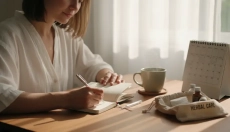

Qi gong exercises improve the health of body and mind
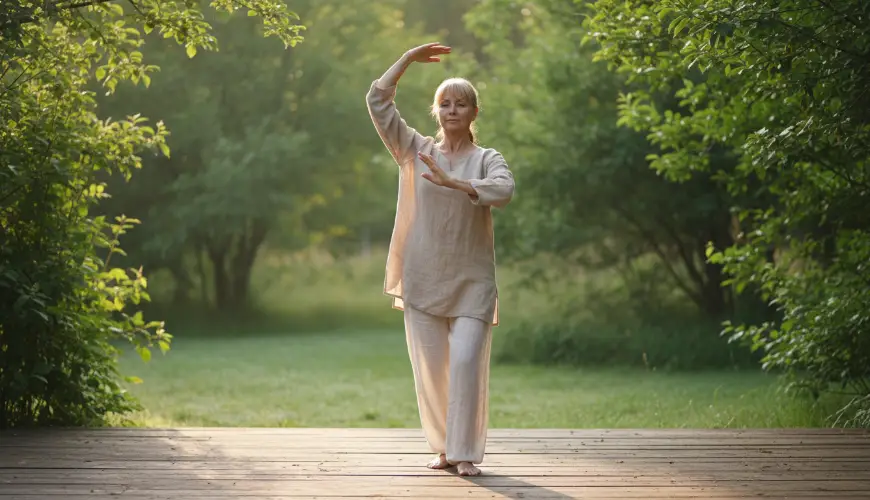
There is an exercise practiced by hundreds of millions of people around the world, and yet many people in the Czech Republic still don't know about it. Qi gong – the Chinese art of movement, breath and concentration – has been coming to the forefront of interest in the West in recent years, and for good reason. One of its most well-known and accessible forms is the so-called Eight Brocades sequence, which has been passed down for centuries as a morning ritual for the health of body and mind. No special equipment, large space or prior experience is needed. All it takes is the will to get up a little earlier and give your body a chance to wake up differently than by rushing to the coffee maker.
Qi gong (romanized from Chinese 氣功, pronounced approximately "chee kung") literally means "working with energy" or "cultivating life force." It is a system of slow, coordinated movements, breathing exercises and meditation, whose roots reach back to ancient China, where it was used by healers, warriors and Taoist monks. Unlike other forms of exercise, qi gong does not work primarily with muscular strength or endurance – it focuses on harmonizing the inner energy that Chinese medicine calls qi or chi. Modern science is increasingly studying this approach and confirming its beneficial effects on health.
Try our natural products
What exactly are the Eight Brocades and why practice them in the morning?
The Eight Brocades sequence – in Chinese Ba Duan Jin (八段錦) – is one of the oldest and most widespread forms of qi gong in existence. The name comes from a comparison to precious silk fabric: just as brocade is rare, strong and beautiful, this sequence of movements is also considered a "jewel" of traditional Chinese culture. Historical records of Ba Duan Jin date back at least to the Song dynasty period, i.e. the 10th to 13th centuries, with some sources placing its origins even further back in the past. The World Health Organization recognizes traditional Chinese medicine and its associated movement practices as part of integrative health care.
The sequence consists of eight individual exercises – eight "brocade panels" – each targeting a different part of the body or organ system. The movements are slow, fluid and symmetrical, always accompanied by conscious breathing. The entire sequence takes approximately fifteen to twenty minutes, making it ideal for morning practice. In the morning, when the mind is still calm and the body is just transitioning from sleep to wakefulness, the conditions for working with energy are particularly favorable. Traditional Chinese medicine recommends practicing qi gong in the morning hours, when yang energy – active, ascending – is on the rise and the body is ready to receive a new impulse.
A practical example? Consider Markéta, a sixty-year-old teacher from Brno, who came across qi gong by chance on the recommendation of a physiotherapist after spinal surgery. Initially skeptical, she began practicing the Eight Brocades every morning before breakfast. After three months, she described not only a significant reduction in back pain, but also better concentration and more restful sleep. Stories like Markéta's are not exceptional – and the science supports them.
Scientifically verified benefits of regular qi gong practice
In the last two decades, dozens of scientific studies have been published examining the effects of qi gong on human health. The results are compelling and relate to several areas. Regular qi gong practice demonstrably reduces cortisol levels – the stress hormone – while also supporting the production of endorphins, natural substances that induce a sense of wellbeing. A study published in the Journal of Health Psychology showed that just eight weeks of regular qi gong practice led to a measurable reduction in anxiety and improvement in overall quality of life among participants.
In terms of physical benefits, research repeatedly confirms that qi gong improves balance and coordination – which is particularly important for older adults, for whom falls represent a serious health risk. The Eight Brocades sequence has proven exceptionally effective in this context: in several controlled studies, regular practice led to significant improvements in stability and a reduction in fall risk among seniors. Additionally, research suggests positive effects on blood pressure, the immune system and even sleep quality.
The movements in the Eight Brocades sequence are not random. Each exercise has its own intention and is traditionally linked to a specific organ or meridian – an energy pathway along which qi flows according to Chinese medicine. The first exercise, "Supporting Heaven with Both Hands," stretches the entire spine and stimulates the triple warmer – a functional system that regulates body temperature and metabolism. The second exercise, "Drawing the Bow and Shooting Like an Eagle," strengthens the lungs and expands the chest, thereby supporting deep breathing. The third exercise, "Lifting One Hand," harmonizes the stomach and spleen. The sequence continues in this way, with each movement refined to the smallest detail, and correct execution requires a certain amount of practice.
As the legendary Chinese qi gong master Peng Zu once said: "Movement generates yang, stillness generates yin – health lies in the balance of both." This idea is at the heart of the entire philosophy of qi gong: it is not about extreme performance or passive rest, but about consciously seeking balance.
It is important to mention that qi gong is not a religion or an esoteric practice in the mystical sense. It is a system of exercises – similar to yoga or tai chi – that can be practiced in a completely secular way as care for physical and mental health. This makes it accessible to people of different beliefs and lifestyles. It is no coincidence that qi gong and tai chi are now taught in hospitals, rehabilitation centers and companies as part of employee health care programs.
How to get started with the morning Eight Brocades sequence
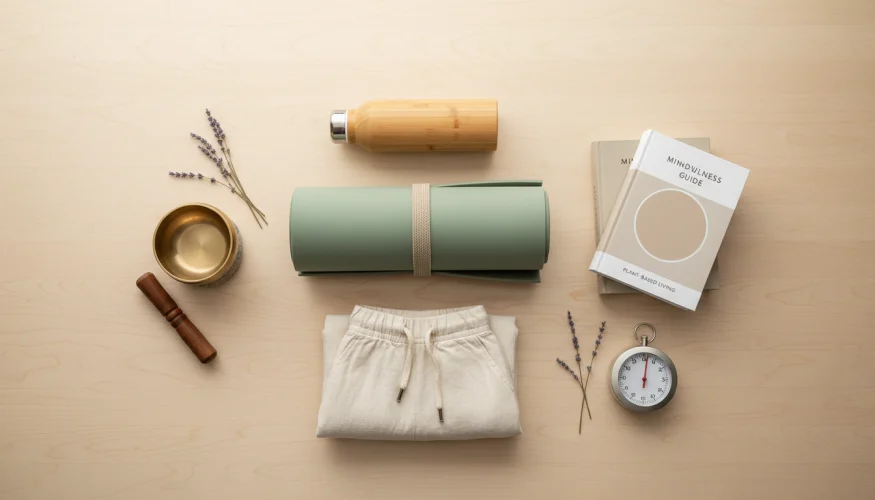
Getting started with qi gong is surprisingly simple. You don't need any equipment, special clothing or a large space – just an area of about two by two meters where you can move freely. Morning practice is ideally done outdoors, weather permitting, or by an open window where fresh air is accessible. Traditional recommendations suggest practicing barefoot or in soft socks to maintain contact with the ground.
For complete beginners, the best approach is to start with an instructional video or course led by an experienced instructor. In the Czech Republic, there are a number of centers and schools where qi gong is taught by certified instructors, and online resources are now available in both Czech and English. A good reference is the Czech Association of Qi Gong and Tai Chi, which brings together certified instructors and organizes courses throughout the country.
During practice itself, several principles are key. Movements should be slow and fluid – never jerky or forced. Breath is just as important as movement: as a general rule, we inhale during upward or outward movements, and exhale during downward or inward movements. Attention should remain in the body, not wandering to the morning news or work obligations. It is precisely this combination of movement, breath and concentration that makes qi gong something more than just a warm-up.
How long does it take to see results? Most practitioners describe the first positive sensations – greater energy, a calmer mind, release of tension in the body – after just the first few sessions. Deep and lasting changes come with regularity: Chinese tradition speaks of one hundred days as the minimum time for a new practice to truly take root. However, you don't need to wait three months to appreciate what morning practice gives you. Often, just one peaceful morning ritual is enough to make the entire day unfold in a completely different way.
Qi gong and the Eight Brocades sequence are not a passing trend or a quick fix. It is a practice that has proven itself over centuries and that takes on new meaning in today's fast-paced world. In a time when we are overwhelmed by stimuli, shortcuts and quick answers, qi gong offers something rare: space for intentional movement, conscious breath and quiet presence. In the morning, before the world has fully awakened and before the daily whirl engulfs us, this may be the most precious gift we can give ourselves.