

A bird feeder in winter is only beneficial with proper care
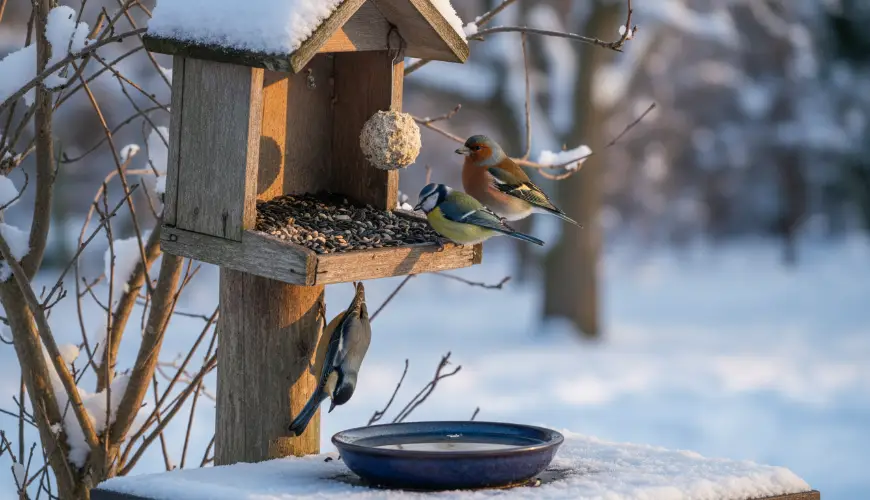
Winter is one of the most challenging periods of the year for outdoor birds. Shorter days mean less time to search for food, frost makes it harder to access natural sources, and snow covers the seeds, berries and insects that birds are accustomed to relying on. That is precisely why millions of people decide every year to put up a bird feeder in their garden or on a windowsill. It is a beautiful habit that brings joy to both sides – people enjoy the sight of a colourful collection of songbirds, while birds receive a lifeline in the form of a reliable energy source. But a bird feeder in winter is not just any old box full of bread. Poorly chosen food or an inappropriately placed feeder can do birds more harm than good, and that is something that rarely gets talked about.
Let us start with what seems obvious at first glance: not every type of feed is suitable for birds. Many people reach for what they have at home – leftover bread, biscuits, salted sticks or flavoured nuts. But a bird's organism is significantly different from a human's, and what seems to us like harmless scraps can cause serious health problems for a bird. Salt is directly toxic to small birds – their kidneys are unable to process it efficiently, and even a small amount can lead to dehydration or damage to the nervous system. Sweetened snacks, chocolate and spicy foods are similarly dangerous. Rule number one therefore reads: never put anything into a feeder that has been flavoured, salted or otherwise processed for human consumption.
Try our natural products




What birds truly need in winter
In cold weather, birds need energy above all else. Their metabolism is set to survival mode in winter – they must maintain a body temperature that hovers around 40 °C for most species, while also managing movement, finding shelter and social interactions within flocks. The most energy-rich foods are fats and oils in their natural form. That is why suet balls, which can be bought at any garden centre or prepared at home from pure beef suet, seeds and grains, are among the very best winter feeds available. They provide concentrated energy in a small volume, and most species – from tits and nuthatches to woodpeckers – love them.
Sunflower seeds are another classic and reliable feed. Preferably unshelled, because the act of shelling itself serves as mental stimulation for birds and also warms them through movement. Hemp seeds are exceptionally nutritious and particularly popular with goldfinches. White millet, in turn, attracts sparrows, buntings and finches. Linseed, plain oats (unprocessed, unflavoured) or dried berries without added sugar are further safe choices that can be included in a feeder without concern.
When it comes to nuts, walnuts or peanuts without salt and without flavouring are an excellent source of protein and healthy fats for birds. It is important, however, to pay attention to their quality – mouldy nuts contain aflatoxins, which are fatally dangerous to birds. Feed should always be fresh and dry. This applies as a general principle to the entire feeder: moisture is the enemy. Wet food spoils quickly, goes mouldy and becomes a breeding ground for bacteria that can cause mass illness across entire flocks.
An interesting perspective on winter feeding is offered by the ornithological organisation RSPB, which has long monitored bird populations in Great Britain and publishes detailed guidelines for winter supplementary feeding. According to their recommendations, it is crucial not only what we offer birds, but also how and where.

Feeder placement and maintenance: the details that matter
Imagine a situation that plays out in thousands of gardens every winter. Someone with good intentions hangs a feeder right next to the living room window so they can watch the birds up close. But the feeder is positioned just twenty centimetres from the glass – and a blue tit, startled by movement behind the window, flies at full speed into the transparent obstacle. Collisions with windows are one of the most common causes of death among garden birds in winter. A feeder should be either very close to a window (less than half a metre, so birds do not have time to build up speed), or alternatively at least two metres away. There is no golden middle ground in this case.
Equally important is placement from the perspective of safety from predators. Cats pose a serious threat to garden birds – according to estimates, they kill millions of birds every year in the Czech Republic alone. A feeder should therefore stand on a pole or be hung in such a way that a cat cannot easily reach it, and there should be no nearby branches or fences from which one could easily leap. The ideal height for a feeder is roughly 1.5 to 2 metres above the ground.
Regular maintenance is an absolute necessity. A feeder should be cleaned at least once every two weeks, ideally weekly. Food remnants, droppings and moisture create conditions for the spread of salmonella and other dangerous bacteria. That is precisely why ornithologists recommend having several smaller feeders rather than one large one – this reduces the density of birds in one place and at the same time lowers the risk of disease transmission. Cleaning requires nothing more than hot water with a little vinegar or a specialist disinfectant that is safe for animals.
As British naturalist and writer Mark Cocker says: "Feeding birds is not just about birds. It is about our need to connect with the nature that surrounds us, even when we are behind glass." And it is precisely this need for connection that should be guided by responsibility – because birds that become accustomed to a feeder begin to rely on it. If a feeder suddenly stops being stocked during winter, it can mean serious trouble for the local population, especially during heavy frost or snowfall.
In addition to food, water is also critically important for birds in winter. Frozen puddles and streams give them no chance to drink or bathe – and birds bathe even in frost, because healthy feathers are their most important insulating layer. A shallow dish of clean water that is regularly refreshed and defrosted is therefore just as valuable as a full feeder. Never add salt, glycerine or alcohol to the water, as is sometimes mistakenly recommended – these substances damage birds' feathers and digestive systems.
It is worth noting that not all bird species use feeders in the same way. Thrushes such as blackbirds or song thrushes generally prefer food on the ground – apples, grapes or berries spread directly on the lawn or on a low platform are far more accessible to them than a hanging feeder. Robins are popular garden visitors, but they too prefer to feed on lower surfaces. Tits, nuthatches and woodpeckers, on the other hand, are masters of acrobatics and have no trouble with hanging suet balls or nets filled with peanuts.
An interesting phenomenon of recent years is that milder winters are changing which bird species remain in the Czech Republic over winter instead of migrating south. According to the Czech Society for Ornithology, the winter presence of certain species that were previously exclusively migratory is gradually increasing. This places new demands on feeding – different species have different nutritional needs and different preferences.
As far as timing is concerned, winter supplementary feeding should begin no later than November, ideally already in October, when birds start looking for reliable food sources ahead of the onset of frosts. It should be wound down gradually in spring, around March or April, when natural food once again becomes available. Abrupt cessation of feeding in the middle of winter, particularly during frost, is one of the most common mistakes that otherwise well-intentioned bird care is prone to.
A bird feeder in winter is a small but meaningful way for us as humans to play a part in caring for nature in our immediate surroundings. It is simply a matter of avoiding the most common mistakes – unsuitable food, a dirty feeder or a dangerous placement – and the reward will be not only the sight of living nature outside the window, but also the knowledge that on the hardest winter days, we are helping where it truly matters.