
# Burnout from a Hobby and How to Get Out of It
Everyone knows it – that feeling when you throw yourself into something with enthusiasm that completely engulfs you. Whether it's knitting, photography, running, cooking, or playing guitar, hobbies give us meaning, joy, and a break from the daily hustle. But what happens when everything that made that joy joyful gradually fades away? When a hobby stops feeling like an escape and starts resembling another item on a to-do list? That's when what's known as hobby burnout arrives – and it's surprisingly more common than it might seem.
Most people associate the concept of burnout exclusively with work. Psychologist Christina Maslach, who has been studying this phenomenon for decades, defines burnout as a state of chronic stress leading to physical and emotional exhaustion, cynicism, and a sense of ineffectiveness. Yet these symptoms aren't tied exclusively to the workplace – they can fully manifest in the realm of leisure time as well, precisely when we least expect it from a hobby.
Try our natural products
How Joy Becomes Obligation
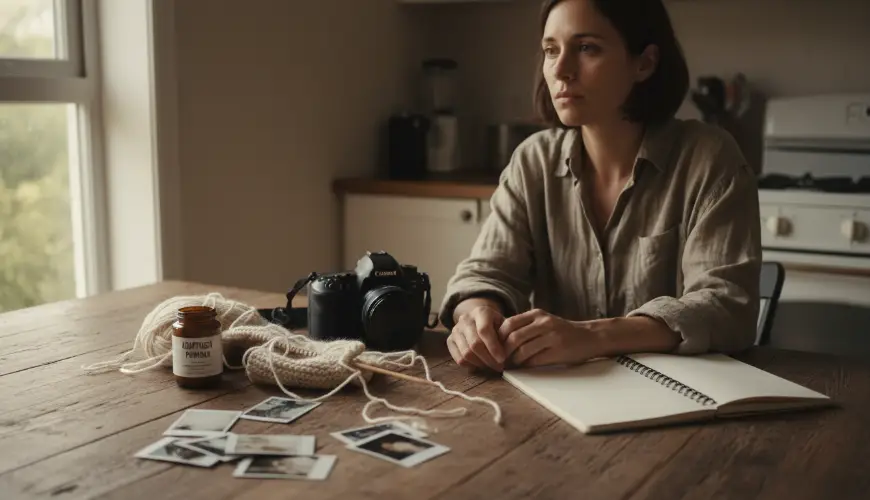
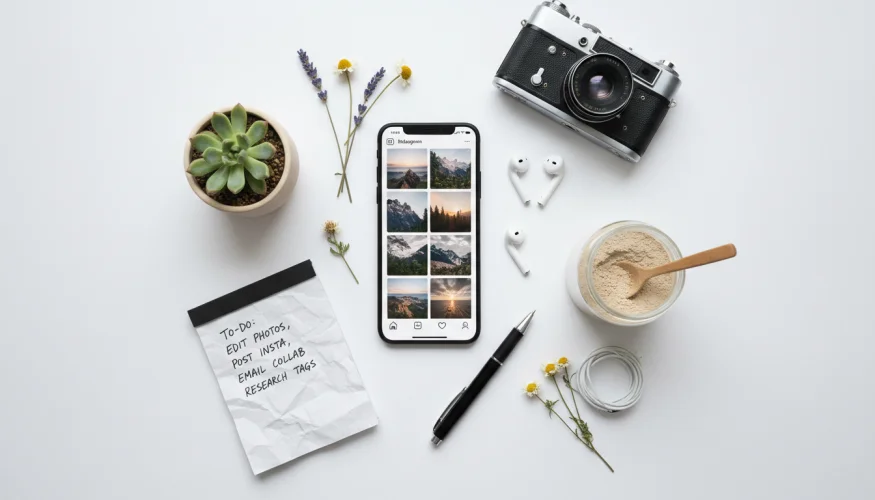
The story of Klára, a thirty-three-year-old graphic designer from Brno, is a good example of how imperceptibly hobby burnout occurs. Three years ago, she started photographing nature as a way to switch off from the computer and get outside. At first, she enjoyed everything – waking up early at dawn, finding interesting angles, exploring light. Then she created an Instagram profile. Followers grew, comments praised her work, friends encouraged her to shoot more. Soon, a weekend trip became a mandatory content production session, and the joy of silence in the forest with a camera in hand turned into a chase for the "perfect shot." Today, Klára doesn't touch her camera. She says photography stopped being fun the moment she started shooting for others, not for herself.
This mechanism is well described in psychology as the "overjustification effect." When we start receiving an external reward for an activity that intrinsically engaged us – whether in the form of likes, money, or recognition – the brain gradually reassesses the motivation. Instead of "I do it because I enjoy it," the thought becomes "I do it because I have to." Research in behavioral psychology, such as studies by Deci and Ryan, shows that external motivation can undermine intrinsic motivation over time, even for activities that originally brought pure joy.
Hobby burnout doesn't only come when a pastime becomes a side income or a public activity on social media. It can just as easily arrive when someone sets overly high standards for themselves – when a runner stops running for pleasure and starts obsessively tracking every kilometer, every minute, every heartbeat. Or when a knitter who began as a way to care for their hands and mind starts rushing to finish Christmas gifts for the whole family. The pressure doesn't have to come from outside. Very often, we create it ourselves.
It's also important to distinguish between natural fatigue and genuine burnout. Fatigue from a hobby is temporary – a break, rest, or change of scenery is enough. Burnout is a deeper and longer-lasting state, in which the very thought of a favorite activity triggers aversion, anxiety, or indifference. If someone realizes they've been avoiding something that used to fulfill them, and that this has been going on for weeks or months, it's time to reflect.
The culture of achievement that permeates modern society also plays a role. We live in an era when people are expected to be productive even in their free time – to profit from their hobbies, develop themselves, build a personal brand, or at least "get something out of it." Social media amplifies this pressure further. We see perfectly curated profiles of people who seemingly effortlessly paint, cook, exercise, and still look great. Comparison is natural, but in the context of hobbies it is particularly insidious – because it undermines precisely that fragile intrinsic motivation that keeps the joy of a hobby alive.
Signals That Shouldn't Go Unnoticed
So how do you recognize that hobby burnout is approaching? It's not always a dramatic turning point. It's more often a gradual change that a person doesn't even notice at first. They stop looking forward to activities that used to energize them. Instead of joyful anticipation, a sense of obligation or even anxiety sets in. The quality of the experience diminishes – even when engaging in the hobby, thoughts wander elsewhere; the body is present, but the mind is not. A feeling of guilt may arise for "not keeping up" or "not doing enough." And finally comes avoidance – procrastination, excuses, complete abandonment.
Writer and psychologist Mihaly Csikszentmihalyi, author of the concept of "flow" – the state of complete immersion in an activity – says: "The best moments in our lives are not the passive, receptive, relaxing times... The best moments usually occur when a person's body or mind is stretched to its limits in a voluntary effort." This state of flow is precisely what hobbies ideally provide. And burnout is exactly its opposite – a state where the tension is present, but the joy and meaning are absent.
The good news is that hobby burnout is not permanent and there is a way out. It does, however, require conscious steps and a willingness to reassess one's relationship with the activity – even at the cost of temporarily setting it aside.
The first step is taking a break without guilt. Allowing yourself a pause is surprisingly difficult for many people, because burnout is often accompanied by a sense of failure. "How can I stop when I used to enjoy this?" But a pause is not capitulation – it is a necessary part of recovery. Just as muscles need rest after intense training, creative or emotional energy also needs time to replenish.
The second key step is returning to the roots – reminding yourself why the hobby started. What was originally appealing about it? What feeling did it bring? It sometimes helps to intentionally shed all external pressures and return to an amateur approach – without an audience, without goals, without evaluation. Taking photos just for yourself and not showing them to anyone. Baking simply because the smell of fresh bread brings joy, not so that the recipe can be shared online.
A third option is consciously setting boundaries around the hobby. If the pastime has become a side income or a public activity, it can help to clearly separate the "work" and "fun" parts – setting aside time to engage in the hobby purely for enjoyment, without any output or expectation. The boundary between work and play is not a luxury – it is a necessity.
Taking care of overall wellbeing also plays a significant role. Hobby burnout very often goes hand in hand with general exhaustion – lack of sleep, overload at work, or neglecting the body's basic needs. It's no coincidence that during the most stressful periods, people stop doing the things they enjoy. An overloaded brain doesn't have the capacity for joy. That's why caring for sleep, movement, nutrition, and mental health isn't just a cliché from the pages of wellness magazines – it's the foundation without which any recovery is difficult to achieve. Products supporting a healthy lifestyle, from quality magnesium to adaptogens to ergonomic relaxation aids, can be a practical part of this recovery process.
If burnout relates to a hobby connected with creating – whether writing, painting, photography, or handicrafts – it can be refreshing to try a completely different form of the same activity. A photographer who has burned out on landscape photography may find new inspiration in street photography or portraiture. A runner who has lost enthusiasm for races may discover new meaning in trail running in nature without a stopwatch. A change of format can sometimes restore curiosity without having to abandon the hobby entirely.
There are also situations where it is healthy to simply end a hobby – at least for a longer period. Not every hobby has to last a lifetime. People change, their needs change, and what fulfilled us at twenty may not be what we need at forty. Accepting this change without guilt or a sense of lost identity is part of a mature relationship with one's own leisure time. Perhaps something new will come to fill the space – and perhaps that is exactly what was needed.
Hobbies should be a place of freedom, not another arena of performance and comparison. In an age when every aspect of life is measurable, evaluated, and put on display, perhaps the most courageous act is to do something simply because we enjoy it – without an audience, without a goal, without an outcome. Allowing yourself to be average, slow, or imperfect at something is paradoxically one of the best ways to maintain long-term joy in a hobby. And if that joy disappears for a time, it doesn't mean it has disappeared forever – it may simply need a little space to return.