
# Practical Guide to Organizing Cleaning Supplies
Everyone who has ever searched for a cloth behind the fridge, rummaged through the cabinet under the sink, or fruitlessly looked for the right sponge in a confusing jumble of bottles and sprays knows exactly what this is about. Cleaning itself is not exactly a popular activity – and when you add chaos among the products that are supposed to help, the result is precisely the opposite. Instead of relief comes frustration. Yet the solution is surprisingly simple: concentrate all cleaning products in one place and establish a system that works long-term.
Home organisation is a topic that has experienced a true renaissance in recent years. Not only thanks to popular methods such as KonMari or the Scandinavian approach to minimalism, but also because people are increasingly recognising the direct connection between an orderly environment and mental wellbeing. According to research published in the journal Personality and Social Psychology Bulletin, people living in cluttered environments have higher levels of cortisol – the stress hormone. In other words, disorder stresses us literally physiologically, even if we may not be aware of it.
And yet very few people systematically address the organisation of cleaning products. Most households operate on the principle of "wherever it fits, that's where it goes" – and the result is a situation where one spray ends up in the bathroom, another in the storeroom, a third under the sink, and nobody knows exactly what is actually in the house and what needs to be bought.
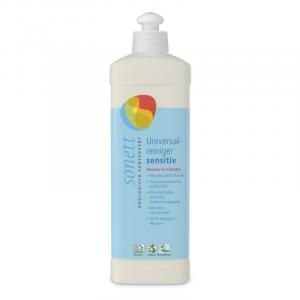
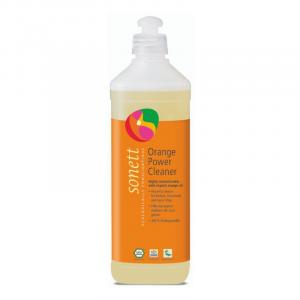
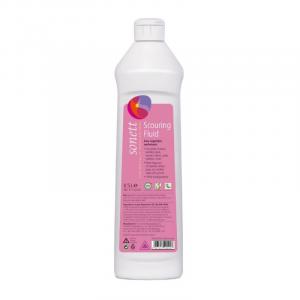
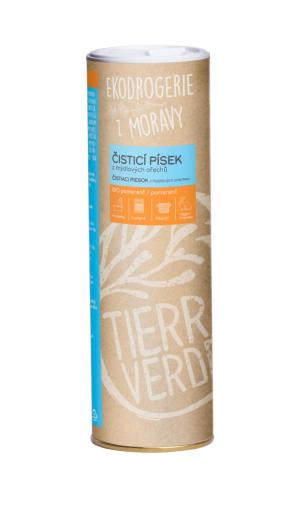
Try our natural products
Why it makes sense to keep everything together
Imagine a typical Wednesday afternoon. Jana returns home from work, sees that the kitchen counter needs wiping, and goes to get a cloth. The cloth is in the storeroom. The surface cleaner is under the sink. The sponge she thought was in the kitchen is actually in the bathroom. Within five minutes, Jana has made a trip to three different parts of the flat and only now can she begin the actual cleaning. Such a scenario is not an exception – it is the everyday reality of many households.
When, on the other hand, all cleaning products are concentrated in one place, not only time is saved, but also mental energy. You know exactly where to reach, what you have at home and what you are missing. Shopping becomes more efficient, because it is enough to look once at the "cleaning station" and the shopping list is clear. Moreover, situations are significantly reduced where a third bottle of glass cleaner is purchased simply because the previous one could not be found.
There is also an ecological dimension to this approach. When people have no overview of their supplies, they buy excessively, which leads to waste – both financial and environmental. A sustainable approach to the household begins with having an overview. If you know what you have, you buy only what you truly need, and you choose more consciously – for example, eco-friendly alternatives, concentrates, or products in recyclable packaging.
As organisational expert and bestselling author of The Life-Changing Magic of Tidying Up, Marie Kondo, says: "Order is not the goal, it is the tool that allows you to live the life you want." And this applies precisely to that seemingly dull corner with cleaning products.
How to practically organise cleaning products
Before one starts buying baskets, shelves, and organisers, it is important to take one crucial step: reviewing what is actually in the house. Pull everything out of the various cabinets, check expiry dates, discard duplicate products, and decide what is truly needed and what is not. Only then does it make sense to think about how to store it all.
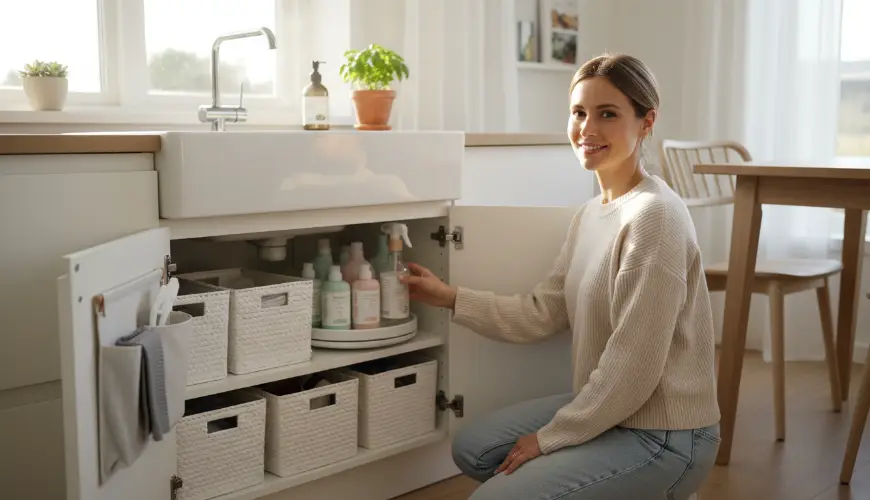
The basic principle of effective organisation of cleaning products rests on several simple pillars. The first is concentration in one place – ideally the cabinet under the kitchen sink, a storeroom, or a dedicated shelf in the utility room. The second pillar is categorisation: floor products separately, bathroom products separately, kitchen products separately, and so on. The third pillar is visibility – everything should be clearly visible so that there is no need to rummage and search.
A very practical helper is the rotating organiser, the so-called lazy Susan, which allows comfortable access even to products stored at the back. Similarly useful are hanging organisers for cabinet doors, which utilise space that would otherwise remain unused. For families with children, it is also important to think about safety – chemical products should be stored out of reach of small hands, ideally with a door lock.
A separate chapter is the cleaning trolley or bucket, which allows the most frequently used products to be carried along during cleaning. This approach is particularly popular in households with multiple floors or larger flats, where carrying individual products from place to place would otherwise take unnecessarily long. It is enough to have a basic set prepared – a universal cleaner, a microfibre cloth, a sponge, and a glass cleaner – and cleaning becomes a significantly smoother affair.
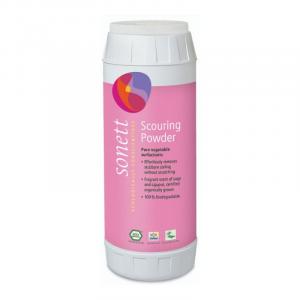
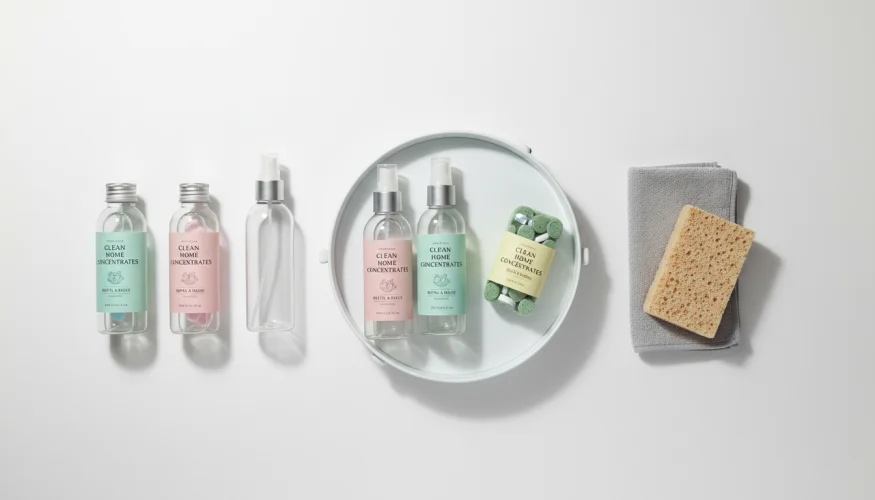
An interesting trend is also the shift towards concentrated or solid cleaning products, which save both space and packaging. Instead of five large plastic bottles, a few small tablets or concentrates suffice, which are diluted with water directly in the bottle. This is not only more practical in terms of storage space, but also more environmentally friendly. Such products can be found, for example, in the range of ecological cleaning products at Ferwer.cz, which specialises in sustainable alternatives for the modern household.
Long-term sustainability of the system
The greatest challenge in organising anything in the household is not the introduction of the system itself, but maintaining it. How many times has it happened that someone enthusiastically organised the entire pantry over the weekend, bought beautiful transparent containers and colourful labels – and three weeks later everything was back in its original chaos?
The key to long-term functionality is the simplicity of the system. The more complex the rules, the more likely they are to fall apart at the first sign of rush or fatigue. The ideal system is one that even a tired person can maintain after a demanding working day. This means that every product has a clearly defined place and returning it to that place takes no more than a few seconds.
Regular but undemanding maintenance also helps. It is enough to once a month – perhaps when shopping – take a brief look at the supplies, check what is running low, and replenish as needed. Such a "mini review" takes five minutes and prevents the situation where someone discovers mid-cleaning that they are running out of floor cleaner.
Another factor is involving the entire household. If only one person knows the system, it is doomed to collapse during the first extended absence or illness. It is therefore important that all members of the household know where everything is and where it belongs. For children, it also develops a sense of order and responsibility – and that is an investment that pays off in the long run.
It is worth mentioning that organising cleaning products is also an opportunity to reflect on which products we actually use. Switching to ecological cleaning products not only reduces the chemical burden on the household, but also simplifies the entire system – many ecological products are multi-purpose, so instead of ten different specialist preparations, two or three universal ones suffice. Fewer products means less chaos and easier organisation. Information about the composition and effects of common cleaning products on health and the environment can be found, for example, on the website of the National Institute of Public Health, which regularly publishes relevant recommendations for consumers.
It is also interesting to observe how the approach to cleaning in general is changing. Even ten years ago, it was perfectly normal to have dozens of different products at home – a different one for every surface, a special preparation for every room. Today, more and more people are transitioning to the philosophy of "less is more", which is reflected not only in the choice of products, but also in the way they think about cleaning. Cleaning is ceasing to be perceived as an endless series of individual tasks and is becoming part of a conscious approach to the household and life as a whole.
Organising cleaning products in one place is therefore not just about practicality and saving time – even though these benefits are entirely real and not insignificant. It is also about how we feel in our house or flat, how much our daily routine exhausts us or, conversely, energises us. A well-organised household is the foundation for a calmer mind – and that is a value that cannot be overestimated. When Jana next comes home tired from work and decides to clean the kitchen counter, she will reach to one place, take what she needs, and be done in two minutes. No searching, no frustration – just a clean counter and the feeling of having the situation under control.