

Movement according to body type is the key to lasting results
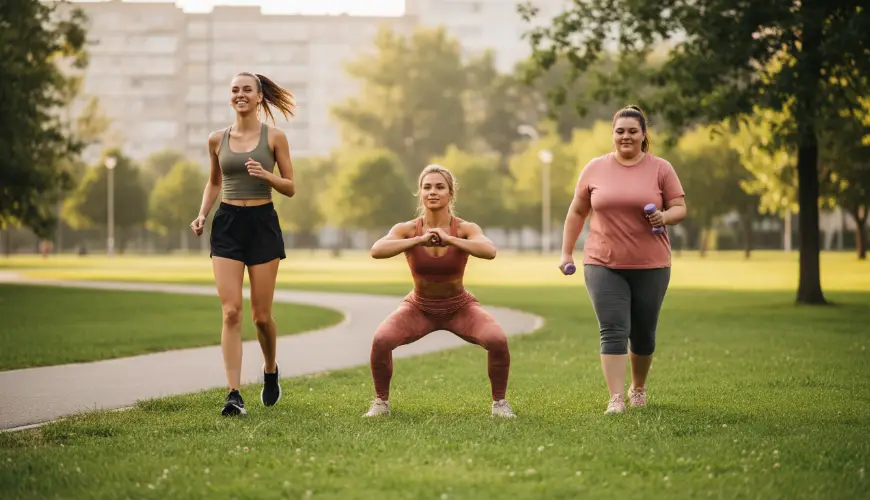
Every person is different – that may sound like a cliché, but in the world of fitness and movement, it's a fundamental truth that is still far too often underestimated. Just look at social media or any fitness magazine: everywhere you'll find "guaranteed" training plans that supposedly work for everyone. But reality tells a different story. What brings results for one person can be a waste of time for another – or even a path to injury.
Imagine two friends who decide to start exercising together. They both attend the same yoga class, both buy the same sports equipment, both try just as hard. After three months, one is full of energy, feeling stronger and more flexible. The other is struggling with knee pain, feeling frustrated, and telling herself that exercise simply "isn't for her." In reality, though, exercise isn't the problem – it just doesn't suit her body, her body type, and her physiological needs.
Try our natural products

Why Body Type Matters
The science of human body types reaches far back into history. American psychologist and physician William Herbert Sheldon introduced the theory of somatotypes in the 1940s, dividing human bodies into three basic categories: ectomorph, mesomorph, and endomorph. Although this theory has faced criticism and oversimplification, modern sports science still draws on it – naturally with much greater nuance and an understanding that most people are a combination of multiple types.
The ectomorph is a body type that tends to be naturally slim, with narrower shoulders, longer limbs, and a faster metabolism. Such people tend to have difficulty gaining muscle mass, and their bodies handle long endurance activities better than strength training with heavy weights. The endomorph, on the other hand, has a wider frame, more pronounced fat tissue reserves, and a slower metabolism. For this body type, activities that combine cardiovascular exercise with strength training are suitable, with consistency and proper intensity being key. And then there is the mesomorph – a naturally athletically built person who builds muscle relatively easily and responds well to various types of training. Even they, however, are not immune to poor choices in physical activity.
Of course, this classification is a simplification of a complex reality. As the American Council on Exercise points out, most people don't fall purely into one category but exist on a spectrum between them. Nevertheless, this basic understanding of one's own body can be the first step toward making movement bring real results and joy – rather than frustration.
It is also important to mention that body type is not just about appearance. It's about the entire physiology – about how the body processes energy, how quickly it recovers, how it responds to different types of stress, and what kind of movement naturally supports musculoskeletal health. A person with naturally hypermobile joints will have completely different needs than someone with a rigid connective tissue system. A person with shorter Achilles tendons will have a different experience with running than someone who is anatomically built for fast sprints.

How to Adapt Movement to Your Body
Adapting physical activity to your own body doesn't mean you have to give up your favourite sports or activities. It's more about understanding how to modify, supplement, or combine a given activity so that it benefits your particular body as much as possible.
Take running, for example – one of the most popular physical activities of all. For slimmer ectomorphic types, long-distance endurance running can be a natural choice that suits the body well. But for endomorphic types with higher body weight, intense running on hard surfaces can place excessive strain on the joints, particularly the knees and hips. This doesn't mean these people can't run – but it might be more appropriate for them to start with walking, nordic walking, or running on softer surfaces, or to combine running with swimming or cycling, which are gentler on the joints.
The same applies to strength training. Mesomorphic types respond to it naturally well and see results relatively quickly. Ectomorphs need more rest between training sessions and less volume but higher intensity to stimulate muscle growth. Endomorphs, in turn, benefit from a combination of strength training and aerobic exercise, with regularity and long-term consistency being key for them.
As sports scientist and author Nate Miyaki says: "The best training plan isn't the most modern or the most popular – it's the one that matches your body, your lifestyle, and your goals." This idea is simple, yet in practice very few people actually follow it.
Also worth mentioning is the influence of sex and age on the suitability of physical activity. Women generally have a wider pelvis, which affects the biomechanics of the knees during running or squats, and are more susceptible to certain types of injuries such as anterior cruciate ligament overload. Men, on the other hand, tend to neglect flexibility and mobility, which can lead to chronic back pain. Older people need more focus on balance, coordination, and functional strength than on maximum performance. These differences are not limitations – they are information that helps create a truly effective movement plan.
An interesting area of research is also the relationship between muscle fibre type and the suitability of physical activity. People with a predominance of fast-twitch muscle fibres (type II) naturally excel in explosive sports such as sprinting, weightlifting, or martial arts. Those who have more slow-twitch muscle fibres (type I) are built for endurance activities such as marathons, triathlons, or long-distance swimming. Research published in the Journal of Applied Physiology repeatedly shows that training matched to the dominant muscle fibre type yields significantly better results than universal approaches.
A practical tool for better understanding your own body can be a consultation with a physiotherapist or certified personal trainer who performs a functional movement assessment. This assessment reveals any imbalances, mobility restrictions, or weak points that could lead to injury. Based on this information, a tailor-made movement plan can be created – not copied from the internet.
The type of nervous system and the overall constitution of the organism also play an important role. People with a dominant sympathetic nervous system, who are naturally more "wired" and stressed, may paradoxically benefit more from calmer physical activities such as yoga, tai chi, or swimming, which help regulate the body's stress response. Conversely, people with a naturally calmer nervous system may need more intense stimuli to feel activated and energised.
The impact of movement on mental wellbeing is yet another dimension that is often overlooked when choosing an activity. Introverted people may prefer solo activities such as running, swimming, or cycling, while extroverts draw energy from group classes, team sports, or dance training. Psychological wellbeing during movement directly influences motivation and long-term sustainability – and without sustainability, there are no results.
Individual Approach as the Foundation of Truly Healthy Movement
It is time to stop believing in universal recipes for movement. No exercise, no training plan, and no movement method is automatically right for everyone – regardless of how convincingly it is presented in advertising or on social media.
The key to movement that truly works is self-knowledge. This includes understanding your own physical constitution, but also your lifestyle, health condition, psychological needs, and personal goals. Some people want to lose weight, others want to build muscle, others are looking for a way to manage chronic stress, and still others simply want to be fit and healthy well into old age. Each of these goals requires a different approach – and each body modifies that approach further.
A useful starting point can be, for example, a questionnaire or body composition test offered by modern fitness centres or sports physicians. These tools can reveal not only body type, but also muscle mass, bone density, metabolic age, and other parameters that help create a truly personalised movement plan.
For those who enjoy exercising at home or in the outdoors, there are a wide range of apps and online tools that allow training to be personalised based on input data about the body, goals, and available equipment. Even this approach is better than blindly copying generic plans.
It is worth remembering that movement should never be a punishment for a poor diet or a way to compensate for a lifestyle. It should be a natural part of everyday life – joyful, sustainable, and tailored to the individual. When movement becomes part of one's identity and brings genuine pleasure, it ceases to be an obligation and becomes a privilege.
Every body has its own rhythm, its own strengths, and its own limitations. Respecting these specifics is not a weakness – it is the smartest thing a person can do for their health. And perhaps this is precisely where the true path to movement begins – one that fulfils, strengthens, and delivers lasting results, not because it is popular, but because it is yours.