

# Why Swimming Is the Gentlest Sport for Your Joints Swimming is one of the few physical activities
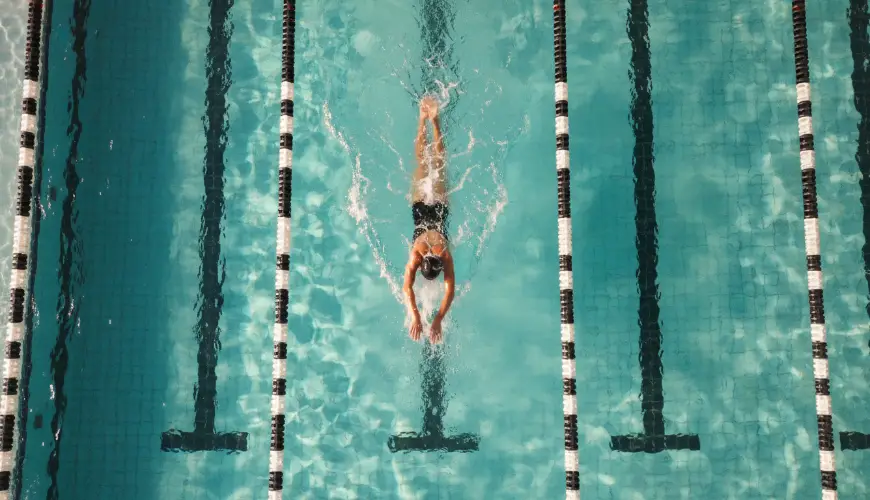
Is there a sport that simultaneously builds muscle, improves fitness, clears the mind, and yet places almost no strain on the joints? Yes, there is – and you probably know it from childhood. Swimming is one of the most versatile physical activities, suitable for virtually everyone, regardless of age, body weight, or health limitations. And yet it is still underestimated as a "boring" alternative for seniors or people recovering from injuries. The opposite is true.
In recent years, swimming has been gaining more and more fans among active athletes looking for ways to supplement their training without the risk of overloading the musculoskeletal system. Rehabilitation doctors recommend it to patients recovering from joint surgery, physiotherapists include it in treatment plans for people with arthritis, and coaches use it as active recovery for elite athletes. What is behind this? The answer is surprisingly simple and has to do with basic laws of physics.
Try our natural products





The physics that protects your joints
When a person enters the water, their body immediately becomes subject to buoyancy – a physical phenomenon that effectively reduces the apparent weight of the body. According to insights from the Cleveland Clinic, when standing in water up to the waist, a person bears approximately 50% of their body weight, and when standing in water up to the neck, only about 10%. This means that the joints – knees, hips, ankles, and spine – are subjected to a fraction of the load they would have to bear during walking, running, or exercising in a gym.
When running, the joints of the lower limbs receive a force equivalent to several times the body weight with each impact. Expert studies repeatedly confirm that the impact load during running can reach up to three times the body weight, depending on the surface and technique. With swimming, this value is practically zero. No impacts, no shocks, no sudden changes of direction that would force joints into extreme positions.
Water also naturally provides resistance from all sides, which forces the muscles to work evenly and smoothly. Movements are slow and controlled, not jerky and abrupt. This natural resistance of the aquatic environment also means that muscles are strengthened without the need for weights or machines. As the famous American swimmer Michael Phelps once remarked: "Swimming is the only sport where you learn to breathe and at the same time stop thinking about anything else." And it is precisely this combination of physical ease on the joints and overall mental relaxation that makes swimming an exceptional discipline.
For people with osteoarthritis or rheumatoid arthritis, swimming is literally a lifesaver. Movement in warm water releases muscle tension around the joints, improves their blood supply and range of motion, while not causing the pain that would otherwise discourage people from exercising. The World Health Organization and the Czech Rheumatological Society regularly recommend aquatic physical activities as part of comprehensive therapy for musculoskeletal conditions.
Swimming as a full-body workout
What makes swimming exceptional compared to other joint-friendly sports, such as yoga or cycling, is its complexity. Swimming engages over 90% of the muscles in the entire body – all in a single training session, without the need to change exercises or machines. During freestyle, the muscles of the shoulders, back, arms, abdomen, and legs work in a coordinated rhythm. Breaststroke intensively strengthens the chest muscles and inner thighs. Backstroke is excellent for strengthening the back muscles and improving posture. Butterfly – technically the most demanding style – represents explosive strengthening of the entire core.
Take, for example, forty-three-year-old accountant Petra, who suffered from chronic lower back pain and a developing herniated disc due to her sedentary job. Her orthopaedist advised her to avoid running, aerobics, and free weight training. Petra started going to the pool twice a week – initially for just 20 minutes, gradually extending the length of her workouts. After three months, not only did the pain disappear, but Petra lost four kilograms and felt more energetic than she had in years. Her story is not an exception – thousands of people who came to swimming through health limitations and stayed with it out of personal conviction share similar experiences.
Swimming also contributes significantly to cardiovascular health. Regular swimming lowers blood pressure, improves lung capacity, and strengthens the heart. Research published in the academic journal International Journal of Aquatic Research and Education shows that swimmers have, on average, a lower risk of cardiovascular disease than people with sedentary lifestyles, while suffering fewer musculoskeletal injuries than runners or players of contact sports.
The impact on mental health is also significant. The rhythmic movement in the water, the focus on breathing, and the complete isolation from the outside world (no phone, no noise) induce a state similar to meditation. Swimming demonstrably reduces cortisol levels – the stress hormone – and promotes the production of endorphins. Many regular swimmers describe the pool as a place where they "switch off their mind" and return to everyday life with fresh energy.
How to get started – a practical guide for complete beginners
The decision to start swimming is easy. Overcoming the first practical obstacles is a little harder – but definitely not impossible. The biggest mistake beginners make is throwing themselves into the pool with excessive ambition, becoming exhausted after two lengths, and coming away with a sense of failure. Swimming looks easier than it actually is – and this is especially true for people who do not know how to breathe correctly or have not mastered the basic technique.
The first step should be an honest assessment of your own level. Those who cannot swim or swim very poorly should consider an adult swimming course. In the Czech Republic, there is a fairly wide range of such courses available – most larger cities have swimming schools or clubs that regularly organise beginner courses. There is nothing to be ashamed of – learning to swim as an adult is a brave step that your body and joints will appreciate for decades to come.
For those who have mastered the basics, several important principles apply:
- Start slowly – the first training sessions should not exceed 20–30 minutes. The goal is not to break a record, but to establish a regular habit.
- Focus on technique – poor swimming technique can cause overloading of the shoulders or cervical spine. It is worth investing in a few sessions with a coach or at least watching quality instructional videos.
- Alternate swimming styles – each style engages different muscle groups and prevents one-sided overloading.
- Use training aids – a kickboard, swimming belt, or fins are excellent tools for both beginners and advanced swimmers when working on specific areas.
- Stay hydrated – in the water, you do not visibly sweat, but the body still loses fluids. Drinking before and after training is essential.
The frequency of training depends on the goal. For maintaining fitness and joint health, two to three times a week for 30–45 minutes is sufficient. Those who want to actively lose weight or prepare for competitions can train up to five times a week – swimming is gentle enough that the body can handle a high training frequency without a significant risk of overloading.
Choosing the right place to swim also plays a role. An indoor pool with temperature-controlled water is the ideal choice throughout the year. Outdoor lidos or natural lakes are a great summer alternative, but you need to account for variable water temperatures and less controlled conditions. For those seeking an even more intense experience, there is cold-water swimming – a discipline with growing popularity that brings additional health benefits, but requires gradual acclimatisation and caution.
An important part of getting started is also choosing the right equipment. High-quality swimwear made from chlorine-resistant material, well-fitting goggles to prevent water from getting in, and a silicone cap are the foundation of a comfortable training session. Cheap equipment from holiday shops typically lasts only a few pool visits, so it is worth investing in sports brands specifically focused on swimming.
Swimming is also one of the few sports that can be practised practically throughout one's entire life. While runners must slow down with age or switch to shorter distances due to joint wear, swimmers can maintain a high training intensity even in their seventies or eighties. It is no coincidence that masters swimming – competitions for competitors over the age of 25 – is one of the fastest-growing categories in the entire world of aquatic sports.
For parents with children, swimming is also an opportunity for shared physical activity. Teaching a child to swim is one of the most valuable things parents can give them – it is a skill that protects them from drowning, opens the door to other water sports, and builds a positive relationship with physical activity from an early age. According to recommendations from the World Health Organization, children aged 5–17 should have at least 60 minutes of moderate-intensity physical activity daily – and swimming meets this requirement with ease.
Whether a person is looking for a way to recover from an injury, lose weight without joint pain, manage the stress of modern life, or find a sport they can stick with for their entire life – swimming answers all of these needs at once. All it takes is putting on a swimsuit, jumping into the water, and getting started. Your joints will be grateful from the very first moment – and a few weeks later, the rest of your body will be too.