

# How to Cook Even on Days When You Don't Feel Like It
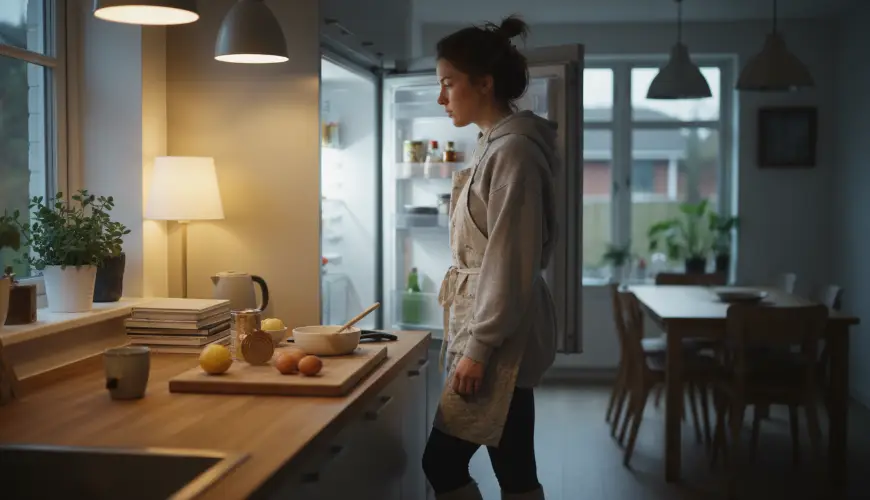
Everyone knows the feeling. You come home after a long day, toss your bag in the hallway, and open the fridge with a quiet hope of finding some inspiration. Instead, you're greeted by half an onion, a yogurt just past its best-before date, and leftover rice from Tuesday. The desire to cook? Zero. Energy? None. And yet you know you need to eat something – ideally something that won't wreck your health or your wallet.
A lack of motivation to cook is not a weakness or laziness – it's a completely natural state experienced by the vast majority of people, even those who otherwise love cooking. The pace of life, work-related stress, emotional exhaustion, or simply the monotony of daily routine can reliably kill any culinary motivation. The question, then, is not whether you feel like cooking, but how to deal with it sensibly without ending up with a bag of crisps or an overpriced food delivery.
Try our natural products





Why we don't feel like cooking – and why that's okay
Psychologists speak of a phenomenon called "decision fatigue." Throughout the day, the average person makes hundreds of minor and significant decisions, and by evening, the brain simply doesn't have the capacity to enthusiastically plan a three-course meal. It's a biological response, not a character flaw. Add to that the fact that cooking involves an entire chain of tasks – planning, shopping, prepping, cooking, washing up – and it becomes clear why this task can feel insurmountable.
It's also important to recognise that the motivation to cook fluctuates like the weather. Some days you happily tackle a complex recipe and invite friends over. Then there are weeks when even boiling pasta feels like an achievement worthy of a medal. Both are normal. The problem only arises when a lack of motivation leads to persistently unhealthy eating habits or unnecessary spending on food delivery. The goal, therefore, is not to force yourself into enthusiastic cooking, but to find smart strategies that work even on the least motivated days.
As writer and food critic Michael Pollan once noted: "Cooking is one of the most human acts there is – but nobody said it has to be a celebration every time." And this thought can be liberating. Cooking doesn't have to be an experience, a challenge, or a creative act. Sometimes it's enough for the food to be done, warm, and nutritious.
Strategies that actually help
One of the most effective methods for overcoming resistance to cooking is reducing the mental burden of decision-making. This means thinking ahead about what to cook before the moment of crisis arrives. The habit known as meal planning – planning your meals for the entire week in advance – may sound tedious, but in practice it can transform chaotic evenings into relatively calm affairs. You don't need to plan every bite. It's enough to know that Tuesday means soup, Wednesday means pasta, and Thursday means leftovers.
Closely linked to planning is smart shopping. Having a stock of basic ingredients at home – pasta, legumes, tinned tomatoes, eggs, quality olive oil, various spices – means that even on days when you have absolutely no motivation, you can put together something edible and nutritious in twenty minutes. You don't need a fridge full of fresh vegetables that will spoil anyway. A few reliable staples you can improvise with is all it takes.
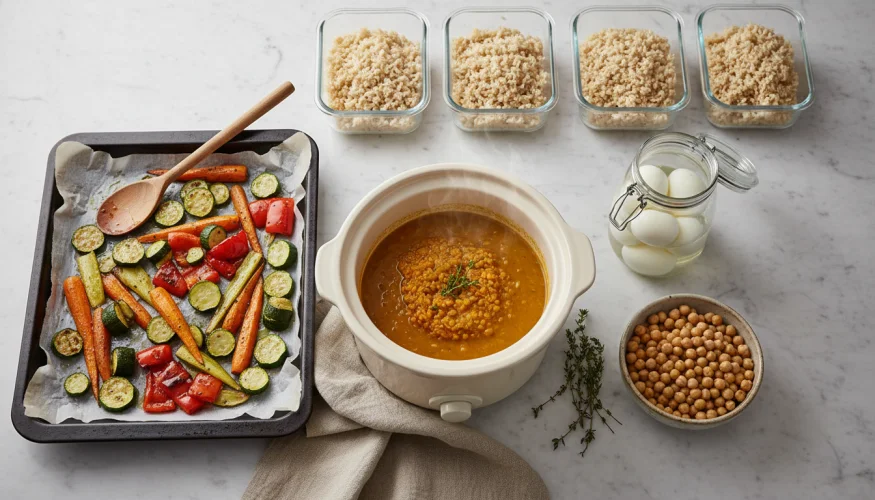
Another approach that many people swear by is so-called batch cooking – cooking larger quantities of food at once, usually at the weekend, and eating it gradually throughout the week. You make a big pot of lentil soup or chicken broth, roast a tray of vegetables, cook a kilogram of rice – and suddenly you have the foundation for three or four different meals that just need a quick reheat or a few additions. This approach works particularly well for people who have minimal energy during the week but can enjoy cooking a little at the weekend.
Take Markéta, for example, a secondary school teacher from the Central Bohemian Region. Every Friday evening she cooks larger batches of food – she sets her slow cooker going with legumes, roasts some vegetables, and prepares a supply of hard-boiled eggs. Monday through Thursday she manages without a single moment of panic in front of the open fridge, because she always knows what to reheat. She says it costs her an extra hour and a half per week, but saves her dozens of minutes every evening – and above all, that nerve-wracking uncertainty about what to have for dinner.
How to simplify cooking without compromising on quality
One of the biggest mistakes people without the motivation to cook make is believing that simple equals unhealthy. The opposite is true. There are plenty of quick, nutritious meals that require neither specialist knowledge nor hours in the kitchen. Scrambled eggs with vegetables, wholegrain bread with avocado and a hard-boiled egg, lentils with carrot and cumin, chickpea salad with olive oil and lemon – all of these can be prepared in fifteen to twenty minutes, and the result is a proper meal you need not be ashamed of.
Quality convenience products and pre-prepared ingredients can also be a great help. There's no shame in buying washed and chopped vegetables, a tin of chickpeas instead of dried ones, or ready-made stock in a carton. The goal is to get food on the table, not to demonstrate culinary prowess. In countries like Japan or Spain, it's perfectly common to buy high-quality convenience products and simply combine them – and nobody considers it a failure.
Changing your environment can help too. If the kitchen puts you off at a particular moment, try putting on your favourite music or a podcast that you otherwise save just for this activity. The brain then begins to associate cooking with something pleasant, and the resistance gradually diminishes. It's a simple psychological trick, but it works surprisingly reliably.
Websites such as BBC Good Food or the Czech Apetit Online offer recipe sections specifically filtered by preparation time – look for recipes that take 20 or 30 minutes. These categories are a goldmine for days when you want to cook something decent but don't have the capacity to wade through complicated instructions.
It's also crucial to reconsider what cooking actually means. Czech culture carries a deeply ingrained idea that a proper meal must be hot, cooked, and ideally made up of several components. In reality, however, a nutritionally valuable and tasty meal can just as well be a cold salad, a bowl of yogurt with fruit and nuts, or quality wholegrain bread with good cheese and vegetables. Stopping punishing yourself for food not being "cooked" in the traditional sense is a liberating step for many people.
It's also worth mentioning that investing in quality kitchen equipment can paradoxically reduce resistance to cooking. A sharp knife, a good frying pan, a functional pot – all of these make working in the kitchen physically more pleasant and faster. A blunt knife you have to wrestle with when chopping a carrot contributes to frustration far more than we realise. Similarly, a kettle, a rice cooker, or a stick blender can cut food preparation time to a fraction of what it would otherwise take.
For those looking for inspiration for sustainable, healthy cooking without unnecessary stress, an interesting resource may also be the Harvard T.H. Chan School of Public Health, which publishes accessible guides to healthy eating focused on simple, balanced meals made from natural ingredients.
Finally, it's worth remembering that the motivation to cook can be cultivated to some extent. Not overnight and not through willpower alone, but gradually, through small positive experiences. One successful quick recipe that pleasantly surprises you. One ingredient you've never tried before that catches your interest. One dinner after which you feel good – physically and mentally. These small moments accumulate and slowly transform your relationship with cooking from an obligation into something that brings satisfaction, at least occasionally.
Cooking without motivation isn't about becoming a master chef overnight. It's about finding your own system, setting reasonable expectations for yourself, and stopping seeing cooking as a performance that has to be perfect every time. Motivation comes and goes – but good food on the table doesn't have to depend on whether you're having a good day or not.