

# Walking vs. Running and Their Impact on Joint Health

Anyone who has ever decided to start exercising has faced a similar question: start walking, or go straight to running? It might seem like a trivial decision, but it can have a fundamental impact on joint health. Both activities are among the most natural movements the human body knows, yet they differ significantly from each other – not just in pace, but primarily in the load they place on the knees, hips, ankles, and spine.
Let's take a real-life example: Jana, a forty-six-year-old accountant from Brno, decided to lose weight and improve her fitness after years of sedentary work. She read that running burns the most calories and immediately started running every day in her first week. After three weeks, she ended up with a painful tendon inflammation in her knee, and the doctor ordered her to rest. Almost everyone knows a similar story – either from someone around them or from their own experience. Yet all it would have taken was to start more slowly, literally.
Try our natural products



How the body reacts to every step
The key to understanding the difference between walking and running lies in the biomechanics of movement. When walking, the body always has at least one foot on the ground – this is the so-called double support phase, where body weight is transferred smoothly and gradually. The impact on the surface during walking corresponds to approximately 1 to 1.5 times body weight. In other words, a person weighing 70 kilograms loads their joints with a force of approximately 70 to 105 kilograms with every step.
Running works completely differently. During running, there is a so-called flight phase – a moment when both feet are in the air simultaneously. The body then lands on the ground with significantly greater force, which can reach 2.5 to 3 times body weight. For the same person weighing 70 kilograms, this means an impact ranging from 175 to 210 kilograms with every single landing. And since the average runner takes approximately 150 to 180 steps per minute, it's clear that joints must absorb an enormous amount of repeated impacts during an hour of running.
These numbers aren't speculation – they are confirmed by research published in the scientific journal Gait & Posture, which has long been dedicated to the analysis of human movement. Biomechanists have repeatedly measured the forces acting on the knee and hip joints during various types of movement, and the results consistently show that running brings significantly higher joint loading than walking.
From this, it might seem that walking is clearly better. But the truth is more complex and depends on many factors – from individual health status to movement technique to footwear selection.
Why running isn't necessarily harmful
Paradoxically, there are numerous studies showing that recreational runners suffer from knee osteoarthritis less than people who don't exercise at all. How is this possible? The cartilage in joints is nourished by synovial fluid, which is absorbed into it precisely during movement – like a sponge being squeezed and released. Regular, moderate loading therefore nourishes the cartilage and keeps it in good condition. Conversely, a long-term lack of movement leads to cartilage degeneration because it doesn't regenerate sufficiently.
"Movement is to joints what lubricant is to an engine – without it, things start to seize up," say orthopedists, who repeatedly point out that a sedentary lifestyle is more harmful to joints in the long run than sensibly dosed sport.
The problem, then, is not in running itself, but in how and when one runs. The greatest risk comes from increasing training volume too quickly, improper technique, poor footwear, or ignoring the signals the body sends. This is precisely why so many beginner runners end up injured – not because running is inherently dangerous, but because they overestimated their capabilities.
Experts from the American Academy of Orthopaedic Surgeons (AAOS) have long emphasized that the key factor is the gradual adaptation of the musculoskeletal system. Tendons, ligaments, and bones need significantly more time to adapt to loading than the cardiovascular system – the heart and lungs improve their fitness within weeks, while joint structures need months.
Walking as an underestimated form of exercise
On the other hand, walking is a significantly safer choice compared to running for the general population – especially for people who are overweight, older individuals, those returning from injury, or simply those who haven't exercised before. Low impact loading means that joints aren't exposed to extreme forces, while the body still receives a valuable movement stimulus.
Walking is far more effective than most people think. Regular brisk walking reduces the risk of cardiovascular disease, improves metabolism, supports mental health, and helps maintain a healthy weight. According to World Health Organization recommendations, adults should complete at least 150 minutes of moderate-intensity physical activity per week – and brisk walking meets this requirement.
Brisk walking means a pace of approximately 5 to 7 kilometers per hour, at which you become slightly breathless but can still comfortably talk. At this pace, the heart rate rises enough for the movement to bring health benefits, but the joints are nowhere near as intensely loaded as during running.
It's also interesting that in terms of energy expenditure per kilometer covered, the difference between walking and running isn't as dramatic as one might think. The body burns fewer calories per minute during walking, but for every kilometer covered (whether walked or run), the difference is smaller. So if a person walks 5 kilometers, they burn only slightly fewer calories than when running the same distance – it just takes them more time.
In practical terms, this means that for people whose primary goal is maintaining a healthy weight while protecting their joints at the same time, regular walking can be just as effective a strategy as running, with a substantially lower risk of injury.
What matters: individual factors
The answer to whether walking or running is gentler for a specific person cannot be given universally. It depends on a whole range of variables that need to be taken into account.
Body weight plays a crucial role – with every excess kilogram, joint loading during running increases significantly. People who are considerably overweight should therefore start their physical activity with walking and only transition to running after reaching an appropriate weight. Age and cartilage condition are another important factor: after forty, the regenerative capacity of cartilage slows down and joints become more susceptible to overloading. Existing joint problems, such as osteoarthritis or previous meniscus injuries, are a clear signal to consult a doctor before starting any more intensive exercise program.
Movement technique matters perhaps more than most people realize. Proper running technique – landing on the midfoot rather than the heel, a slight forward lean of the torso, relaxed arms – significantly reduces the impact forces acting on joints. Similarly, the type of surface one runs on affects the level of loading: a soft forest path is incomparably more favorable for joints than hard asphalt or concrete.
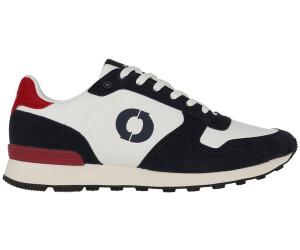
Footwear is an investment no one should skimp on. Quality running shoes with sufficient cushioning can absorb some of the impact energy and thereby protect joints. The same applies to walking – suitable footwear with good arch support and cushioning is the foundation of healthy movement.
Anyone who wants to start running while protecting their joints should consider the so-called run-walk method, in which intervals of running and walking are alternated. This method, popularized by American coach and ultramarathoner Jeff Galloway, allows for gradually building fitness while giving joints time to recover between impact intervals. Research shows that this method not only reduces the risk of injury but for many runners leads to better results than uninterrupted running – paradoxically because, thanks to regular rest, they can maintain a higher overall pace and complete longer training sessions.
The strength of muscles around the joints is another factor that cannot be overlooked. Strong thigh muscles, glutes, and calf muscles function as natural shock absorbers – they take on part of the load that would otherwise fall directly on the joint cartilage. This is why supplementary strength training, especially targeted exercises for the lower limbs and core, is an important part of joint care for anyone who regularly walks or runs.
Let's return for a moment to Jana from the introduction. After recovering, she returned to exercise – but this time differently. She started walking, gradually increased her pace, after three months she incorporated short jogging intervals, and within half a year she completed her first five-kilometer race without any problems. Her joints didn't hurt because her body was given time to adapt. Her story illustrates something that orthopedists and sports medicine doctors repeat over and over: the problem isn't in the movement itself, but in the pace at which we approach it.
Whether a person chooses walking or running, the most important thing is to listen to your own body, invest in quality footwear, work on movement technique, and increase the load gradually. Joints are designed for movement – they just need to be treated with reason and respect. And if you're not sure where to start, a consultation with a sports medicine doctor or physiotherapist is always a good first step – whether that step is slow or fast.