

# When Is Joint Cracking Normal and When Is It Not? Joint cracking is a very common phenomenon that

It sounds like a small crack, sometimes a loud pop, other times a quiet click. Joint cracking is a sound that almost everyone knows — whether during a morning stretch, after sitting at a computer for a long time, or simply when moving your hands. Some people deliberately cause this cracking because it brings them a sense of relief. Others are frightened by it and immediately wonder whether they are hurting themselves. Where does the truth lie?
The answer is not as simple as it might seem, and science has been grappling with it for a surprisingly long time. Just a few decades ago, there was a belief among doctors and laypeople alike that joints that crack are joints doomed to arthritis. Today we know that this belief is largely a myth — but with important caveats that are worth paying attention to.
Try our natural products



What is actually happening inside a joint?
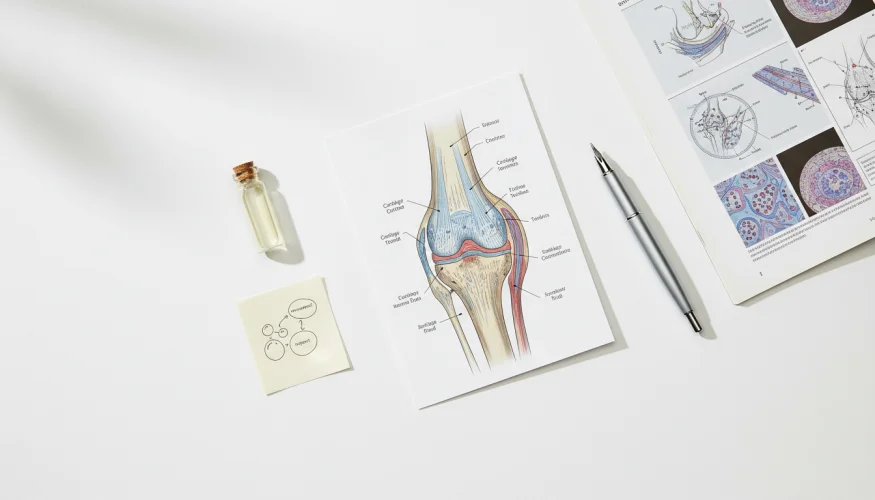
To understand cracking, it helps to picture how a joint works. Every joint is surrounded by a joint capsule containing synovial fluid — a lubricant that enables smooth movement of the bones. This fluid contains dissolved gases, primarily carbon dioxide, oxygen and nitrogen. When a joint is stretched or bent into a certain position, the pressure inside the capsule changes. The gases are rapidly released and form a small bubble — and it is the bursting of this bubble that produces the characteristic sound.
This phenomenon, technically known as cavitation, was the subject of scientific debate for decades. It was not until 2015 that a study published in the journal PLOS ONE provided convincing visual evidence using real-time MRI scans — and confirmed that the sound is produced at the moment the bubble forms, not when it collapses, as had previously been assumed. It is a small but fascinating detail that shows how complex even seemingly trivial bodily processes can be.
Joint cracking does not always have just one origin, however. In addition to cavitation, the source of the sound can also be the movement of tendons or ligaments over bony prominences — this type of cracking tends to be less loud but may repeat with every movement. And then there is cracking that is a genuine sign of a problem: coarser, painful, or accompanied by swelling.
It is precisely in making this distinction that the key to understanding when joint cracking is completely normal — and when it should prompt a visit to the doctor — lies.
When is cracking normal and when is it not?
Imagine a situation familiar to many office workers: after an hour of focused work at a computer, a person stretches, interlaces their fingers and tilts their head back — and a series of pops follows. An immediate sense of relief comes, as if the body has been "reset". Nothing hurts, movement is free, there is no swelling or redness. This is precisely the classic example of physiological cracking, which is completely harmless.
This conclusion was also supported by one of the most remarkable scientific experiments ever conducted in the field of joint medicine. American physician Donald Unger deliberately cracked the joints of only one hand over a period of 60 years — and throughout that time monitored whether any difference would develop between the two hands. The result? None. No arthritis, no damage, no difference in mobility. For this unusual personal study, he even received the satirical Ig Nobel Prize in 2009. His story became a symbol of how tenaciously a mistaken folk belief can survive even in the face of evidence.
Nevertheless, it would be wrong to claim that joint cracking is always without risk. There are situations in which a person should not simply dismiss sounds coming from their joints. Pain accompanying the cracking is the first and most important warning sign. Healthy joints crack without any uncomfortable sensation — if pain joins the sound, it may signal cartilage injury, inflammation or other structural damage.
An equally serious signal is swelling or redness around the joint. These symptoms indicate an inflammatory process that requires medical examination. Similarly, anyone whose joints begin to crack after an injury should take notice, as should anyone in whom cracking appears suddenly where it was not present before. Gradual restriction of mobility combined with regular cracking may be an early symptom of osteoarthritis — a degenerative joint disease that, according to the World Health Organization, affects more than 500 million people worldwide.
A special category is joints that crack constantly and with every movement. So-called crepitus — coarse, grating or grinding sounds — is typical of conditions in which the joint cartilage is damaged and bones rub against each other without adequate cushioning. This type of cracking differs markedly from the occasional pop and should definitely not be ignored.
Healthy joints are not a given
Although mild joint cracking in itself does not pose a health risk, it serves as a timely reminder of how easily we take the musculoskeletal system for granted — until it starts to hurt. Caring for joints is neither complicated nor costly, but it does require consistency.
Movement is fundamental. Joints are designed for movement, and synovial fluid performs its lubricating function best when the joint is used regularly. Long hours in one position — whether sitting at a desk or, conversely, standing — lead to stiffness and reduce the supply of nutrients to the cartilage. Regular stretching, walking or swimming are simple ways to help joints.
Nutrition plays a surprisingly large role. Omega-3 fatty acids, found for example in oily fish or flaxseed, have anti-inflammatory effects that can contribute to joint health. Vitamin D and calcium are essential for bone strength, while collagen — the basic building block of cartilage — can be supported by consuming foods rich in vitamin C or quality dietary supplements. As American rheumatologist Dr Nathan Wei has noted: "Joints are like a car — without regular maintenance, they wear out faster than necessary."
Body weight also plays an important role. Every extra kilogram means significantly greater load on the weight-bearing joints — the knees, hips and spine. Studies repeatedly show that even a modest reduction in weight has a measurable positive effect on joint pain and slows their degeneration.
The modern lifestyle presents joints with specific challenges. Working at a computer, long car journeys, lack of physical activity and an excess of processed foods — all of these are factors that burden joints subtly but persistently. It is no coincidence that musculoskeletal problems are today one of the most common causes of sick leave in the Czech Republic. According to data from the National Institute of Public Health, diseases of the musculoskeletal system have long ranked among the most widespread chronic conditions in the population.
An interesting area that has been attracting increasing attention in recent years is the influence of psychological stress on joints. Chronic stress raises the level of inflammatory substances in the body, which can also adversely affect joint tissues. Yoga, meditation or simple breathing exercises are therefore not merely fashionable trends, but have a real physiological basis as part of musculoskeletal care.
Sleep quality is also worth mentioning. During sleep, regenerative processes take place in which minor tissue damage is repaired — including damage to joint tissues. Chronic sleep deprivation disrupts this process and may contribute to faster joint wear.
When it comes to popular dietary supplements such as glucosamine and chondroitin, the scientific evidence is mixed. Some studies suggest their benefit in mild to moderate osteoarthritis, while others have not demonstrated a significant effect. Nevertheless, their use in combination with physical activity and a balanced diet is considered safe, and many people report subjective improvement. Before beginning any supplementation regimen, however, it is always wise to consult a doctor.
Joint cracking is therefore, in most cases, genuinely not a cause for panic. It is a natural physical phenomenon that accompanies joint movement and does not in itself cause damage to the joints. Far more important than the sound itself is the context — whether the cracking is painful, whether it is accompanied by other symptoms and whether it appeared suddenly or following an injury. The body has its own language, and joint cracking is just one of its many expressions. Learning to distinguish when it is an innocent manifestation of physiology and when it is a genuine warning is part of a responsible approach to health — and that is a skill that pays dividends throughout life.