

How to Keep Your Air Fryer Clean
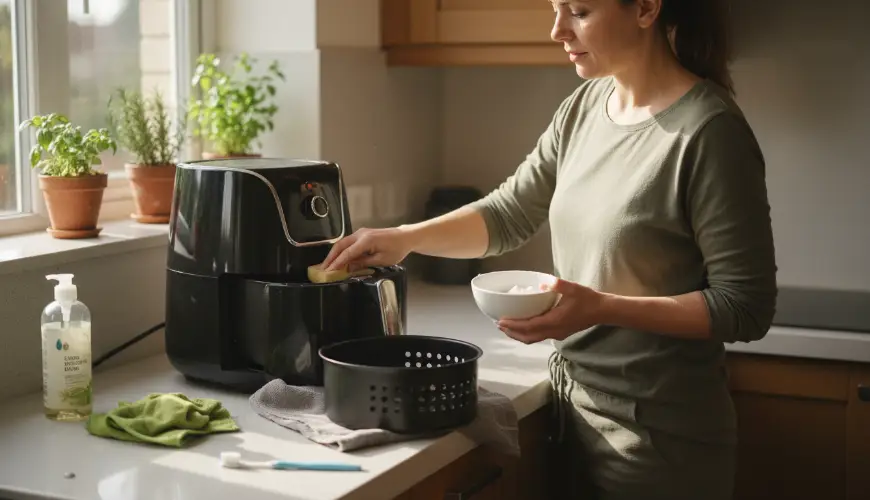
Over the past few years, the air fryer has secured a firm place in modern kitchens. It is easy to see why: it makes it possible to prepare favorite meals with significantly less fat, does so quickly, and produces surprisingly tasty results. But like any kitchen appliance, an air fryer requires regular, thorough care. In fact, it requires much more care than most users initially realize. Neglecting to clean the basket and heating coils can not only affect the taste of food, but also damage the appliance or even create a fire hazard.
Take Martina, a 34-year-old mother from the Central Bohemian Region, who bought an air fryer a year and a half ago. At first, she cleaned it carefully after every use, but over time she began skipping steps or putting off washing it until the next day. After a few months, she noticed that her food was starting to have a strange aftertaste, and when she looked at the heating coils, she found they were covered in a layer of burnt grease. Only then did she realize how important it was to clean the air fryer regularly—not just the basket, but the entire appliance.
Try our natural products


Why cleaning an air fryer is so important
An air fryer works by circulating very hot air around the food being cooked. A fan and a heating element, usually located at the top of the appliance, move the hot air around the food. This system is precisely why grease and food residue reach places you would not normally think of. Grease vapors rise and settle on the heating coils, the fan, and the appliance’s interior walls. If this layer of grime is not removed regularly, the burnt grease is reheated every time the appliance is used, releasing unpleasant odors and substances that certainly do not belong in the food being prepared.
Food safety and kitchen hygiene experts repeatedly point out that old, burnt grease is among the most common sources of food contamination in the home. According to recommendations from the Czech Agriculture and Food Inspection Authority, all surfaces that come into contact with food should be cleaned regularly and thoroughly. This is doubly important for air fryers, because high temperatures accelerate the oxidation of fat and the formation of potentially harmful compounds.
Besides hygiene, there is also a simple economic reason. An air fryer that is regularly maintained will last considerably longer. Neglecting to clean the heating coils, on the other hand, can cause them to overheat, shorten their lifespan, or, in extreme cases, cause the appliance to malfunction. That is bad news for both your wallet and the environment, since every appliance that ends up in a landfill prematurely places an unnecessary burden on the planet.
As the famous French chef Auguste Escoffier said: “A clean kitchen is the foundation of every good meal.” This idea applies just as much to professional restaurants as it does to appliances on a kitchen counter at home.
Before getting into specific methods, it is worth remembering one thing: cleaning an air fryer is not complicated, but it requires consistency and a little patience. The right method depends on which part of the appliance you are cleaning—the basket and inner pan can be cleaned differently from the heating coils or the exterior.
Cleaning the basket: the everyday foundation of proper care
The air fryer basket comes into direct contact with food, so it should be cleaned after every use. Most manufacturers now design baskets to be removable and easy to wash. Many models even specify that the basket is dishwasher-safe—convenient though this is, handwashing is gentler on the basket’s nonstick coating.
The basic process is fairly simple. After use, leave the air fryer to cool for at least ten to fifteen minutes. Never start cleaning a hot air fryer: you risk burning yourself, and a sudden change in temperature can also damage the basket’s nonstick coating. Once the appliance has cooled, remove the basket and drip tray and soak both in warm water with a little dish soap. A short soak—ten minutes is enough—makes it much easier to remove food residue and dried grease.
Use a soft sponge or cloth to clean the basket. Steel wool, metal brushes, and abrasive cleaning products are definitely unsuitable, as they would damage the nonstick coating, which is essential to the basket’s proper function. If dried or burnt-on residue in the basket cannot be removed by ordinary washing, a paste made from baking soda and water can help. Simply apply it to the problem areas, leave it for twenty minutes, and then gently wipe it off. Baking soda is naturally abrasive, but gentle enough not to damage the basket’s surface.
After washing, it is important to rinse the basket thoroughly and dry it completely before putting it back in the air fryer. Remaining moisture can cause an unpleasant odor when heated or, in extreme cases, even damage the appliance.
From time to time—ideally once a week with heavy use or once every two weeks with normal use—it is a good idea to clean the entire interior of the air fryer more thoroughly. This includes wiping the interior walls with a damp cloth and a drop of dish soap, then wiping them dry. The interior walls tend to be coated with grease vapor residue, which gradually builds up and darkens.
How to clean the heating coils: the most demanding part of the process
The heating coils are undoubtedly the most problematic part of an air fryer to clean. They are located at the top of the appliance, so they are not visible at first glance and are therefore easy to forget. Yet this is precisely where the most burnt grease accumulates, causing smoke, odors, and possibly an off-flavor in the food.
The basic rule is that the heating coils should only be cleaned when the appliance is completely switched off, unplugged, and cool. Cleaning it while it is hot or plugged in is dangerous and could lead to electric shock.
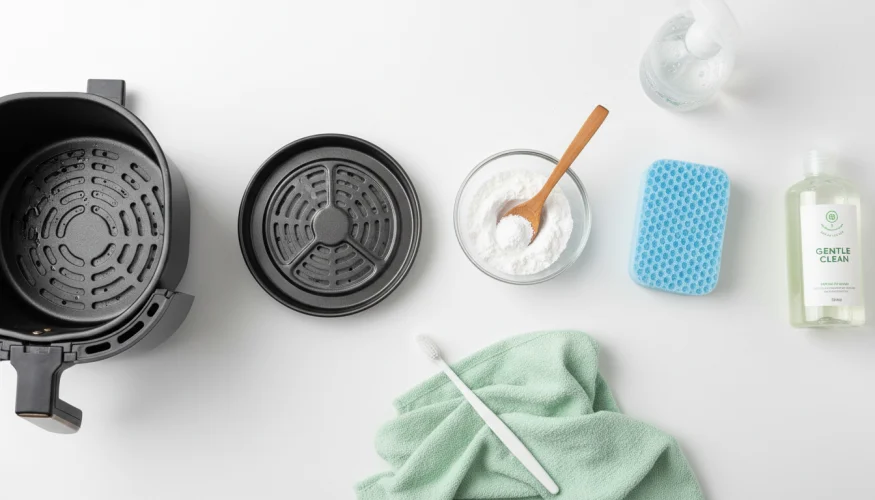
A soft brush—ideally an old toothbrush—or a special grill grate cleaning brush with soft bristles works well for cleaning the heating coils. Turn the air fryer upside down to make the coils easier to reach. First, use the dry brush to remove loose dirt and food residue. Then use a damp cloth or sponge dipped in a solution of warm water and a little dish soap. Take care not to let too much water get into the appliance—the cloth should be damp, not wet.
A paste made from baking soda works well for removing heavier deposits of burnt grease from the coils, just as it does for the basket. Apply it carefully to the coils, leave it for about twenty minutes, and then gently remove it with a damp cloth. Never use metal objects or hard brushes that could damage or deform the heating coils. After cleaning, make sure no moisture remains around the coils—the appliance should dry completely before its next use, preferably overnight or for at least several hours.
An interesting alternative for regular maintenance of the heating coils is the so-called steam method. Simply place a small container of water in the bottom of the air fryer and switch the appliance on for a few minutes. The resulting steam helps loosen grease deposits on the coils, making them easier to wipe away. This method is no substitute for thorough cleaning, but it works very well as regular preventive care.
How often the heating coils need cleaning depends on how frequently the appliance is used and what is cooked in it. Fattier foods such as chicken wings, bacon, and oily fish leave considerably more deposits on the coils than vegetables or low-fat fish. As a general guideline, clean the heating coils at least once a month with normal use, or every two weeks with heavier use.
There are also several practical tricks to make cleaning the heating coils and basket easier overall and keep it to a minimum. If you place a piece of parchment paper in the bottom of the basket before cooking fattier foods, or use silicone liners designed specifically for air fryers, food residue and droplets of grease are caught before they can drip to the bottom or rise to the coils. Parchment paper should never cover the entire bottom of the basket, however—air must be able to circulate freely, otherwise the air fryer cannot function properly.
Another useful habit is to add a small amount of water when cooking fatty foods to the bottom of the air fryer. Grease dripping from the food is immediately caught in the water instead of forming a burnt layer on the bottom of the appliance. This simple trick significantly reduces the amount of work needed for cleaning afterward.
Regular air fryer care is not just a matter of hygiene—it is an investment in the quality of your food, the lifespan of your appliance, and, last but not least, your own health. A clean, well-maintained air fryer works more efficiently, uses less energy, and cooks food more evenly. A neglected appliance with a layer of grease on its coils, on the other hand, has to work harder to reach the required temperature, affecting both the quality of the results and your electricity bill.
An air fryer is a great aid for anyone who wants to enjoy tasty food while eating more healthily. To continue doing its job for years to come, it needs a little extra attention—and that attention pays off many times over.