

What a Weighted Blanket Does to Your Nervous System
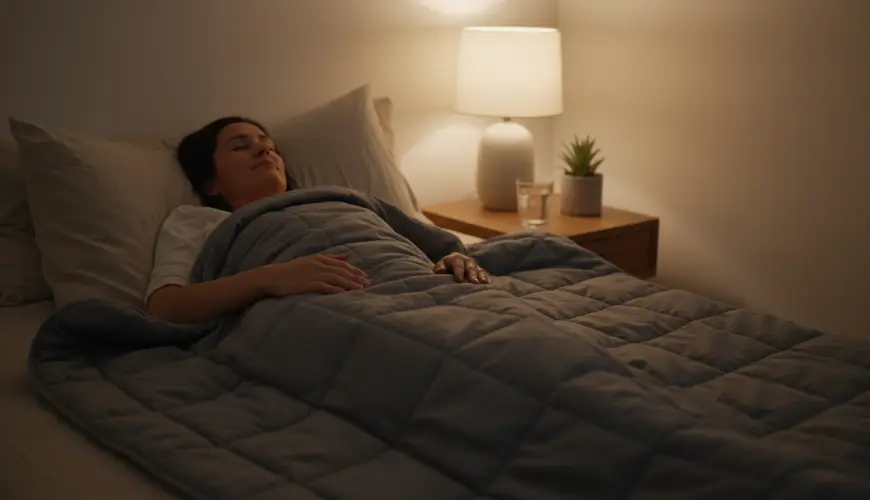
Imagine getting into bed after an exhausting day, your mind racing with thoughts you can’t stop and your body refusing to relax. Millions of people know this situation all too well. It is in moments like these that more and more people are turning to a simple but surprisingly effective aid – the weighted blanket. This unassuming product has gained enormous popularity in recent years, not only among people experiencing anxiety or sleep disorders, but also among those simply looking for a way to truly unwind after a demanding day.
But what lies behind this popularity? Is it just a passing trend, or is there a genuine scientific basis for why a weighted blanket helps with anxiety and insomnia? The answer is surprisingly complex and reaches deep into neuroscience and psychology.
Try our natural products



How does a weighted blanket actually work?
The basic principle behind a weighted blanket is what is known as deep pressure touch, or Deep Pressure Stimulation (DPS). It involves gentle, even pressure across the entire body, similar to the feeling of being hugged or tightly swaddled. This pressure activates the parasympathetic nervous system, the part of the nervous system responsible for calm, recovery and rest. At the same time, it suppresses activity in the sympathetic nervous system, which controls the “fight or flight” response – the very response that is chronically overstimulated in people experiencing anxiety.
Research shows that deep pressure touch stimulates the release of serotonin and dopamine, neurotransmitters associated with feelings of well-being and contentment, while also reducing levels of cortisol, the stress hormone. A study published in the academic journal Journal of Sleep Medicine & Disorders found that using a weighted blanket reduced participants’ physiological activity during sleep and improved their subjective sense of sleep quality. Similar results have been reported in studies focusing on people diagnosed with an anxiety disorder or autism spectrum disorder, for whom weighted blankets have been used as a therapeutic aid for decades.
It is no coincidence that therapists specializing in sensory integration also use this principle. The deep pressure touch method was first systematically described by Temple Grandin, an American scientist and autistic activist who experienced the calming effects of even pressure firsthand and designed a so-called “hug machine” for therapeutic purposes. As Grandin herself said: “Deep pressure is like landing for the nervous system – it gives it a firm point of reference.” This insight gradually made its way into aids for the general public, leading to the development of modern weighted blankets.
The key variable, of course, is the weight of the blanket. The general recommendation is to choose a blanket weighing approximately 10% of the user’s body weight, with slight adjustments depending on personal preference. A blanket that is too light will not provide the deep pressure effect, while one that is too heavy may cause discomfort or even intensify feelings of anxiety. Standard options on the market range from 4 to 12 kilograms, with blankets weighing 6 to 9 kilograms being the most popular choice for adults.
Inside the blanket, glass or plastic beads are typically distributed evenly among quilted pockets. This design ensures that pressure is spread across the entire surface of the body without creating uncomfortable pressure points. The material of the outer cover also plays an important role – cotton and bamboo options are popular for their breathability, while microplush covers offer comforting warmth during colder months.
Who can really benefit from a weighted blanket?
The answer to this question is broader than it might seem. Weighted blankets were originally used primarily in occupational therapy and in the care of people with sensory processing disorders, autism or ADHD. Over time, however, it became clear that their beneficial effects are not limited to these groups.
People with anxiety disorders are among those who benefit most significantly from weighted blankets. Generalized anxiety disorder, panic attacks and social anxiety are conditions in which the nervous system is in a permanent state of alert. A weighted blanket acts as a kind of “reset button” – a physical signal to the brain that it is safe to relax. Many users describe how, after a few minutes under the blanket, their racing heart slows and their repetitive thoughts begin to quiet down.
People with insomnia may notice a similarly significant difference. Insomnia is an alarming problem today – according to data from the World Health Organization, approximately one-third of the world’s population experiences sleep disorders. The causes vary: work stress, digital overload, a disrupted circadian rhythm or chronic anxiety. A weighted blanket addresses this problem on a physiological level by promoting the natural release of melatonin – the sleep hormone. Research published in Swedish academic literature, cited by sources such as Sleepfoundation.org, showed that users of weighted blankets fell asleep faster, woke up less often during the night and felt better rested in the morning.
Consider a specific example: Jana, a thirty-four-year-old project manager from Brno, struggled for several years with being unable to “switch off” in the evening. Although she was physically tired, her mind was constantly processing tasks, deadlines and potential problems. Conventional advice such as limiting screen time before bed or meditating helped somewhat, but it wasn’t enough. After buying a weighted blanket, she described her first night as “the first time in years I woke up in the morning feeling like I had actually slept.” Of course, one example does not make a scientific study, but Jana’s experience resonates with thousands of similar accounts around the world.
Weighted blankets are also used for children with attention or sensory integration disorders, where their use is best documented from a therapeutic perspective. With children, however, greater care is needed when choosing the weight, and consultation with a pediatrician or occupational therapist is always recommended.
There are also groups for whom a weighted blanket is not suitable. These include young children under two, people with claustrophobia, people with certain respiratory or cardiovascular conditions, and those who cannot remove the blanket themselves. In these cases, consulting a doctor is essential.
How do you choose the right one and use it?
Choosing a weighted blanket is not rocket science, but it helps to know a few basic rules. In addition to the 10% body weight rule already mentioned, it is important to consider the blanket’s dimensions – it should cover the whole body but should not hang over the edges of the bed, as it could then slide off on its own and disrupt the even pressure. For this reason, weighted blankets are generally made in smaller sizes than conventional duvets.
Quality of construction is also important. The filled quilted pockets should be securely closed and evenly distributed across the entire blanket to prevent the filling from shifting to one area. The cover should be easy to remove and washable, since hygiene is essential with daily use.
When it comes to use, you don’t have to sleep under the blanket all night, although many people eventually do. You can also use it just while relaxing in the evening, reading, watching television or whenever you feel the need to calm down. Some users like to use it while working from home, during stressful video calls or demanding work situations. This flexibility is one of the weighted blanket’s major advantages over other relaxation aids.
When using it for the first time, it is normal for the feeling under the blanket to seem a little unusual or even mildly uncomfortable. The body needs to get used to the new sensation, so it is recommended to start with shorter periods – perhaps 20 to 30 minutes – and gradually increase the duration. Most users report that after three to five nights, the feeling becomes natural and pleasant.
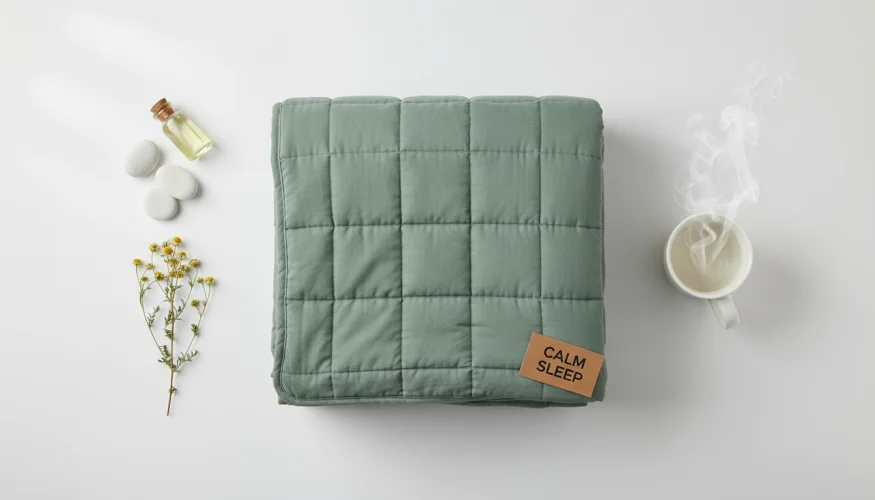
Combining a weighted blanket with other techniques to support sleep and manage anxiety may produce even more noticeable results. These include a regular sleep schedule, limiting caffeine in the afternoon, moderate physical activity and breathing exercises. A weighted blanket is not a miracle cure – it is a tool that works best as part of a broader approach to caring for mental health and sleep quality.
Interestingly, the growing interest in weighted blankets reflects a broader social trend – people are increasingly seeking natural, non-pharmacological ways to cope with stress and sleep problems. At a time when antidepressants and sleeping pills are being prescribed in ever greater quantities, a weighted blanket offers an alternative that has no side effects and whose mechanism of action is rooted in the basic principles of how the human nervous system works. It is therefore no wonder that a therapeutic aid for specific patient groups has become an accessible product for anyone seeking a slightly calmer night and a slightly less anxious day.