

Try Lentil Shepherd’s Pie with Mashed Potatoes
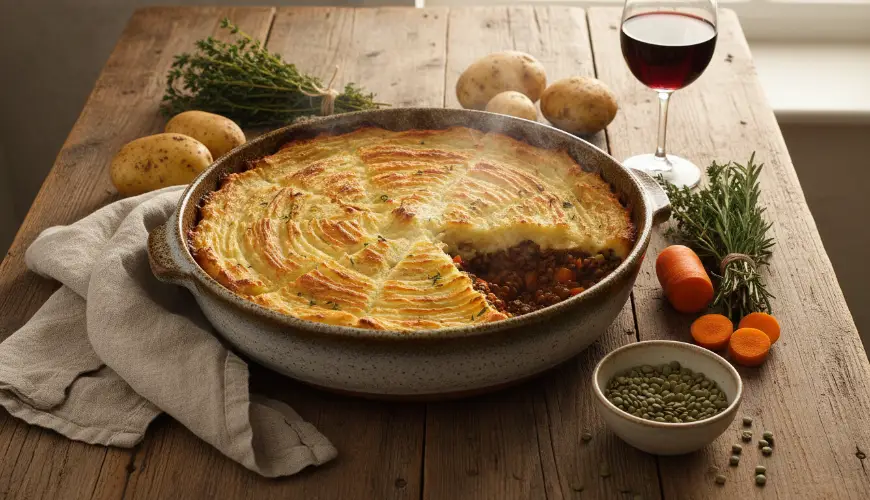
Some dishes can warm not only the body but also the soul. Lentil shepherd’s pie with mashed potatoes is one of them. It combines tradition, comfort and a surprisingly rich flavor—and requires neither meat nor advanced cooking skills. At a time when more and more people are thinking about what they eat and where their food comes from, this plant-based take on a classic British recipe is winning the hearts of households around the world, including in the Czech Republic.
Shepherd’s pie has its roots in British and Irish cooking of the 18th and 19th centuries. Originally, it was a humble dish made to use up leftover cooked meat—most often lamb or mutton—covered with a layer of mashed potatoes and baked in the oven. The name “shepherd’s” refers directly to the sheep tended by shepherds. Modern cooking, however, has transformed the recipe beyond recognition, and today there are dozens of variations, with the lentil version among the most popular and nutritious.
Try our natural products



Why choose lentils instead of meat?
Red or green lentils are more than an inexpensive substitute for ground meat—they are a nutritious food in their own right. Lentils are rich in plant protein, fiber, iron, folate and a wide range of minerals, while containing very little fat. According to data from the World Health Organization, regular consumption of legumes has been shown to reduce the risk of cardiovascular disease, type 2 diabetes and certain types of cancer. Those are figures worth paying attention to.
Lentils also have one practical advantage over other legumes: they do not need to be soaked beforehand. Red lentils cook in just 15 to 20 minutes, while green lentils or French Puy lentils take 25 to 30 minutes. This makes them an ideal ingredient for busy households that do not want to spend hours in the kitchen but still crave a nutritious and tasty meal.
Interestingly, lentil shepherd’s pie has gained popularity beyond vegetarian and vegan communities. People who do not consider themselves followers of a plant-based diet have also embraced the dish. Take one family from Brno, where the father—a committed meat eater—initially turned up his nose at the “vegetable pie,” but after his first taste admitted that he could barely tell the difference. The key was the right seasoning and a generous vegetable filling, which gave the dish depth and fullness of flavor.
A few tricks can give lentil pie the flavor profile typically associated with meat dishes. Worcestershire sauce, soy sauce or miso paste give the filling the pronounced umami flavor characteristic of this dish. Smoked paprika adds a hint of smokiness, while fresh thyme and rosemary lend herbal freshness. Vegetable stock instead of water and a splash of red wine to deglaze the vegetables before adding the lentils are small details that make a big difference.
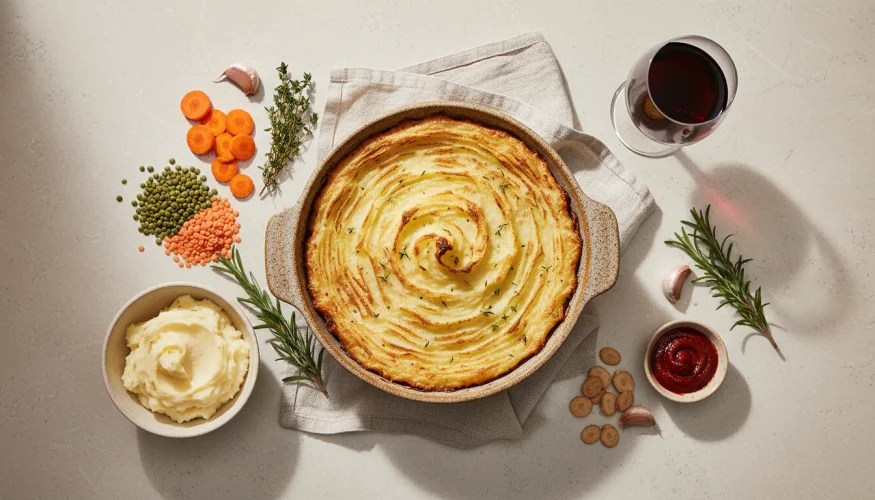
Alongside the lentils, the filling is usually based on onion, garlic, carrot and celery, first sautéed in olive oil. Some cooks also add peas, corn, parsnips or mushrooms—mushrooms, especially portobellos or dried porcini, are an excellent source of umami and give the filling a meatier texture. The mixture is then thickened with tomato paste and stock and simmered slowly until the lentils are tender and the sauce has reached a creamy consistency.
Mashed potatoes as the dish’s crowning glory
While the filling is the heart of shepherd’s pie, the mashed potatoes are its crown—literally and figuratively. Properly prepared mashed potatoes should be smooth, creamy and firm enough to hold their shape during baking, yet light enough to melt in the mouth. Achieving this ideal is not rocket science, but it does require following a few principles.
It is best to cook the potatoes in their skins so they do not absorb too much water, and mash them while they are still hot. For a vegan version, plant-based alternatives work wonderfully in place of butter and milk—coconut milk, for example, gives the mash a subtly sweet flavor, while almond milk adds neutral creaminess. Olive oil is another popular choice, lending the mash a slightly fruity undertone. Of course, plenty of salt and freshly ground pepper are essential.
Some cooks also add a clove of roasted garlic, a teaspoon of Dijon mustard or grated cheese to the mash—for a vegan version, plant-based cheese or nutritional yeast adds a cheesy flavor without animal products. Before baking, the surface of the mash is scored with a fork, creating characteristic peaks that turn golden in the oven and form an appealingly crisp crust.
Baking takes place in an oven preheated to approximately 200 degrees Celsius for 20 to 25 minutes, until the top is golden and the filling begins to bubble around the edges. The result is visually impressive, and the aroma that spreads throughout the home as it bakes is a reward in itself.
As British chef and plant-based cooking advocate Yotam Ottolenghi aptly observed: “Vegetables don’t need to be the star of the side dish—they can be the star of the main course.” Lentil shepherd’s pie is a wonderful example.
Nutrition, sustainability and everyday practicality
Lentil shepherd’s pie with mashed potatoes is not just delicious—it is also exceptionally nutritious and affordable. One serving provides approximately 400 to 500 kilocalories, including around 20 grams of protein, plenty of fiber and complex carbohydrates with a low glycemic index, which help keep you feeling full for longer. It is a satisfying meal that does not place an unnecessary burden on the digestive system.
From a sustainability perspective, choosing lentils over meat is clearly better for the environment. Lentil production generates up to 43 times fewer greenhouse gases than beef production and uses significantly less water and land. According to research published in the scientific journal Nature Food, simply reducing meat consumption and replacing some meat dishes with legume-based alternatives could make a significant contribution to reducing global food-related emissions. Lentil pie is therefore more than a personal choice—it is a small step with a potentially large impact.
The practical side is equally compelling. Lentil shepherd’s pie is perfect for making ahead—it keeps in the refrigerator for up to four days and freezes well. It is therefore an ideal choice for preparing food for the whole week, an approach known as meal prep, which is becoming increasingly popular among people who want to eat healthily but do not have time to cook every day. After thawing, simply reheat the pie in the oven or microwave, and the meal is ready in minutes.
Another reason for the dish’s popularity is its versatility. The basic recipe can be varied almost endlessly. Instead of traditional mashed potatoes, you can use mashed sweet potatoes, which give the pie a natural sweetness and a more vivid orange color. A combination of potatoes and parsnips creates a mash with a subtly nutty undertone. For a gluten-free version, simply replace the Worcestershire sauce with gluten-free tamari and make sure all the ingredients used are certified gluten-free.
As for the lentils themselves, each variety brings a slightly different texture and flavor. Red lentils break down into a smooth purée as they cook, naturally thickening the filling, while green or brown lentils retain their shape and give the dish a more pronounced texture and a slightly earthy flavor. French Puy lentils are considered a gourmet choice—they are firmer, more aromatic and hold their shape better during cooking than other varieties. Each option produces a slightly different but equally delicious result.
To make the pie truly special, it is also worth paying attention to where the ingredients come from. Potatoes from local farmers, organic lentils, homemade vegetable stock made from vegetable scraps, high-quality cold-pressed olive oil—all contribute not only to better flavor but also to mindful consumption that respects both personal health and the planet. Today, it is becoming easier to buy these ingredients from trusted suppliers who prioritize sustainable farming practices.
Lentil shepherd’s pie with mashed potatoes is therefore much more than a vegetarian version of an old recipe. It is a dish that brings together history and modernity, simplicity and sophistication, personal comfort and responsibility toward the world around us. Whether you make it for family, friends or just yourself after a long day at work, one thing is certain: this pie will not disappoint.