

Get an Under-Desk Walking Pad for Working from Home
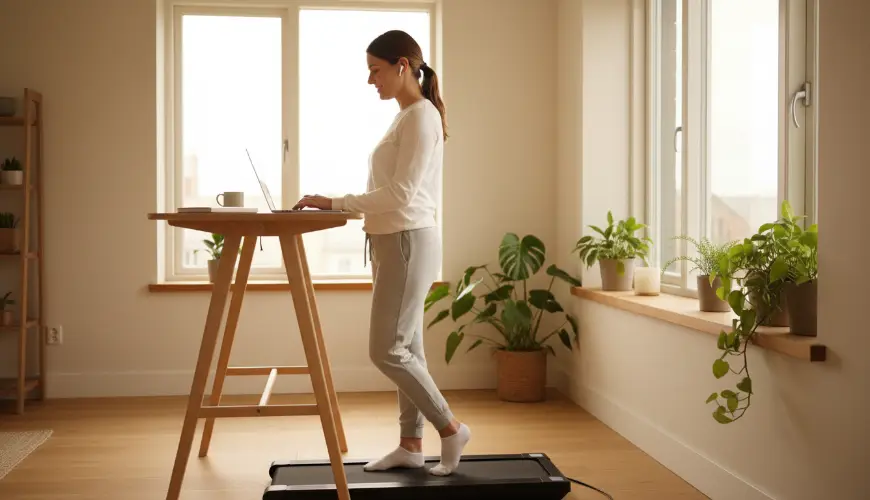
Sedentary work is one of the greatest health risks of modern times. The average office worker spends up to ten hours a day sitting – and the shift to working from home has made the problem even worse. Without a commute, meetings in a conference room at the other end of the building or informal breaks by the coffee machine, movement during the working day has dwindled to a minimum. That is precisely why more and more people are buying an under-desk walking treadmill – an unobtrusive device that can turn every working hour into an opportunity to move.
The idea is simple: instead of a conventional floor mat under the desk, there is a compact treadmill on which a person walks slowly while working on a computer, making phone calls or reading emails. The speed is set so low – typically between one and three kilometers per hour – that walking does not interfere with concentration or the quality of work. The result is a state in which the body is moving while the mind remains fully focused on work tasks.
Try our natural products





Why sedentary work is more harmful than we think
Research repeatedly confirms that prolonged sitting is associated with a wide range of health complications – from back and neck pain to metabolic disorders and an increased risk of cardiovascular disease. According to the World Health Organization, physical inactivity is the fourth leading risk factor for premature death worldwide. And it is a problem that is amplified in a home office environment.
When someone works in a conventional office, natural movement is almost automatically part of the working day – walking to lunch, attending meetings, moving between floors. At home, these brief moments of movement are simply absent. The refrigerator is two meters from the desk, the bathroom is around the corner and the nearest colleague is on the other end of a video call. The total daily step count of people who work from home may be a third lower than that of those who commute to an office – and over time, this deficit takes a toll on health and mental well-being.
The under-desk walking treadmill did not emerge as a passing fad, but as a response to a real need. People were looking for a way to build movement directly into their work routine without sacrificing productivity or setting aside an extra hour a day for exercise.
How an under-desk walking treadmill works in practice
Consider a specific example: Jana works as a project manager, handling emails, leading video conferences and preparing reports all day. A year ago, she bought a walking treadmill to use under her height-adjustable desk, and today she says she would find it difficult to return to sedentary work. In the morning, she sets the speed to 1.5 km/h and, while working through her morning emails, walks three to four kilometers without even noticing. During video calls, she switches to an even slower pace so that the movement is completely imperceptible to other participants.
The key to success is setting up the workspace correctly. An under-desk walking treadmill works best in combination with a height-adjustable desk, which allows the work surface to be adjusted to meet ergonomic requirements for standing and walking slowly. The monitor should be at eye level, with the keyboard and mouse positioned naturally for the hands – the same principles as working while standing, except that the person is also walking.
Modern walking treadmills designed for use under a desk are constructed differently from conventional gym treadmills. They are lower, quieter and more compact. Most models reach a maximum speed of around six kilometers per hour, which is more than sufficient for work purposes. Noise is another key parameter – a quality under-desk walking treadmill should produce no more than 40–50 decibels at working speed, approximately the volume of a quiet conversation.
As American physician and treadmill desk pioneer James Levine of the Mayo Clinic once remarked: “The human body was not designed to sit. It was designed to move.” This principle lies at the heart of the whole philosophy behind home office walking treadmills.
The benefits of walking regularly while working from home
The benefits are not just physical. Research published in the British Journal of Sports Medicine showed that even mild physical activity during the working day has a positive effect on cognitive function, creativity and the ability to concentrate. In other words, walking while working can benefit not only the body but also work performance itself.
From a physical perspective, regular use of an under-desk walking treadmill offers a number of specific benefits. Blood circulation improves, reducing the risk of swelling in the lower limbs and vein problems, which are very common among sedentary workers. The postural muscles of the torso and back, which remain passive and gradually weaken while sitting, are activated. Total energy expenditure increases – even slow walking at 2 km/h burns approximately twice as many calories as sitting.
The psychological aspect is also significant. Movement stimulates the release of endorphins and other neurotransmitters associated with a sense of well-being. Many home office walking treadmill users report that after adopting this habit, they experience fewer afternoon energy slumps, sleep better and generally feel less exhausted even after a demanding workday.
The effect on musculoskeletal pain is also worth mentioning. Paradoxically, although walking involves movement, walking while working with a properly configured setup can significantly reduce back and neck pain compared with sitting still. The key is correct ergonomics and alternating walking with sitting or standing – no expert recommends standing or walking for the entire eight-hour workday.
What to look for when choosing one
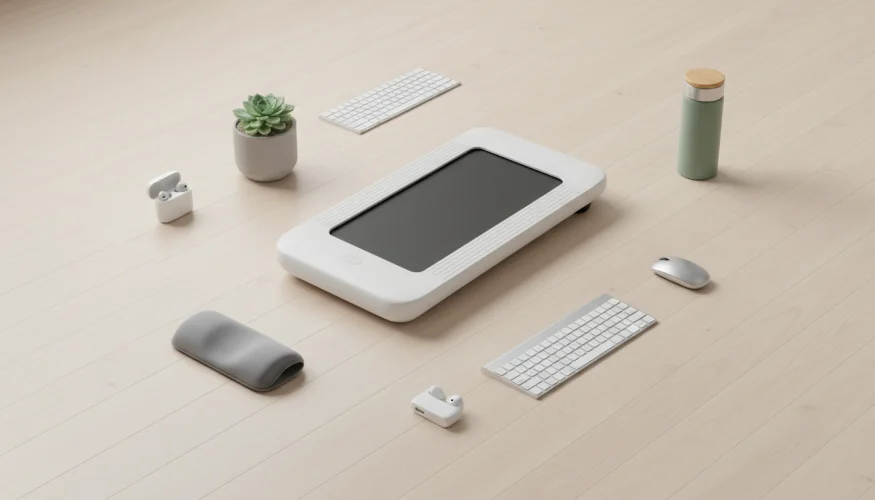
The market for under-desk walking treadmills has expanded considerably in recent years, with options ranging from inexpensive models costing a few thousand Czech crowns to premium machines with integrated apps and advanced quiet motors. When choosing one, it is worth focusing on several key parameters:
- Motor noise – it should not exceed 50 dB at working speed
- Weight capacity – most quality models can support 100–120 kg
- Belt dimensions – a length of at least 100 cm for comfortable walking
- Maximum speed – 6 km/h is sufficient for work, but a higher maximum offers greater flexibility
- Compatibility with a height-adjustable desk – the height of the device should allow the work surface to be set correctly
Preparing the workspace is just as important as the device itself. The floor beneath the treadmill should be level and firm, there should be enough space around the device, and cables should be routed carefully so they do not obstruct movement.
Beginners should start gradually with an under-desk walking treadmill – thirty minutes a day for the first week, gradually increasing to one or two hours, and eventually developing their own rhythm of alternating between walking, standing and sitting. The body needs time to adjust to a new way of working, and switching overnight to eight hours of walking could cause muscle fatigue or foot pain.
An under-desk walking treadmill for working from home is not a miracle solution to all the health problems of modern times, but it is one of the most practical ways to meaningfully increase daily physical activity without radically changing a work routine. At a time when the boundaries between home and office are blurring and movement is slowly disappearing from everyday life, this unobtrusive device under the desk may be what truly changes the way we approach our health. And not just in the short term, but as a lasting lifestyle habit worth developing as soon as possible.