

How Often Should You Wash Hairbrushes and Makeup Brushes?
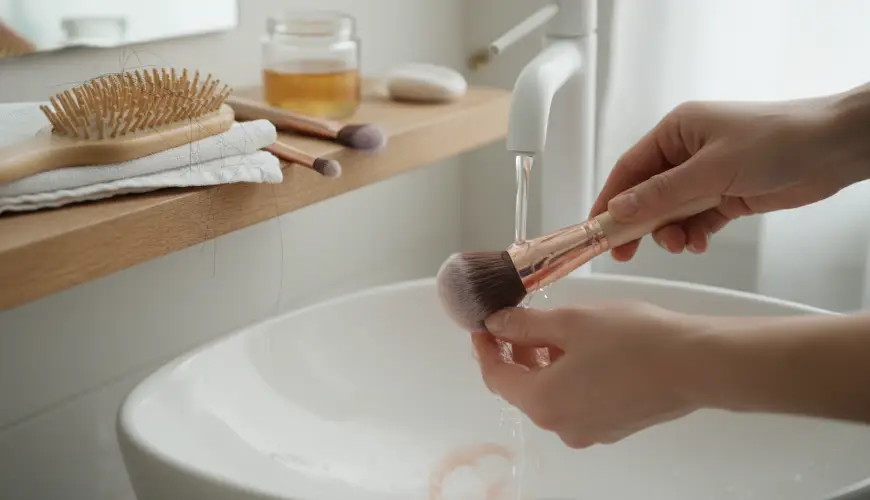
We touch them every day and trust them with our appearance, yet we almost forget about them when it comes to household hygiene. Hairbrushes and makeup brushes are among the tools we use daily but put off cleaning week after week. Yet a surprising amount of dirt, bacteria, and dead skin cells lurks in their fibers, bristles, and cushions, only to be transferred directly back onto our skin or hair. It’s worth thinking about.
Imagine a situation familiar to almost every woman: you buy a new foundation with a beautiful natural finish, but the result on your skin doesn’t quite match what you saw in the advertisement. You use the brush every day, but the last time you washed it... you can’t actually remember. Buildup on brushes is one of the most common reasons makeup doesn’t look the way it should—and why blemishes or irritation appear, even when you otherwise take good care of your skin.
Try our natural products
Why cleaning makeup brushes and hairbrushes is so important
The problem isn’t just aesthetic. According to dermatologists, dirty makeup brushes are one of the main ways bacteria are transferred directly onto the skin. The American Academy of Dermatology (American Academy of Dermatology) has repeatedly warned that neglecting to clean beauty tools can contribute to clogged pores, acne, and skin infections. Not only makeup residue but also sebum, dead cells, and microorganisms accumulate in brush fibers and are transferred back onto the skin with every use.
The situation with hairbrushes is similar, if a little different. Hair, residues from hair products—such as hairsprays, mousses, or oils—and flakes of skin from the scalp collect between the bristles. If you don’t clean your brush regularly, you transfer this buildup back onto your hair every time you brush, which can make it become greasy more quickly, look dull, or even cause scalp irritation.
As renowned American lifestyle expert and hygiene author Jolie Kerr put it: “Your hairbrush is like your pillow—you rarely clean it, but you spend a lot of time with it.” This simple analogy captures the essence of the issue better than any statistic.
A natural question arises: how often should these tools be cleaned? The answer depends on how heavily you use them and which products you apply, but the general recommendations are surprisingly strict.
Makeup brushes should ideally be cleaned once a week if you use them every day. Brushes that come into direct contact with moist or liquid cosmetics—such as foundations, concealers, or eyeliners—should be cleaned even more often, preferably every two to three days. Hairbrushes should be thoroughly cleaned at least once every two weeks, while removing trapped hair should be part of your daily or weekly routine.
Many people only start paying attention to cleaning their tools when they are visibly dirty or stop working properly. But by then it’s too late—you’ve been using them as a kind of “bacterial sponge” on your own skin and hair.
How to wash makeup brushes properly
Washing brushes properly isn’t difficult, but it requires a little patience and the right technique to avoid damaging the fibers and ensure the brushes last as long as possible. Special cleansers for makeup brushes are available, but a gentle shampoo or soap is sufficient at home—ideally one that is kind to the skin and free of harsh chemicals.
The process is simple: wet the brush under lukewarm running water, making sure the water flows down over the fibers and does not get into the metal ferrule that holds them together. Water inside the ferrule could break down the glue, causing the brush to gradually fall apart. Then put a little shampoo or cleanser in the palm of your hand and gently swirl the brush fibers in it until the water takes on the color of your makeup. Rinse the brush with clean water and repeat until the water runs clear.
After washing, proper drying is essential. Never dry brushes upright—water would run into the ferrule and damage it. Ideally, lay them flat on a clean towel or hang them with the fibers pointing down. Let them dry at room temperature, away from heat sources, as hot air can damage the fibers, especially in natural brushes made from animal hair.
For those looking for more sustainable alternatives, eco-friendly brush cleansers are available that are biodegradable and gentle on the environment. These products align with the principles of sustainable living while working just as well as conventional cleansers.
If you want to clean brushes quickly between uses, there are also dry-cleaning sprays or cleaning sponges into which you can dip and swirl the brush several times. These methods do not replace a thorough wet wash, however—they are better suited as a quick solution when switching between color shades or as a supplement to regular weekly cleaning.
How to clean hairbrushes
Hairbrushes have one advantage over makeup brushes: they don’t require thorough washing as often. Even so, cleaning them regularly is essential for the health of your hair and scalp. The first step is always to remove trapped hair, ideally after every use or at least once a week. You can use the end of a comb, a toothpick, or a special brush-cleaning tool available at drugstores or specialty shops.
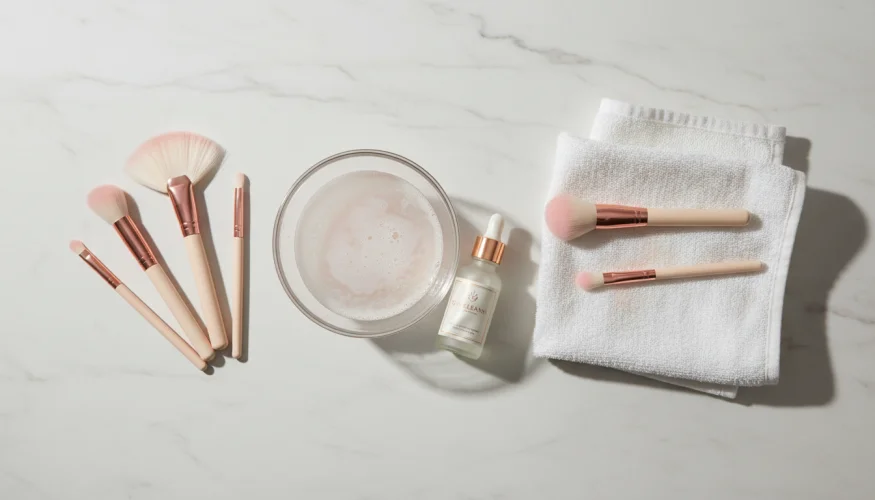
Once the hair has been removed, it’s time to wash the brush. Fill a bowl or sink with lukewarm water and add a little gentle shampoo—about as much as you would use to wash your hair. Place the brush bristle-side down in the solution and let it soak for a few minutes. Then gently massage the bristles with your fingers or a soft brush to loosen product residue and dirt trapped at their base.
It’s important to adapt the method to the brush material. Wooden brushes should not be soaked in water for long, as the wood could swell or crack. For these brushes, it’s better to soak only the bristles and keep the body of the brush as dry as possible. Plastic or rubber brushes, on the other hand, are more durable and can safely be fully submerged.
After washing, rinse the brush thoroughly with clean water, shake off excess moisture, and place it bristle-side down on a towel to air-dry. As with makeup brushes, avoid drying it near heat sources.
How often you wash your brush also depends on how many hair products you use. If you apply hairspray, serums, or oils daily, cleaning your brush every week is recommended. If you don’t style your hair much or use any products, a thorough wash once every two to three weeks is sufficient.
Some hair care experts recommend disinfecting the brush after washing—for example, by briefly immersing it in a solution of equal parts water and vinegar. Vinegar naturally kills bacteria and mold without leaving any chemical residue. This simple trick is also in keeping with an eco-friendly household, as vinegar is readily available, inexpensive, and gentle on the environment.
For those who want to take their hair tool care a step further, the choice of brush itself is also worth considering. Research on hair care suggests that brushes with natural bristles—for example, boar bristles—are gentler on the hair structure and help distribute natural oils more evenly along the length of the hair. These natural materials require a little more care when cleaning, however, because they are more sensitive to moisture and heat.
You may be wondering whether there’s a simple way to remember when it’s time to wash your tools. A practical solution is to tie cleaning your makeup brushes and hairbrushes to another regular ritual—for example, your weekly housecleaning or weekend skin care routine. Once cleaning becomes part of an established routine, it stops being a chore you forget and becomes a natural part of everyday life.
Taking care of your beauty tools isn’t just a matter of hygiene or appearance. It’s also a way of respecting the investment you’ve made in them—quality makeup brushes or a good hairbrush can cost hundreds of Czech crowns, and if you care for them properly, they can last for years. Clean tools work better: makeup goes on more evenly, and hair is easier to brush. And what’s more, you know that what touches your skin and hair every day is truly clean.