

Slow Jogging Will Teach You to Run with a Smile on Your Face
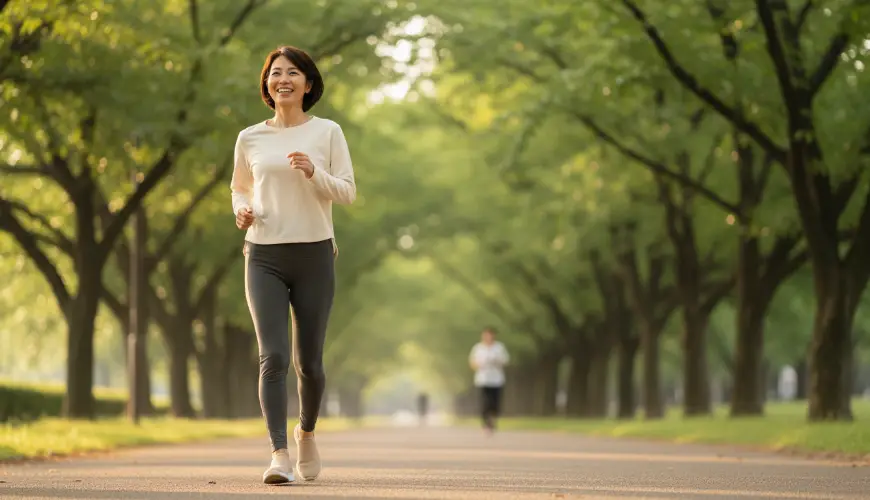
Imagine running so slowly that pedestrians pass you. And smiling while you do it. Sound absurd? That is precisely the magic of a phenomenon that revolutionized the approach to exercise in Japan and is gradually gaining followers around the world. Slow jogging, or “running at a smiling pace,” is more than just another fitness trend. It is a philosophy that rewrites the rules of what it means to be active, healthy, and comfortable in your own body.
Japanese professor Hiroaki Tanaka of Fukuoka University spent decades researching aerobic exercise and came to a surprising conclusion: you don’t have to suffer to be healthy and live a long life. You simply need to move slowly, regularly, and joyfully. His book Slow Jogging: Lose Weight, Stay Healthy, and Have Fun with Science-Based, Natural Running became the foundation of an entire movement, offering a scientifically supported perspective on why less can be more. Tanaka’s research showed that the key is not intensity, but consistency and the ability to sustain physical activity over time.
Try our natural products





What exactly is slow jogging and how does it work?
Slow jogging is a form of running in which you move at a pace comparable to brisk walking – approximately 4 to 6 kilometers per hour. It sounds almost paradoxical, because the line between running and walking becomes so blurred that many wonder whether it is “real” running at all. The answer is yes, for one crucial reason: technique. Slow jogging is not just slow walking. It is a specific movement pattern in which you land on the forefoot (rather than the heel, as in conventional jogging), your steps are short and quick, your body leans slightly forward, and your movement is smooth and effortless.
This forefoot landing technique is one reason why slow jogging is gentle on the joints. In conventional running with a heel strike, the body transfers the impact to the knees and hips, which places strain on them over time. In slow jogging, by contrast, the calf and foot muscles work naturally as biological shock absorbers. The result is an activity that almost anyone can do – regardless of age, fitness level, or previous exercise experience.
How do you find the right pace? This is where the poetic “smiling pace,” known in Japanese as niko niko pace (にこにこペース), comes in. The Japanese expression niko niko imitates the sound of smiling and describes an exercise intensity at which you can smile, breathe comfortably, and hold a conversation. In other words, if slow jogging leaves you so breathless that you cannot speak, you are going too fast. This rule is a surprisingly accurate guide to finding your aerobic exercise zone without having to measure your heart rate or use a smartwatch.
Physiologically, this pace falls around the aerobic threshold, where the body burns fat as its primary source of energy and does not produce excessive amounts of lactate. Research published in scientific journals repeatedly confirms that this low to moderate exercise intensity has a significant impact on cardiovascular health, weight management, and the prevention of lifestyle-related diseases. And because the body is not overexerted, recovery is quick and the activity can easily be repeated every day.
Take, for example, a fifty-year-old woman who has hated running all her life – her knees hurt, she quickly became breathless, and after every attempt at jogging she spent two days with sore muscles. Slow jogging could open the door to an activity she once considered beyond her reach. She starts with ten minutes a day at a pace that allows her to chat on the phone with a friend, and after three months of consistent practice, she finds that stairs no longer leave her winded and her sleep has improved. This kind of transformation is typical of the stories slow jogging brings.

Why slow jogging is more than just slow running
It would be a mistake to see slow jogging merely as a less demanding alternative for those who “can’t keep up” with conventional running. In fact, it is a conscious choice based on a deeper understanding of how the body works and what it truly needs. Modern society is obsessed with performance – the faster, the better. The fitness industry convinces us that there is no gain without pain, that we must push beyond our limits and train to exhaustion. Slow jogging turns this logic on its head.
Professor Tanaka says: “The best exercise is the one you will do every day for the rest of your life.” This simple idea may be the most important message of the entire movement. Exercise that overburdens us, hurts us, or leaves us so tired that we begin to avoid it will not serve its purpose. By contrast, exercise that brings us joy and that we can sustain for years can transform our health profoundly and lastingly.
Slow jogging has a proven effect on many aspects of health. Regular practice helps lower blood pressure, improves insulin sensitivity, supports a healthy weight, and strengthens the immune system. Japanese studies following older adults who practice slow jogging have shown improvements in cognitive function and a slower decline in muscle mass associated with aging. This effect is not surprising – aerobic exercise stimulates the production of BDNF (brain-derived neurotrophic factor), a protein that supports the growth of new neurons and improves memory and concentration.
The psychological dimension of slow jogging is also interesting. Because the activity takes place at a comfortable pace, the brain does not perceive it as stress. Instead, endorphins and serotonin are released without the overactivation of the sympathetic nervous system that occurs during intense training. The result is a pleasant sense of well-being rather than exhaustion. Many practitioners describe slow jogging as a form of moving meditation – the mind calms down, problems seem smaller, and creativity awakens. It is no coincidence that Japanese culture, which gave us slow jogging, deeply values the concept of ikigai – a sense of purpose in life – and moving at a natural pace is a natural part of it.
Another aspect that sets slow jogging apart from other trends is its accessibility. You do not need any special equipment, a gym membership, or a personal trainer. All you need is comfortable footwear – ideally with thin soles that allow you to land naturally on the forefoot – and any outdoor surface. Parks, forests, town squares, or neighborhood sidewalks are just as good as a running track. Slow jogging is exercise for everyone in the best sense of the word.
How do you get started? The recommended approach for complete beginners is very simple. For the first few weeks, all you need is:
- 10 to 15 minutes a day at a smiling pace, without pressure to cover a particular distance
- Alternating short stretches of slow jogging with walking, if needed
- Gradually increasing your exercise time by 5 minutes each week
- Paying attention to your forefoot landing technique
After a month of regular practice, most people find that they can run for 30 to 45 minutes without stopping or feeling tired. That is the moment when slow jogging stops being “exercise” and becomes a natural part of the day.
It is also interesting how slow jogging resonates with the broader trend of slowing down, which extends into many areas of life – from slow food and slow fashion to slow travel. All these approaches share the same basic idea: quality matters more than speed, and consciously experiencing the present moment brings more satisfaction than chasing performance. In the context of a sustainable lifestyle, slow jogging makes perfect sense – it is an activity that does not overburden the body, the environment, or your wallet.
The scientifically supported results of slow jogging are comparable to those of more intense training, and in some respects even surpass them. Studies published in the Journal of the American College of Cardiology suggest that even very slow, regular running reduces the risk of cardiovascular disease almost as effectively as faster forms of exercise – while the risk of injury is substantially lower. For long-term health, slow jogging is therefore not only sufficient but, in many respects, an optimal choice.
The world of sport and fitness is gradually awakening from the cult of performance and recognizing that exercise should serve people, not the other way around. Slow jogging is a pioneer in this regard – it shows that the line between “real” training and simply moving for pleasure is artificial and unnecessary. The Japanese approach to exercise, deeply rooted in respect for the body and natural movement, offers an alternative that is both scientifically validated and intuitively understandable. And perhaps most importantly of all: it is exercise that makes you smile. And that, it seems, is the best measure of healthy exercise ever devised.