
How to Store Spices Properly and Preserve Their Aroma
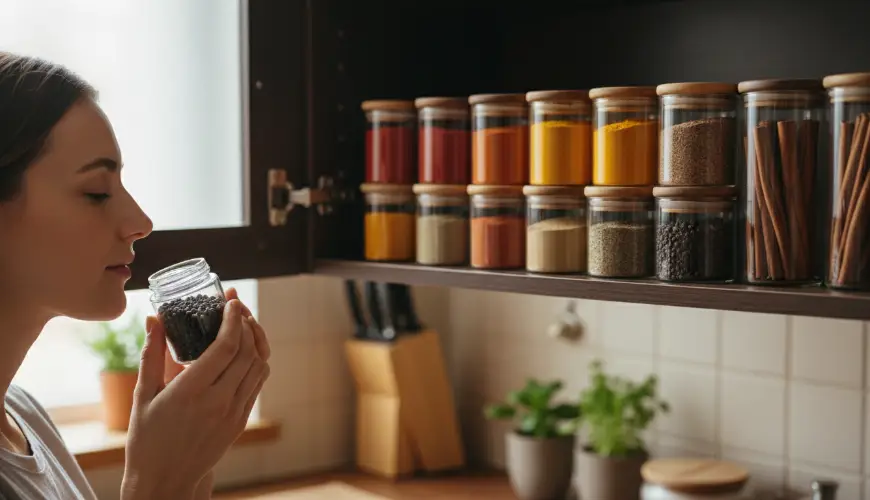
Just open the cupboard above the stove and smell some old pepper or paprika, and it immediately becomes clear why spice storage matters. The aroma that should instantly hit your senses is either completely absent or dull and flat. That is precisely when most cooks realize that years-old nutmeg or hardened cinnamon really won’t do a dish any favors. Spices don’t last forever, and how they are treated determines whether a dish shines or falls flat.
The world of spices is fascinating. For millennia, spices were more precious than gold, merchants crossed oceans in search of them, and entire civilizations shaped their trade routes around where pepper or cinnamon grew. Today, we can buy a packet of turmeric for a few coins at the supermarket, and that is precisely why we tend to take it for granted. But the quality of spices depends on the conditions in which they are stored, and poor care can mean that we pay to season our food without getting any real benefit from it.
Try our natural products


Why spices lose their potency
To understand how to store spices properly, it helps to first know why they lose their properties in the first place. The answer lies in chemistry—specifically, in the essential oils and volatile aromatic compounds responsible for their flavor and aroma. These substances are sensitive to light, heat, air, and moisture. Once exposed to one or more of these factors, they begin to break down, oxidize, or simply evaporate.
Take cumin, for example. Freshly ground, it smells intensely earthy, almost intoxicating. After a year in an uncovered jar on a shelf above the stove, where cooking sends temperatures soaring, only a shadow of that aroma remains. This is precisely what research from the American McCormick Science Institute, an organization that has long studied spices and their properties, describes: heat and light are the greatest enemies of aromatic compounds.
Whole spices retain their potency significantly longer than ground spices. Peppercorns, whole star anise, and cinnamon sticks have considerably more staying power because the surface area exposed to oxidation is relatively small. Once a spice is ground, the area exposed to air increases dramatically, and degradation accelerates. Ground spices therefore lose their aroma much faster than whole spices—and this simple fact should change how we buy and store our kitchen supplies.
There are also specific cases in which spices not only lose their aroma but can become unsuitable for use. Moisture causes clumping and can lead to mold, especially in sweet spices such as cinnamon or vanilla. If a spice has changed color significantly, hardened, or shows any signs of moisture in the package, it is best to throw it away without regret.
Interestingly, many people sense that their food “doesn’t taste like it used to” without realizing that the problem lies not in the recipe but in the age of the spices used. They add twice as much, but the result is still bland. This is a classic sign that it’s time to give the spice cupboard a thorough review.
Proper spice storage, step by step
The practical rules for storing spices are not complicated, but they do require some discipline and a little thought about where and how supplies are kept. The most common mistake is storing spices directly above or beside the stove. It seems like a logical place—spices are close at hand while cooking—but the heat and steam produced during cooking are devastating to their aromatic compounds.
The ideal place to store spices is dark, dry, and cool. A closed cupboard away from the stove, a pantry, or even a drawer is far more suitable than an open shelf full of colorful jars exposed to sunlight. Light—especially direct sunlight—speeds up oxidation and destroys the pigments responsible for color and flavor. Paprika, turmeric, and chili not only fade but also lose their characteristic flavor.
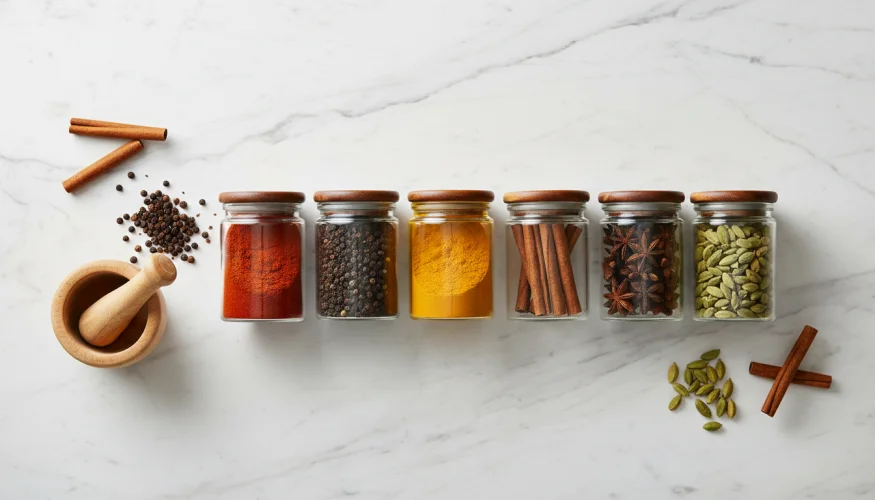
Another key factor is the container. Glass containers with tightly fitting lids are an ideal choice: glass keeps out odors and moisture and, unlike plastic, does not absorb the spices’ aromas. If you buy spices in paper bags or thin plastic packaging, transferring them to glass jars is one of the simplest steps you can take to significantly extend their shelf life. There are many stylish spice jar sets on the market that are both practical and attractive, and choosing such a solution is an investment that will pay for itself many times over in the quality of your food.
Moisture is another silent enemy. A spoon that has been exposed to steam from a pot should never be dipped directly into a spice container. Just a few such instances can introduce enough moisture to cause clumping or even mold. Instead, pour the spice into a spoon away from the pot and only then add it to the dish.
How long do spices actually last? As a general guideline, whole spices retain their quality for approximately two to four years, ground spices for one to three years, and dried herbs for approximately one to three years. These times depend greatly on storage conditions, however: properly stored spices may last even longer, while poorly stored ones can lose their potency in a matter of months. The date on the package is a guideline rather than a hard-and-fast rule—your own sense of smell and taste is a better test.
Here is a simple test anyone can try: put a little spice in the palm of your hand, press it with your finger, and smell it. If the aroma is intense and distinct, the spice is still good. If you have to sniff very carefully and can still detect only a faint trace, it is time to replace it. This test is more reliable than any date on the package.
Freezing spices is a subject in its own right, and some cooks recommend it as a way to preserve freshness. Freezing does slow the degradation of aromatic compounds, but it also brings a risk: every time spices are taken out of the freezer, moisture condenses on them while they are cold, potentially causing the very moisture problems we want to avoid. If you decide to freeze spices, it is better to divide them into smaller portions and use each one separately.
It is also worth noting that freshly ground spices are always better than pre-ground ones. A manual pepper mill or a small electric spice grinder lets you grind only as much as you need at a given moment—and the difference in flavor is immediately noticeable. Freshly ground pepper or cardamom and the same spices that have sat in a kitchen cupboard for a year are almost like two different ingredients.
As the French chef Auguste Escoffier once observed: “Good cooking depends on the right ingredients.” And although this idea is most often applied to the freshness of vegetables or meat, it applies equally to spices—perhaps even more so, because spices are what turn good ingredients into an unforgettable dish.
When it’s time to give your spice cupboard a thorough cleanout
Every so often—ideally once a year—it is worth going through your entire spice collection and giving it a thorough review. It may not be an enjoyable task, but it is an investment that pays off in tastier food. A good time might be the start of a new year, the arrival of spring, or simply the moment you realize that your curry or goulash “doesn’t taste like it used to.”
It helps to be systematic. Open each container, smell it, and taste the contents if necessary. Keep the spices that pass the smell test. Throw away those that smell weak or have no aroma at all without hesitation—or add them to the compost, where their essential oils may even help repel pests. Throwing out old spices is not wasteful; on the contrary, it is a step toward better cooking.
When replenishing your supplies, it is wise to buy spices in smaller quantities and replace them more often, rather than keeping large stocks at home that you cannot use up in time. Health food stores and specialty spice shops—and, nowadays, quality online stores focused on healthy living—offer spices in a range of sizes, so you can buy exactly as much as you really need.
More exotic or expensive spices such as saffron, vanilla pods, and high-quality Ceylon cinnamon deserve special attention. These spices are an investment, making proper storage even more worthwhile. Saffron should be kept in an airtight container away from light, ideally in a cool place—and under these conditions it can retain its quality for several years. Vanilla pods, on the other hand, are best wrapped in food-safe plastic wrap or stored in a glass container with a little sugar, which will absorb their aroma and become an excellent ingredient in its own right.
Taking care of spices is not rocket science—it is more a matter of mindful habits and a little attention. Anyone who has smelled freshly ground cardamom or paprika that has been properly stored from the start will understand why it matters. Spices are not just seasonings—they are the soul of every dish, and as such they deserve to be treated in a way that allows them to truly fulfill that role.