

Period Flu Is Neither a Myth Nor a Sign of Weakness

Your head aches, you feel exhausted, your joints ache, and you feel as though you’ve been struck down by some mysterious virus—only to realize that your period is due in a few days. You’re not alone. Millions of women around the world experience a similar scenario every month, and many have no idea that what they’re going through has a name: period flu. It isn’t an actual infection or a viral illness in the medical sense, but a set of physical symptoms so similar to the flu that they can be almost impossible to tell apart.
This entire phenomenon is closely linked to the hormonal changes a woman’s body undergoes during the menstrual cycle. While the first half of the cycle is relatively uneventful for most women, the second half—the so-called luteal phase—brings dramatic fluctuations in estrogen and progesterone levels. These fluctuations are responsible for a wide range of unpleasant symptoms that can resemble the onset of an illness. And although this phenomenon is being discussed more and more, there are still plenty of misconceptions about what is really happening in the body.
Try our natural products


What exactly is period flu and what are its symptoms?
The term “period flu” is not an official medical diagnosis, but rather a colloquial expression women themselves have coined to describe symptoms that regularly appear a few days before or during menstruation. These include fatigue, muscle and joint aches, headaches, chills, nausea, diarrhea or, conversely, constipation, and in some cases a slightly elevated temperature. Looking at this list, it’s no wonder that many women—and the people around them—mistake these symptoms for the onset of a viral illness.
Substances called prostaglandins play a key role in the entire process. These hormone-like compounds are produced by the body in the uterine lining and are responsible for triggering uterine contractions so that the lining can shed and leave the body. Problems arise when there are too many prostaglandins: they cause stronger contractions, but can also enter the bloodstream and affect the entire body. The result is a range of unpleasant symptoms: back pain, lower abdominal cramps, diarrhea, and a general feeling of malaise that bears a striking resemblance to the flu. Research shows that women with higher prostaglandin levels experience more severe menstrual pain and more pronounced overall symptoms. For more information about the role of prostaglandins in the menstrual cycle, see the American Society for Reproductive Medicine.
Alongside prostaglandins, the drop in estrogen just before menstruation also contributes to the symptoms. Among other things, estrogen has anti-inflammatory effects and supports the production of serotonin, which affects both mood and the perception of pain. When estrogen levels drop sharply, the body responds with increased sensitivity to pain and a greater susceptibility to inflammatory processes. This is why pain that a woman might barely notice at another time can become unbearable in the premenstrual period.
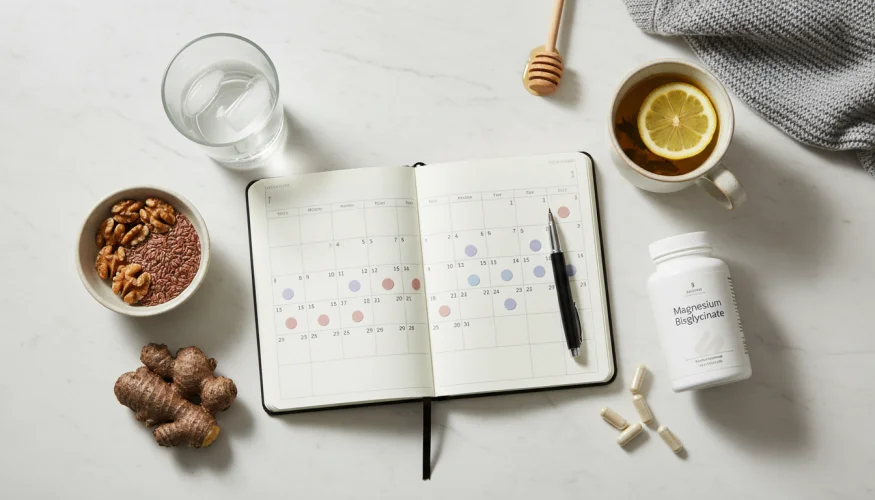
It is not unusual for women with this condition to stay home from work, postpone planned activities, or cancel social engagements—and feel a little guilty because they “aren’t really sick.” Take, for example, a 30-year-old teacher who suffers such severe headaches and muscle aches two days before her period every month that she cannot function normally. For years, she thought it was just a coincidence or that she was simply more prone to viral illnesses at a certain time of year. Only when she started keeping a menstrual diary and recording exactly when her symptoms appeared did she notice a regular pattern—and finally understand what was happening to her.
Why the body reacts so intensely and what can be done about it
One of the most important things to understand is that period flu is not a sign of weakness or oversensitivity—it is a real physiological response to hormonal changes. Some experts even believe that the mild inflammatory response that occurs in the body before menstruation has an evolutionary purpose and is connected to how the body prepares the uterine lining to shed. As Dr. Jen Gunter, gynecologist and author of The Menstruality Manifesto, says: “Menstruation is not a disease, but that does not mean that the symptoms associated with it are not real or deserving of attention.”
Hormonal fluctuations also affect the immune system. Research suggests that during the luteal phase of the cycle, the body’s immune response may be slightly altered, potentially leading to greater susceptibility to infections or a more intense experience of inflammation. This explains why it can sometimes feel as though the body is actually “coming down with something”—in a sense, it is undergoing a regulated inflammatory response, even without a virus or bacterium present.
When it comes to symptom relief, a wide range of approaches may help. One of the best-documented methods is dietary changes. Foods rich in omega-3 fatty acids—such as flaxseeds, walnuts, and fatty fish—naturally reduce prostaglandin production and may therefore lessen the intensity of cramps and other symptoms. Conversely, foods high in sugar and saturated fats, and processed foods in general, promote inflammation, so limiting them during the second half of the cycle may bring noticeable relief. Research published in the European Journal of Clinical Nutrition confirms that a diet lower in animal fats and higher in fiber and omega-3 fatty acids is associated with milder menstrual symptoms.
Exercise is often the last thing you feel like doing when you feel unwell—and yet regular physical activity is one of the most effective natural ways to relieve menstrual symptoms. Exercise promotes the release of endorphins, which act as natural painkillers, while also helping to regulate hormone levels. This does not mean you need an intense workout; on the contrary, when the body is tired and sore, gentler forms of movement such as yoga, walking, or swimming are more suitable. In several studies, regular yoga practice focused on relaxing the pelvic floor and reducing stress has been shown to be effective in relieving dysmenorrhea, or painful menstruation.
Another important factor is sleep and stress management. Cortisol, the stress hormone, directly affects the balance of sex hormones, so chronic stress can significantly worsen period flu symptoms. Women who regularly sleep less than seven hours or experience prolonged stress often report more intense premenstrual symptoms. Techniques such as meditation, breathing exercises, or herbal adaptogens—for example, ashwagandha or maca—can help keep cortisol at a manageable level and support hormonal balance.
When it comes to natural remedies, magnesium deserves a special mention. This mineral plays a key role in regulating muscle contractions and the nervous system, and a deficiency—which is relatively common among women of reproductive age—is associated with more severe menstrual cramps, headaches, and irritability. Magnesium supplements, particularly in the form of magnesium bisglycinate or citrate, can bring noticeable improvement. Vitamin D has a similar effect, and its anti-inflammatory properties may help reduce the overall intensity of symptoms.
In herbal medicine, several plants have a long history of use for menstrual problems. St. John’s wort may help with mood swings and irritability, while ginger, thanks to its anti-inflammatory properties, effectively combats nausea and pain. Some studies suggest that ginger’s effects in relieving menstrual pain are comparable to those of ibuprofen—without adverse effects on the stomach lining. If you are looking for natural products that could support your body throughout your cycle, Ferwer offers a wide range of products focused on women’s health and hormonal balance.
It is also very important for women who regularly experience severe flu-like symptoms during menstruation to see a gynecologist. In some cases, intense symptoms may be a sign of endometriosis—a serious gynecological condition in which tissue similar to the uterine lining grows outside the uterus. Endometriosis affects approximately ten percent of women of reproductive age and is notoriously underdiagnosed, with an average of around seven to ten years between the first symptoms and diagnosis. Severe pain, exhaustion, and general flu-like symptoms should therefore never be automatically dismissed as a “normal part of menstruation.”
Understanding your own body and its cycles is a powerful tool. Keeping a menstrual diary—whether on paper or through an app—helps reveal patterns, anticipate more difficult days, and adjust your lifestyle accordingly. Women who track their cycle can, for example, plan more demanding work tasks for the first half of the cycle, when they have more energy, and save quieter activities for the days around menstruation. This approach, sometimes called “cycle syncing,” has gained increasing support in recent years among women and experts who recommend it as a way to live in harmony with the body’s natural rhythm.
Period flu is real, has a biological explanation, and deserves attention—from women themselves, the people around them, and the healthcare community. The fact that the symptoms are not caused by a virus does not mean they are less serious or that women should simply endure them in silence. Understanding what is happening in the body and knowing the available options for relief can fundamentally change the monthly experience of menstruation—from something to be patiently endured into something that can be actively managed.