

What Is Oldest Daughter Syndrome and Who Does It Affect?
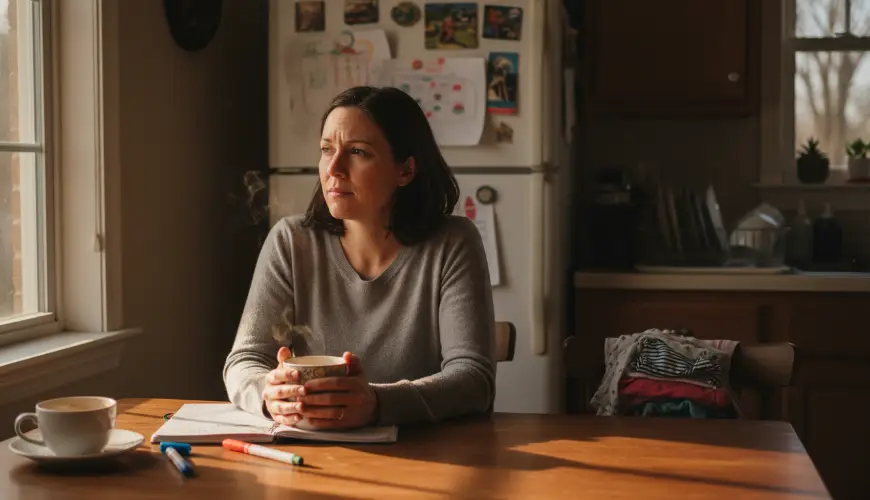
Perhaps you know her. She is the one who always knows what needs to be done, who never asks for help, and who feels guilty when she allows herself to rest. She is the eldest daughter in the family – and, according to psychologists, she carries far more on her shoulders than most people realize. Eldest daughter syndrome is a phenomenon that has been discussed more and more openly in recent years, not only in professional circles but also in everyday conversations among women who are beginning to recognize themselves in its descriptions.
It is not a diagnosis in the sense of a psychiatric manual. Rather, it is a set of behavioral patterns, emotional responses, and internal beliefs that eldest daughters carry from childhood into adulthood – and that significantly affect their relationships, careers, health, and overall well-being. Understanding where these patterns come from and how they work is the first step toward helping the women affected begin to live more freely.
Try our natural products

How the burden of being the firstborn develops
When a first child is born into a family, the parents are excited, nervous, and full of expectations. Gradually – whether consciously or unconsciously – they place more responsibility on this child than is appropriate for their age. Research repeatedly shows that firstborn children are generally subject to greater demands and expectations from their parents. When that firstborn child is a girl, the situation becomes even more complicated – deeply rooted gender norms come into play, traditionally expecting women and girls to be nurturing, empathetic, and self-sacrificing.
Eldest daughters learn very early that their worth depends on how well they care for others. They look after younger siblings, help around the house, interpret emotions between parents and children, and become a source of support for their mother or father during difficult times. All the while, they are expected to handle everything with a smile, without complaining, and without needing too much attention themselves.
Imagine Lucie, a thirty-three-year-old woman from Brno who grew up with two younger brothers. Her mother worked two shifts, and her father was often away on business. From the age of ten, Lucie cooked dinners, supervised her siblings’ homework, and resolved conflicts between them. Today she has a family and a career of her own, but she admits that she cannot say “no” – not at work, at home, or to her friends. “I always feel that if I don’t help, I’ll mess something up,” she says. “As if the whole world depended on me.”
This very feeling – that everything depends on them – is one of the most characteristic signs of eldest daughter syndrome. Psychologists call it parentification: a situation in which a child takes on the role of a parent or emotional caregiver within the family. This phenomenon is described in detail, for example, by American psychologist and author Lindsay C. Gibson, who has long focused on emotionally immature parents and their impact on children.
Patterns that persist into adulthood
What begins as an adaptation to a family situation eventually becomes a deeply ingrained way of being in the world. Eldest daughters take a whole set of beliefs from childhood and unconsciously apply them to every area of their lives. These include the belief that rest is a luxury they must earn. That asking for help is a weakness. That their needs are less important than those of others. And that if something goes wrong, it is probably their fault.
These patterns have a direct impact on physical and mental health. Chronic stress, burnout, anxiety, and difficulty forming relationships of equals are just some of the consequences experts associate with this syndrome. The World Health Organization has repeatedly pointed out that chronic stress is among the most significant risk factors for a wide range of diseases associated with modern lifestyles, from cardiovascular disease to depression.
In romantic relationships, eldest daughters often find themselves in the role of the person who “runs” the household, planning, organizing, and making sure everything works. They are often described as strong and reliable – and although that sounds like a compliment, in practice it means that others rarely expect them to need support themselves. Their partners, friends, and colleagues become accustomed to them taking care of themselves – so eldest daughters find themselves in a paradoxical situation: they are surrounded by people, yet feel lonely.
In the workplace, eldest daughters are usually highly productive, reliable, and willing to take responsibility. At the same time, they often struggle to delegate tasks, accept criticism without feeling like a failure, and set healthy boundaries. They tend to be the first to work overtime and the last to take a vacation. They may achieve a great deal in their careers – but at a cost that sooner or later takes a toll on their health or relationships.
Another interesting aspect is the eldest daughter’s relationship with her younger siblings. While she bore responsibility and lived up to expectations, her siblings could afford to be “just children.” This unequal distribution of roles can lead in adulthood to quiet resentment, a sense of injustice, or, conversely, an excessively protective role that the eldest daughter continues to play toward her siblings – even though they have all long since grown up.

The path to a freer life
The good news is that becoming aware of these patterns is itself a powerful tool for change. Psychology speaks here of the concept of “earned security” – the idea that a secure emotional attachment can be developed in adulthood, even if we did not have one in childhood. It will not happen overnight, but it is possible.
One of the key steps is learning to distinguish between responsibility that truly belongs to us and responsibility we have taken on because someone – consciously or unconsciously – led us to do so. Eldest daughters tend to accept responsibility automatically, without thinking, like a reflex. In this context, therapy helps slow down this automatic response and prompts them to ask themselves again: Is this really my responsibility? Do I want to do this, or am I doing it out of fear?
Working with the body is another very useful tool. The chronic tension that eldest daughters carry in their bodies cannot be resolved through reason alone. Approaches such as yoga, mindfulness, breathing exercises, and somatic therapy help release tension held in the nervous system and reconnect with one’s own needs. It is no coincidence that interest in these practices has grown significantly in recent years – many women intuitively feel that they need a way to return to themselves.
Change also begins with small everyday decisions. Saying “no” to one request. Asking a partner for help with something an eldest daughter would normally handle herself. Allowing yourself to rest without feeling guilty. These seemingly small steps gradually rewrite old beliefs and create new ones – that I am valuable even when I am not caring for others, that my needs are just as important as those of others, and that I can be vulnerable without the world falling apart.
As American psychologist and author Nedra Tawwab, a specialist in healthy boundaries, put it: “Boundaries are not about controlling others. They are about taking care of yourself.” This idea is especially important for eldest daughters – because they have spent their whole lives learning to care for others, but no one taught them how to care for themselves.
It is worth noting that eldest daughter syndrome does not affect only women who grew up in genuinely dysfunctional families. It can also appear in families where the parents were loving and tried their best but simply did not know how else to divide up roles. It is not about blaming parents – it is about understanding what happened and deciding how we want to live going forward.
Recently, eldest daughter syndrome has also received growing attention in the media and on social networks. Hashtags such as #eldestdaughtersyndrome on platforms like TikTok and Instagram have millions of views, and thousands of women are sharing their stories with surprising openness. This wave of sharing has great therapeutic potential – it shows women that they are not alone and normalizes conversations about topics that were taboo for a long time.
If you recognize yourself in this article, it is worth paying attention to your patterns – not so that you feel like a victim, but so that you can consciously choose how you want to live. Eldest daughters are generally exceptionally strong, empathetic, and capable women. The question is not whether they have enough strength – the question is whether they will also use it for themselves.