
# Stretching Intercostal Muscles for Better Breathing
Breathing is something we do automatically thousands of times a day without thinking about it. Yet most people breathe only shallowly, using a fraction of their actual lung capacity, without even realising that the cause may be something as specific as tight intercostal muscles. These small but enormously important muscles between the ribs determine how deeply we can inhale, how freely the chest moves, and ultimately how we feel overall.
Intercostal muscles are not a topic commonly discussed over breakfast or during sport. Yet they are part of every inhale and exhale. They are arranged in three layers between individual ribs, and their main task is to allow the chest to expand during inhalation and contract during exhalation. If these muscles are shortened, overloaded, or stiff, the entire breathing mechanism suffers. A person then breathes shallowly, using the upper part of the chest, and the body receives less oxygen than it should. Over time, this state affects not only physical fitness but also psychological wellbeing.
Try our natural products





Why intercostal muscles stiffen and what to do about it
There are several reasons why intercostal muscles lose their elasticity. A sedentary lifestyle, working at a computer with hunched shoulders, long hours spent behind the wheel, or chronic stress – all of these cause the chest to gradually close up. The body adapts to the position in which it spends the most time, and if that is sitting with a rounded back, the intercostal muscles will shorten and stiffen. Paradoxically, a similar problem can also result from intense athletic performance, during which the muscles around the chest become overloaded without sufficient recovery.
Interestingly, a tight chest and restricted breathing are closely linked to stress and anxiety. When a person is under pressure, their breath automatically becomes shallower and faster. If this state persists over a long period, the body "memorises" this pattern and shallow breathing becomes the norm even during moments of rest. This is precisely why stretching the intercostal muscles is an effective tool not only for physical health, but also for calming the nervous system.
How to go about it? The good news is that intercostal muscles can be stretched relatively easily and it requires no special equipment. All you need is a little space, patience, and the willingness to dedicate a few minutes each day to your body. Below are specific exercises that genuinely work and are recommended by physiotherapists and yoga instructors around the world.
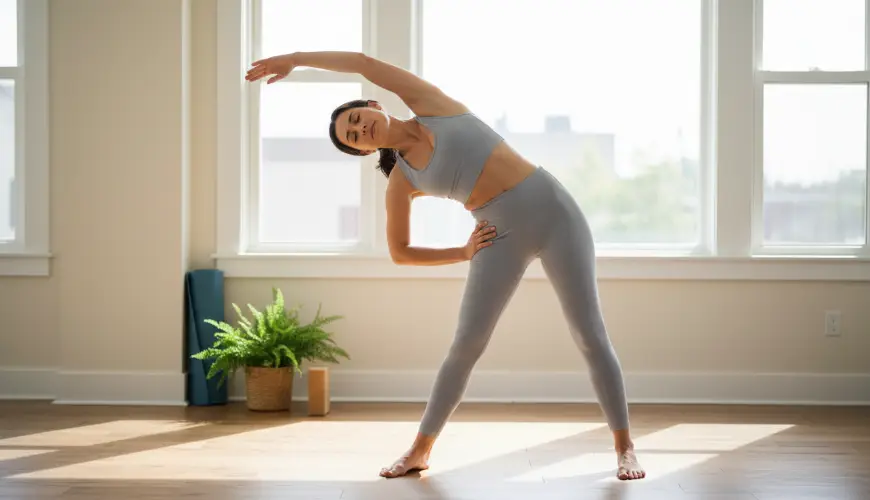
One of the simplest yet most effective methods is a lateral bend performed standing or seated. Simply stand up straight, raise one arm above your head, and slowly lean to the opposite side. When performed correctly, you will feel a distinct stretch along the entire side of the chest – precisely where the intercostal muscles lie. It is important to hold the position for at least 20 to 30 seconds while consciously breathing into the area where you feel tension. The breath thus becomes a tool for stretching, rather than merely an accompanying phenomenon.
Another popular exercise is the so-called "open book", or thoracic spine rotation. Lie on your side, bend your knees, and extend both arms in front of you. Then slowly rotate the upper arm backwards and upwards, letting your gaze follow your hand. The chest opens, the intercostal spaces widen, and the muscles get a chance to stretch. This exercise is also popular among physiotherapists because it simultaneously mobilises the thoracic spine, which tends to be significantly stiff in people with sedentary lifestyles.
Lateral breathing, sometimes called lateral or rib breathing, is also highly effective. In this exercise, the inhalation is intentionally directed into the sides of the chest – as if the ribs were opening outwards like an accordion. The hands can rest on the sides of the chest so that you can feel the movement of the ribs beneath your palms. This technique originates from Pilates and yoga, but today it is also used by singers, actors, and athletes who need to have full control over their breath. Practising this breathing method regularly will literally retrain the body in how to breathe correctly.

How stretching the intercostal muscles changes everyday life
It may seem like a small thing. But a change in the quality of breathing manifests surprisingly quickly and across many areas of life at once. People who begin regularly stretching their intercostal muscles and paying attention to their breathing often report feeling less tired, having better concentration, and sleeping more soundly. This is no coincidence – oxygen is the fundamental fuel for every cell in the body, and deeper breathing simply means more energy.
Research confirms that conscious work with the breath has a demonstrable effect on the activity of the autonomic nervous system. For example, a study published in the journal Frontiers in Human Neuroscience showed that slow, deep breathing activates the parasympathetic nervous system – the part responsible for rest, recovery, and calm. In other words, stretching the chest and breathing consciously are among the most natural ways to reduce stress levels without medication or other interventions.
Let us consider a specific example. Jana works as a project manager, spends most of her day sitting at a computer, and her evenings on the sofa. A year ago, she began experiencing a feeling of heaviness in her chest and occasional pain between her shoulder blades. Her doctor ruled out heart problems, and her physiotherapist recommended focusing on chest mobility and intercostal muscle stretching. Jana began dedicating ten minutes each morning to simple exercises – lateral bends, thoracic rotations, and rib breathing. After three weeks, the feeling of heaviness subsided; after six weeks, she noticed she could breathe more freely even when climbing stairs. Today she no longer regards these exercises as an obligation, but as a natural part of her morning routine, much like breakfast or a shower.
Such stories are not exceptional. Physiotherapists and breathing technique instructors encounter similar experiences regularly. The key is consistency and patience – the body needs time to consolidate new movement patterns.
It is also worth mentioning that stretching the intercostal muscles is not solely a concern for people with problems. Preventive care for the chest and breath is just as important as caring for the back or joints. As the pioneer of modern movement medicine Moshe Feldenkrais said: "If you don't know what you're doing, you can't do what you want." Awareness of one's own body and its movements – including the breath – is the foundation of truly healthy movement.
For those who wish to go deeper, there is a wide range of approaches for working systematically with the intercostal muscles and the breath. Yoga offers dozens of poses that specifically open the chest – such as cobra, bow, or bridge. Pilates places emphasis on rib breathing as the foundation of the entire system. Breathing techniques such as Buteyko or the Wim Hof method work with the breath at an even deeper physiological level. And for those who prefer a personalised approach, consulting a physiotherapist is always a good option, as they can identify specific restrictions and suggest exercises tailored precisely to the individual.
An interesting yet little-known fact is that the intercostal muscles are connected to the diaphragm – the primary breathing muscle, which arches like a dome beneath the lungs. If the intercostal muscles are stiff, the diaphragm cannot fully descend during inhalation and the lungs cannot expand to their full volume. Conversely, when the intercostal muscles are flexible and relaxed, the diaphragm works more efficiently and the breath automatically deepens. These two systems are therefore inseparably linked, and caring for one will always be reflected in the other.
According to information available on the Cleveland Clinic website, the proper function of the intercostal muscles plays a key role not only in normal breathing, but also in coughing, laughing, singing, and physical exertion. Any restriction in their mobility will therefore manifest across the full breadth of everyday functioning – from athletic performance and vocal volume to the ability to laugh wholeheartedly.
Caring for the intercostal muscles is caring for quality of life. There is no need to spend hours at the gym or invest in expensive equipment. All it takes is a few minutes a day, a little attention, and the willingness to listen to your own body. Breathing that has been shallow and laboured for years can gradually transform into a deep, calm rhythm that gives the body exactly what it needs. And that is a change you will feel with every step.