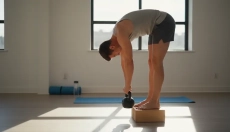

Constipation and the pelvic floor are more connected than you think

Chronic constipation is one of those health problems that people manage on their own for a long time, quietly and without professional help. They reach for laxatives, increase their fiber intake, drink more water – and yet nothing fundamentally changes. The reason? Very often the problem lies somewhere completely different from where most of us would expect. The pelvic floor and its function are directly connected to chronic constipation, yet this connection remains surprisingly little known to the general public.
Most people associate the pelvic floor exclusively with pregnancy, childbirth, or incontinence. Yet this group of muscles, ligaments, and connective tissue that forms the base of the torso performs far more functions. It supports the organs of the lesser pelvis, works together with the diaphragm and deep back muscles during breathing and spinal stabilization, and plays a crucial role in regulating elimination – of both the bladder and the bowels. If this system does not function properly, the result can be chronic constipation that does not respond to standard dietary or pharmacological treatment.
Try our natural products
When muscles block instead of relaxing
To understand how the pelvic floor and constipation are connected, it is necessary to visualize what actually happens during defecation. The rectum and anal sphincter must relax at the right moment to allow stool to pass through. The pelvic floor simultaneously lowers slightly and releases. This sounds simple, but in a portion of the population this process works in exactly the opposite way – the pelvic floor muscles contract instead of relaxing during an attempt to empty the bowels. This condition is medically known as pelvic floor dyssynergia, or anismus, and is one of the most common yet least diagnosed causes of chronic constipation.
A person with this problem typically describes a feeling of urgency, but the stool "won't come out", or that they must exert disproportionate effort during a bowel movement. Sometimes a change of position helps, or manual assistance, or taking a break and trying again. All of these signals point not to slow intestinal transit, but to a functional disorder in the pelvic floor area. Standard examinations and imaging methods such as X-ray or colonoscopy will not reveal this problem – specialized testing is required, such as anorectal manometry or defecography.
As Cleveland Clinic points out, pelvic floor dysfunction affects men and women of all age groups, with many patients waiting years for the correct diagnosis. In the meantime, their symptoms worsen, dependence on laxatives increases, and quality of life deteriorates.
Interestingly, the causes of this condition are highly varied. In women, childbirth, hormonal changes, or surgery in the pelvic area play a role. In men, the trigger may be prostatectomy or anal surgery. In both sexes, however, chronic stress and psychological tension are increasingly emerging as key factors. The pelvic floor muscles respond to stress similarly to the muscles of the neck or back – they tighten, shorten, and lose the ability to consciously relax. A person who lives under chronic stress may have a chronically hypertonic pelvic floor without even being aware of it.
This aspect is addressed, for example, in research published in Neurogastroenterology & Motility, where authors repeatedly highlight the strong link between emotional state, the nervous system, and pelvic floor function. The gut–brain axis, which has been discussed increasingly in recent years, therefore encompasses not only the microbiome and mood, but very concretely also muscular tension in the pelvic region and the capacity for healthy bowel movements.
Consider the example of a thirty-year-old accountant who works from home, sits at a computer for eight to ten hours a day, eats relatively healthily, and yet has suffered from chronic constipation for several years. Her doctor repeatedly referred her to increase her fiber intake and exercise. She increased her fiber, started doing yoga – with no significant change. Only when a physiotherapist specializing in the pelvic floor examined her did she discover significant hypertonicity of the pelvic muscles and an inability to consciously relax them. After a series of physiotherapy sessions focused on release and practicing correct breathing, her symptoms improved considerably – without a single additional laxative.
This example is not isolated. Pelvic floor physiotherapy has been used as a standard treatment for functional bowel disorders for decades in other countries, particularly in France, Belgium, and Canada. In the Czech Republic, this field is only now receiving the attention it deserves, although the number of specialists in this area is growing and awareness among physicians is increasing.

How to approach it: physiotherapy, breathing, and correct positioning
The good news is that pelvic floor dysfunction associated with chronic constipation is treatable in most cases, and without surgical intervention. The key is correct diagnosis and individually tailored physiotherapy. A specialized physiotherapist first assesses muscle tone, coordination, and the ability for conscious control – and only then designs an exercise plan.
It is important to understand that in cases of pelvic floor hypertonicity, classic strengthening exercises such as Kegel exercises are not appropriate. These are intended for a weakened pelvic floor and could worsen symptoms in a hypertonic state. Instead, the focus is on release techniques, conscious breathing into the abdomen and pelvic region, movement, and practicing the correct defecation position.
The position during a bowel movement is a simple yet very effective variable that is often overlooked. Elevating the feet on a footrest beside the toilet so that the knees are higher than the hips mimics the natural squatting position, in which the puborectalis muscle – a component of the pelvic floor – relaxes optimally. A study published in the Journal of Clinical Gastroenterology showed that this simple change in position shortens the time needed for a bowel movement and reduces the need for straining in the majority of subjects tested. Toilet footstools, sometimes humorously called "toilet stools," are therefore becoming a common recommendation from gastroenterologists and physiotherapists alike.
Breathing is another important element. Many people instinctively hold their breath when attempting a bowel movement and increase intra-abdominal pressure. While this may help in the short term, it places long-term strain on the pelvic floor and prevents it from functioning correctly. Practicing so-called coordinated exhalation during defecation – where a person exhales while bearing down instead of holding their breath – is part of the physiotherapeutic approach and yields demonstrable results.
As American physiotherapist and author of books on pelvic health Katy Bowman once aptly noted: "The pelvic floor is not an isolated muscle. It is part of the entire movement system of the body, and if we want it to function, we need to move as a whole." This idea is fundamental – no isolated pelvic floor exercises will produce lasting results without changing overall movement patterns, posture, and breathing.
Alongside physiotherapy, lifestyle also plays a role. Adequate fluid intake, regular physical activity, and reducing chronic stress are factors that directly influence pelvic floor tone and bowel function. Yoga, swimming, or walking are activities that support both intestinal peristalsis and the release of tension in the pelvic area. Meditation and conscious breathing techniques help reduce overall tension in the nervous system, which is directly reflected in the pelvic floor.
Diet naturally remains important – but in a different way than most people think. It is not just about the amount of fiber, but about its type and the overall quality of the diet. Soluble fiber from fruit, legumes, and oats is gentler on the intestines than insoluble fiber from bran, which can cause bloating and worsen symptoms in sensitive individuals. Fermented foods such as kefir, sauerkraut, or kombucha support a healthy gut microbiome, which is also connected to bowel function and pelvic floor health. Quality magnesium – whether through diet or as a supplement – naturally relaxes muscle tension and supports intestinal motility, acting on the pelvic floor in a similar way to other muscles of the body.
Chronic constipation is therefore, in many cases, not simply a matter of diet or intestinal motility. It is a complex functional condition involving muscular coordination, the nervous system, breathing, movement patterns, and psychological state. And the pelvic floor stands at the very center of this interconnected web. The sooner this connection is taken seriously – both by patients themselves and by physicians – the sooner genuine relief and an improvement in the quality of everyday life can be achieved.