
# How to Prevent Little Toe Pain from Inappropriate Footwear Pain in the little toe is a very commo
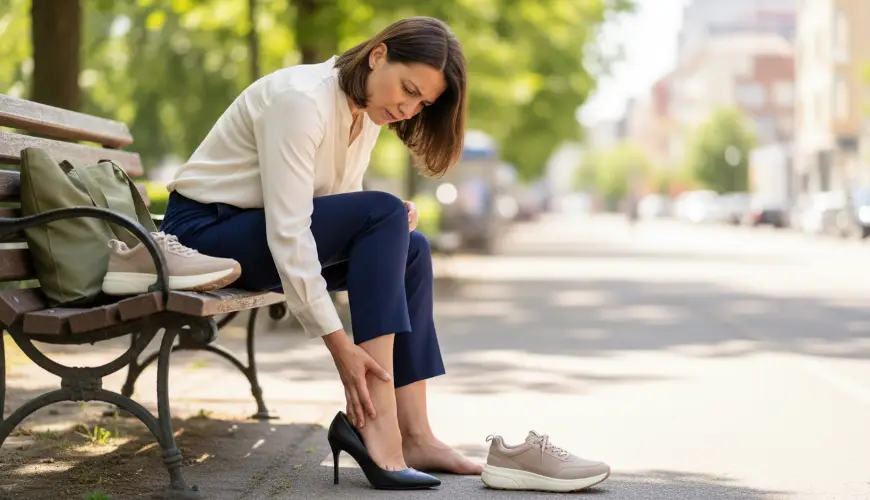
Everyone knows it. A new pair of shoes, the first longer walk, and then that unpleasant feeling — a sharp pain on the outer side of the foot, precisely where the little toe begins to protest. Pain in the little toe caused by inappropriate footwear is one of the most common orthopaedic complaints that people tend to dismiss. "The shoes will break in," they tell themselves. But the reality is often different, and the consequences of ignoring this warning signal can be surprisingly serious.
The little toe may be the smallest toe on the foot, but its role in the overall biomechanics of walking is absolutely essential. It contributes to maintaining balance, stabilising the stride, and the proper rolling of the foot off the ground. When it is subjected to prolonged pressure from inappropriate footwear, the body has to deal with it somehow — and the ways it does so are not always pleasant or healthy.
Why inappropriate footwear hurts the little toe specifically
The answer lies in the anatomy and construction of most modern footwear. Pointed or overly narrow shoes are the main culprits. They compress the front part of the foot into a shape that nature certainly never intended. The little toe is constantly pushed towards the other toes, rubbed against the upper of the shoe, or squeezed in an overly tight toe box. The result is initially mild sensitivity, which over time develops into chronic pain.
Another factor is heel height. High heels shift the body's centre of gravity forward and increase pressure on the front part of the foot by tens of percent compared to walking barefoot. According to research published in the specialist journal Journal of Orthopaedic Research, wearing heels higher than five centimetres can increase the load on the metatarsal bones by more than 75%. The little toe and its joint are among the most heavily exposed areas.
The quality of materials also plays a role. Cheap synthetic footwear without sufficient flexibility and breathability does not allow the foot to move naturally. The material does not adapt to the shape of the foot; instead, it forces the foot to adapt to the shape of the shoe — and that is precisely the opposite of how it should be. Quality footwear should respect the natural shape of the foot, not reshape it.
What happens to the little toe under pressure
If pain in the little toe caused by inappropriate footwear is left unaddressed, the body begins to respond in various ways — and none of them are pleasant. First, calluses and corns appear, which is the skin's defensive reaction to repeated mechanical pressure. The skin thickens to protect the deeper tissues. But that alone is not enough.
A far more serious problem is the development of so-called hallux valgus of the little toe, i.e. a deformity in which the little toe begins to bend towards the other toes. This condition is medically known as digitus quintus varus, or "tailor's bunion." The name originates from the Middle Ages, when tailors sat cross-legged all day and the pressure on the outer edge of the foot caused precisely this deformity. Today, it is caused primarily by inappropriate footwear.
With prolonged pressure, inflammation of the little toe joint may also occur, along with damage to the tendons or even stress fractures of the fifth metatarsal — the bone that supports the little toe. Stress fractures of this type are fairly common, particularly among women who wear narrow shoes with high heels. They initially manifest as a dull ache that worsens with activity, and many people mistakenly regard them as mere overuse.
It is remarkable how far from the foot the problems can spread. When the little toe hurts, a person unconsciously changes their gait. They offload the painful area, shift their weight elsewhere, and compensate with their entire body. The result can be pain in the ankle, knee, hip, or even the back. As American orthopaedic surgeon Dr Rock Positano put it: "Feet are the foundation of the entire body — if the feet are unhealthy, the entire musculoskeletal system suffers."
Consider a specific example: Jana, a thirty-year-old accountant, wore elegant court shoes with a narrow toe box and a seven-centimetre heel for several years. At first, she only complained of tired feet after a working day. Gradually, pain in the little toe was added, which she managed with plasters and insoles. After two years, her doctor diagnosed an incipient little toe deformity and joint inflammation, which required several months of physiotherapy. And yet far less would have sufficed — paying attention to the first signals and reaching for appropriate footwear.
How to recognise inappropriate footwear before it starts to hurt
Prevention is always easier than treatment. There are several simple rules that will help you choose footwear that will not torment your little toe.
The basic guide is the shape of the toe box. Shoes should have a sufficiently wide toe box that allows the toes to move freely. The big toe and little toe should not be pressed together — ideally, there should be a small gap between the widest part of the foot and the edge of the shoe. A practical test: stand on a sheet of paper, trace around your foot, and place the shoe against the outline. If the shoe is noticeably narrower than the outline of the foot, that is a clear warning sign.
Shoe length is another key parameter. There should be approximately one centimetre of space — roughly the width of a thumb — between the longest toe and the tip of the shoe. The foot naturally lengthens during walking and needs this space to move freely.
Heel height should ideally not exceed three centimetres for everyday wear. This does not mean that elegant footwear with a higher heel must be completely banned, but it is sensible to reserve it for special occasions and limit the time spent wearing it. The upper material should be sufficiently soft and adaptable — natural leather or quality textile materials will "mould" to the foot far better than rigid synthetics.
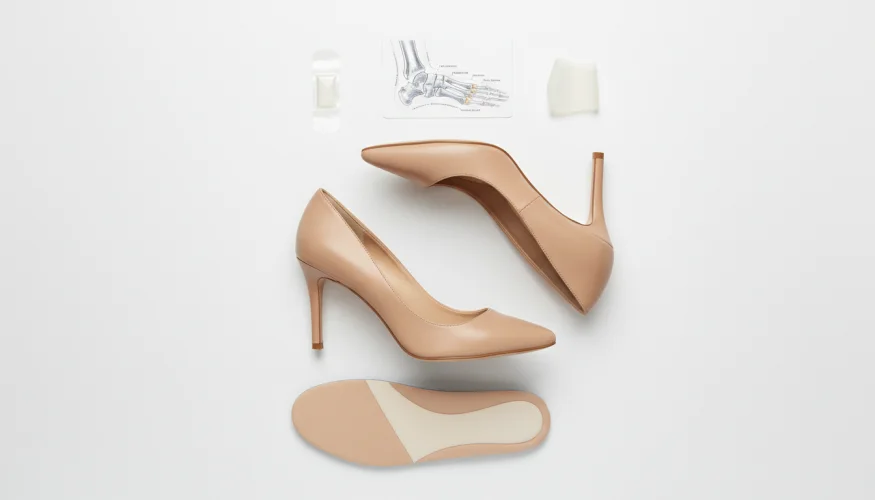
The insole and footbed also play an important role. A well-shaped insole with arch support helps distribute pressure evenly across the entire foot, thereby reducing the concentration of load in the area of the little toe. There are also specialist orthopaedic insoles on the market designed specifically to protect the metatarsal area, which can be added to existing footwear.
When choosing footwear, it is also important to think about the time of purchase. Feet are smaller in the morning and can be up to half a size larger in the afternoon after a full day of activity. Buying shoes in the morning and then discovering they are too tight in the afternoon is an unnecessarily unpleasant experience that is easily avoided.
Sports footwear is a chapter in itself. Running shoes, trainers, or hiking boots should always be chosen with regard to the specific activity and the individual shape of the foot. Experts from the American Podiatric Medical Association recommend having your foot professionally measured and your arch type assessed, as this significantly influences the choice of an appropriate model. A flat foot, high arch, or foot overpronation — each type requires different support.
If pain in the little toe from inappropriate footwear already exists, it is important to act without unnecessary delay. In the first instance, switching to more comfortable footwear, applying an ice pack to reduce inflammation, and resting are all helpful. Specialist silicone little toe protectors, which absorb pressure and reduce friction, are also suitable. Pharmacies and specialist orthopaedic supply shops offer a wide range of such products.
If the pain persists for more than two weeks, or is accompanied by swelling, redness, and limited joint mobility, a visit to a GP or directly to a podiatrist — a specialist in foot care — is warranted. They can recommend physiotherapy, custom-made orthopaedic insoles, or, in advanced cases, surgical correction of the deformity.
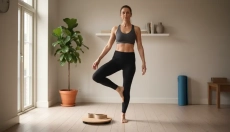
Physiotherapy, meanwhile, offers surprisingly effective tools. Exercises to strengthen the muscles of the foot, stretching the tendons, and mobilising the joints of the little toe can significantly reduce pain and slow or halt the progression of deformities. Simple exercises such as picking up marbles with the toes, rolling a tennis ball under the foot, or rising onto the tips of the toes are accessible to anyone and require no special equipment.
It is also worth reflecting on the overall approach to foot health. In many Asian cultures, walking barefoot or in minimalist footwear is a normal part of everyday life, and problems with toe deformities are statistically less common there. A study published in the journal Footwear Science compared populations that traditionally wear enclosed footwear with those who walk predominantly barefoot or in sandals, and found a significantly lower incidence of forefoot deformities in the latter group.
This does not, of course, mean that all shoes should be immediately discarded. But it offers a valuable lesson: the foot needs space, movement, and natural conditions in order to remain healthy. Every compromise in the choice of footwear should be a conscious one, balanced by care for the feet.
Pain in the little toe is a signal worth taking seriously — not so that every everyday shoe purchase becomes a science, but because healthy feet are the foundation of wellbeing and activity at every age. The right footwear is not a luxury, but an investment — in the comfort, health, and quality of every step.