

# Cook Yourself Vegetarian Oyster Mushroom Goulash
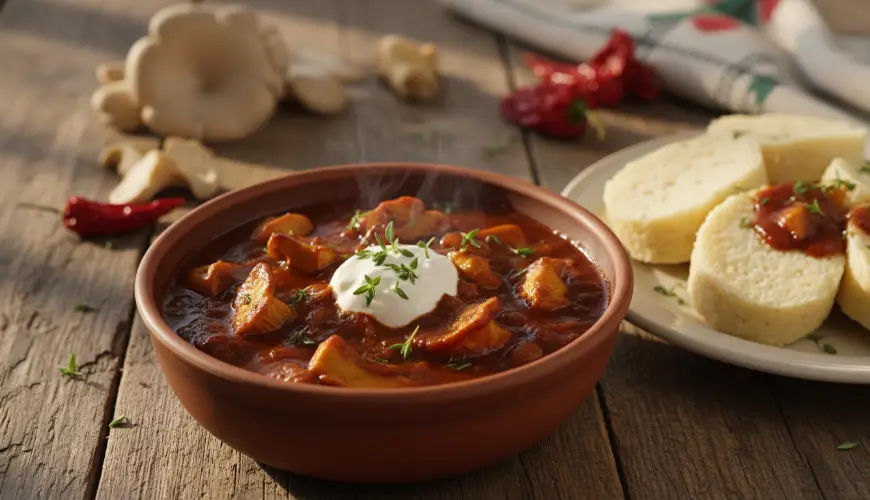
Autumn brings to kitchens a craving for warm, hearty dishes that warm you from the very first bite. Goulash is an absolute classic in the Czech Republic – but what do you do when you want to reduce your meat consumption, or when you're cooking for guests with different dietary preferences? The answer is surprisingly simple and yet completely delicious: vegetarian goulash made from oyster mushrooms. This mushroom can mimic the meaty texture so faithfully that many diners cannot tell it apart from meat.
Oyster mushroom (Pleurotus ostreatus) is one of the most widespread edible mushrooms in the world. It is cultivated on sawdust, straw, or wooden logs, making its production significantly more environmentally friendly than raising livestock. According to data from the Food and Agriculture Organization of the United Nations (FAO), mushrooms in general rank among foods with one of the lowest carbon footprints, with their cultivation consuming a fraction of the water and land required for meat production. Oyster mushrooms are also easily accessible – you can find them in supermarkets, at farmers' markets, and in specialist health food shops.
Why do even people who don't usually seek out mushrooms fall in love with them? The key lies in their structure. The large cap of the oyster mushroom has a fibrous consistency that, after cooking, closely resembles pulled meat. When you tear it by hand into larger pieces and fry it in hot oil, it develops a golden crust and a deep, slightly nutty flavour. Add the right spices, a quality paprika base, and enough time for slow braising – and the result is a goulash that would hold its own on any Czech table.
Try our natural products


The secret to great flavour: preparation and seasoning
It all starts with choosing the right ingredients. Fresh oyster mushrooms should have firm, light grey to beige caps with no dark spots or unpleasant smell. If possible, opt for a locally grown variety – Czech oyster mushroom production is of high quality and relatively easy to find throughout the year. It is important not to wash the mushroom under running water before preparation, but only to wipe it with a damp cloth, so it doesn't absorb unnecessary moisture and browns properly when fried.
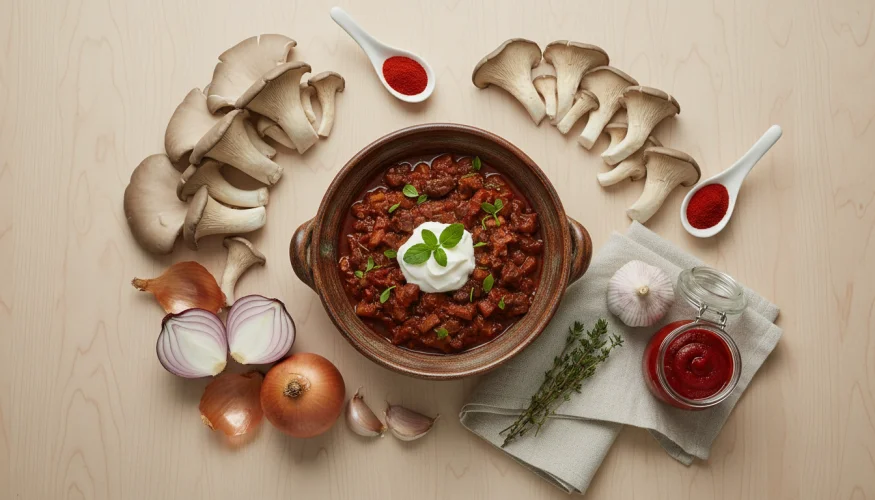
The foundation of any proper goulash is a good onion base. Two to three large onions, sliced into half-rings, are slowly sautéed in oil or clarified butter until they turn golden and begin to caramelise. This step requires patience – it is precisely the caramelised onion that gives the goulash its characteristic sweetness and the dark colour of the sauce. Once the onion is ready, it's time for the paprika. The classic recipe uses a combination of sweet and hot ground paprika, with the ratio depending on personal taste. The paprika is added away from direct heat or with the flame turned down, to prevent the spice from burning and turning bitter – this is a mistake many beginner cooks make.
Garlic, caraway seeds, marjoram, and possibly a little tomato paste are then added to the base, giving the sauce depth and a mild acidity. Only at this point are the fried oyster mushroom pieces added. The mushrooms are best sautéed separately in a very hot pan, in a single layer and without stirring, until they brown. Only this way will they develop the right texture and flavour, rather than steaming in their own juices and turning rubbery.
The whole goulash is then covered with vegetable stock or water and left to simmer slowly for approximately twenty to thirty minutes. The resulting sauce should be thick, velvety, and fragrant. It can be thickened by adding a tablespoon of plain flour dissolved in a little cold water, or simply by cooking uncovered for longer to allow the excess liquid to evaporate. Some cooks add a spoonful of sour cream at the end, which softens the sauce and gives it a creamy character.
One specific example: Jana, a thirty-year-old teacher from Brno who decided two years ago to reduce her meat consumption, admits that oyster mushroom goulash was the first vegan dish that won over her partner – a committed meat-eater. "I made it for the first time at a family Sunday lunch and my father-in-law asked where the meat was. When I told him there was none in the pot, he didn't believe me," she laughed. Today it is one of their favourite autumn dishes.
Nutritional values and health benefits of oyster mushrooms
Oyster mushrooms are not just delicious – they are also nutritionally rich. They contain quality plant-based proteins, with an amino acid profile that is above average in completeness for the world of mushrooms. According to research published in the scientific journal Food Chemistry, oyster mushrooms contain, among other things, beta-glucans – polysaccharides that support the immune system and have proven anti-inflammatory properties. This is precisely why oyster mushrooms are a popular ingredient in functional foods and dietary supplements aimed at supporting immunity.
In addition to proteins and beta-glucans, oyster mushrooms are rich in B vitamins, particularly niacin (B3) and riboflavin (B2), as well as potassium, phosphorus, and zinc. They also contain ergothioneine, a natural antioxidant that protects cells from oxidative stress. Notably, oyster mushrooms are one of the few plant-based sources of vitamin D – especially when exposed to sunlight before consumption or during cultivation. Vegetarians and vegans who struggle with vitamin D intake may therefore find a valuable ally in oyster mushrooms.
In terms of caloric value, oyster mushrooms are very undemanding – one hundred grams of fresh mushroom contains approximately 33 calories, while being naturally fat-free and low in carbohydrates. This makes them an ideal ingredient for those who care about a balanced diet but don't want to give up tasty and filling meals. Vegetarian oyster mushroom goulash can thus be a complete main course that satisfies hunger without unnecessarily burdening the body.
As British chef and advocate of sustainable gastronomy Yotam Ottolenghi says: "Mushrooms are to vegetarian cooking what good stock is to a chef – the foundation without which depth of flavour cannot be achieved." And that is precisely what applies to oyster mushroom goulash – a depth of flavour that surprises anyone who thinks vegetarian food must inevitably be pale and characterless.
Preparing this dish is also very accessible even for those who don't spend much time in the kitchen. Unlike meat, oyster mushrooms require no marinating or lengthy pre-cooking – the entire preparation of the goulash can take less than an hour, with much of that time spent with the pot on the hob without your attention. This is particularly appreciated by parents of young children or people with busy working weeks who nevertheless crave a home-cooked, wholesome meal.
Oyster mushroom goulash can be served in the classic way with bread or potato dumplings, but it tastes equally good with boiled potatoes, wide noodles, or even with wholegrain bread. For a gluten-free version, an ideal combination is with rice or buckwheat porridge, which adds an interesting earthy note to the goulash. Lovers of fermented foods can add a spoonful of quality sauerkraut, which not only refreshes the flavour but also supports the gut microbiome thanks to its natural probiotics.
If you want to enrich the goulash with additional ingredients, diced potatoes work wonderfully with oyster mushrooms – added roughly halfway through cooking – as does red pepper, which adds sweetness and colour. Some cooks also add dried mushrooms – such as porcini or shiitake – pre-soaked in warm water. This water, full of umami flavour, then forms the base of the stock, giving the whole goulash an even more intense and complex flavour profile.
At a time when more and more people are thinking about what they eat and where their food comes from, vegetarian oyster mushroom goulash offers an elegant answer to many questions at once. It is tasty, nutritious, affordable, and its preparation does not place unnecessary strain on the planet. Oyster mushrooms can also be purchased from Czech growers, which supports the local economy and shortens the journey of the food from producer to your table. A dish that tastes good and makes sense at the same time – that is a combination well worth trying.