

# How to Properly Practice Jefferson Curl for a Flexible and Healthy Spine Jefferson curl is one of
The spine is the foundation of the entire musculoskeletal system, yet most people only start paying attention to it when it begins to hurt. The modern lifestyle – sitting at a computer, walking with your head bent over a phone, lack of movement – has made back pain almost an epidemic. Yet there is an exercise that is barely whispered about in the mainstream fitness world, despite its remarkable effects on spinal health. It is called the jefferson curl, and in recent years it has been gaining increasing attention among physiotherapists, movement conditioning coaches, and functional training enthusiasts.
At first glance, the jefferson curl looks provocative. It involves an intentional forward bend with a rounded back and a light weight in the hands – precisely what our parents, gym teachers, and doctors forbade us from doing since childhood. "Never lift anything with a rounded back!" is perhaps the most frequently repeated phrase in fitness centres. And yet the jefferson curl works. Why? Because there is a fundamental difference between an uncontrolled movement of the spine under heavy load and a slow, conscious movement with minimal weight that gradually strengthens the spine and develops its flexibility.
Try our natural products


What exactly is the jefferson curl and how does it work
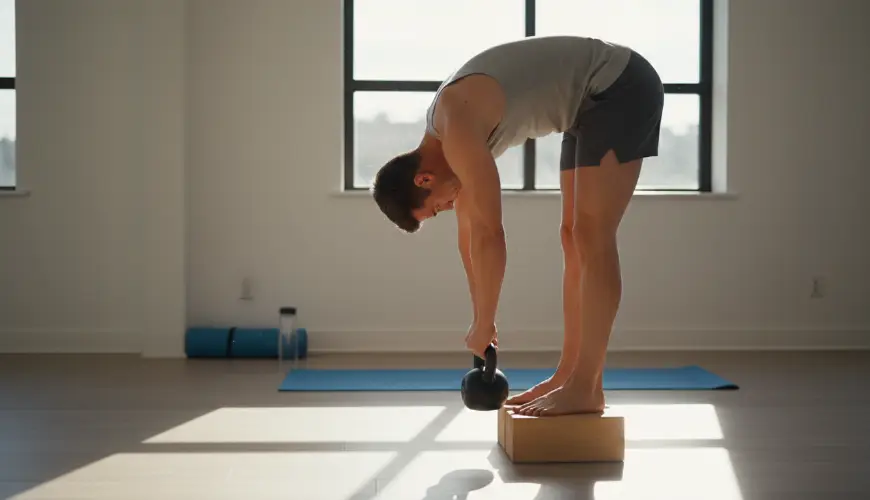
The jefferson curl is a strength stretching exercise in which a person stands on an elevated surface, holds a kettlebell or barbell, and very slowly bends forward – vertebra by vertebra – to the maximum possible range of motion. The entire spine forms a smooth arc, the shoulders hang down, and the head is relaxed. The person then returns to the starting position just as slowly. The entire movement takes several seconds and requires full concentration.
The key to understanding this exercise is the concept of progressive loading of connective tissue. The intervertebral discs, ligaments, and fascia around the spine need regular movement stimulus to remain supple and strong, just like muscles do. The problem is that most people either do not load these structures at all, or overload them with sudden movement. The jefferson curl offers a middle path: a controlled, repeated movement through a full range of motion with a light load that stimulates the tissues without exceeding their current capacity.
Physiotherapist and musculoskeletal specialist Dr. Stuart McGill has long researched spinal biomechanics and points out that the spine needs both stability and mobility – and that losing either of these elements leads to pain and degenerative changes. The jefferson curl helps restore this balance, provided it is performed correctly and load is increased gradually.
The exercise was popularised primarily by Australian trainer and mobility pioneer Ido Portal, who incorporated it into his movement education system. Portal emphasises that modern people have spines that are actually very limited in their mobility – even though they "use" them all day. Sitting for eight hours a day provides the spine with almost no functional movement stimulus.
Why spinal flexibility is so important
A healthy spine should be capable of moving in all directions – forward bend, backward bend, lateral bend, and rotation. Yet in practice, most adults function within a range of motion that is a fraction of what the spine should anatomically be capable of. The result is a gradual loss of elasticity in the intervertebral discs, shortening of the paravertebral muscles, and reduced blood flow throughout the entire area.
Intervertebral discs are unique structures – they have no direct blood supply of their own, and nutrients reach them primarily through movement, through a kind of "pumping" effect. When the spine moves, the discs absorb fluid and nutrients; when the spine remains in one position for a long time, the discs dry out and lose their cushioning function. This is one of the reasons why people with sedentary jobs are so susceptible to disc herniations and chronic back pain.
The jefferson curl supports this natural mechanism. A slow forward bend with a light load creates traction on the spine, separating the vertebrae from one another and allowing the discs to "breathe". It also stretches the posterior spinal ligament and the hamstrings, which are chronically shortened in most sedentary people and contribute to overloading of the lumbar spine.
Consider an everyday example: a thirty-year-old graphic designer who spends six to eight hours a day at a computer begins to notice a dull ache in the lower back after a few months. A physiotherapist recommends the jefferson curl, among other things, as a preventive exercise. After four weeks of regular practice – three times a week, three sets of five repetitions with a four-kilogram kettlebell – the designer notices a significant improvement in flexibility and a reduction in pain. Nothing dramatic, no overnight miracle, but consistent progress that changes everyday comfort.
How to perform the jefferson curl correctly
Correct technique is absolutely essential with this exercise. Neglecting technique or using too much weight can have the opposite effect and load the spine inappropriately. It is therefore important to start slowly, with minimal weight, and ideally under the supervision of an experienced trainer or physiotherapist.
The basic procedure is as follows:
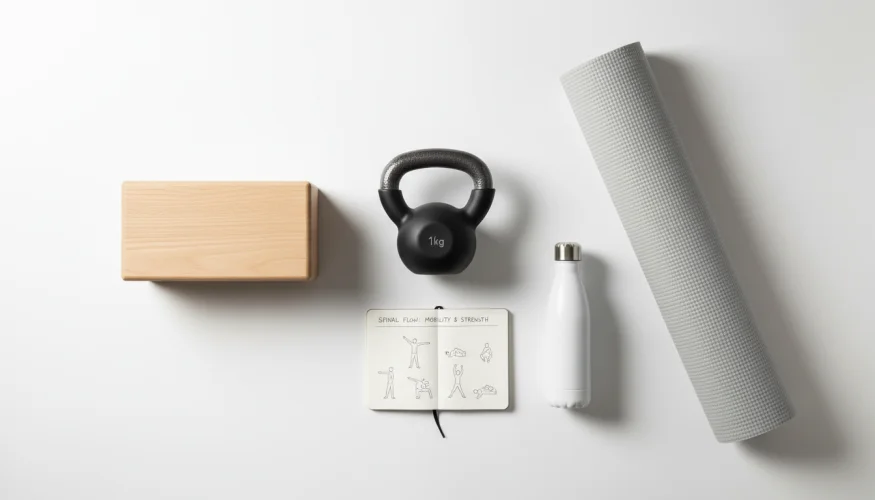
- Starting position: standing on an elevated surface (a step, a thick book, a low box), feet hip-width apart, knees slightly bent, a kettlebell or barbell held with both hands in front of the body
- Downward movement: begin by rounding from the head – chin to chest, then the cervical spine, the thoracic spine, and finally the lumbar spine; the movement is very slow and conscious, vertebra by vertebra
- Bottom position: maximum forward bend, hands hanging freely as low as possible, the entire back forming an arc; it is possible to hold this position briefly
- Upward movement: equally slow straightening from the lumbar spine upward, chest, shoulders, neck, head
Beginners should start with no weight at all or with a very light weight – one to two kilograms is absolutely sufficient. The goal is not to lift heavy weights, but to teach the spine to move in a controlled manner through its full range of motion. Progress is slow and that is fine – connective tissue adapts more slowly than muscles, so patience is key.
Breathing is also important. You can exhale on the way down and inhale on the way back up. Breathing helps release tension and facilitates spinal movement. Many people find that during their first attempts they feel a strong pull in the back of the thighs or in the lumbar region – this is normal, but sharp pain or pain shooting into the leg should be a signal to stop and consult a specialist.
The jefferson curl is not suitable for people with an acute disc herniation or other acute vertebrogenic conditions. In such cases, consultation with a doctor or physiotherapist is essential before attempting the exercise. For a healthy spine or as a preventive measure, however, the jefferson curl is a safe and highly effective tool.
Interestingly, this exercise also finds its place in the context of a sustainable approach to health – the idea that caring for the body should be regular, gentle, and long-term, rather than one-off and intense. The same principle that underlies choosing a more ecological lifestyle or mindful consumption also applies to movement: small, consistent steps have a greater impact than dramatic swings.
Research in the field of rehabilitation and sports medicine repeatedly confirms that controlled loading of tissues through a full range of motion is one of the most effective methods of both prevention and rehabilitation of the musculoskeletal system. The jefferson curl applies this principle directly to the spine – a structure that is absolutely essential to the quality of everyday life.
It is also worth bearing in mind that the jefferson curl is not an isolated exercise, but part of a broader approach to spinal care. Combining it with strengthening of the deep stabilising system, regular stretching, and sufficient movement throughout the day yields the best results. The spine needs both strength and flexibility simultaneously – and no single exercise can fully meet these needs on its own.
If a person decides to incorporate the jefferson curl into their movement repertoire, it is sensible to start with a frequency of two to three times per week, give the exercise full attention, and not skip the slow movement phase. It is precisely that slowness that distinguishes the jefferson curl from ordinary stretching – and what makes it a truly effective tool for long-term spinal health.
The spine is not the enemy and forward bending is not taboo. It is a natural movement that our body needs just as it needs food, sleep, and fresh air. The jefferson curl reminds us that spinal health is built slowly, consciously, and with respect for the body's natural capabilities – and that the best investment in the future is the one we make today.