

Try miso spread as a savory substitute for butter
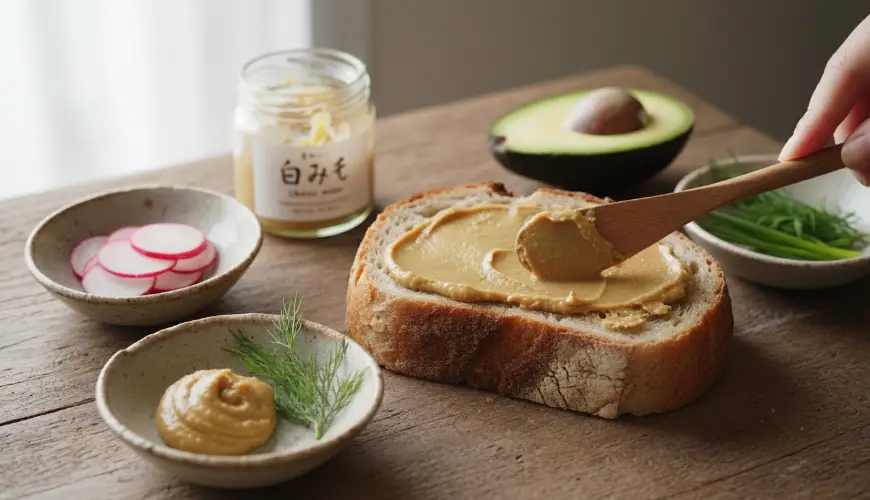
There are moments when one looks for something different from classic butter spread on a slice of bread – something equally satisfying, but bringing a little adventure to everyday cooking. This is precisely when miso spread comes into play, which has been gaining more and more fans in recent years, not only among vegans and health-conscious people, but also among ordinary food lovers who want to enrich their diet with new flavours.
Miso paste, a fermented soybean paste originating from Japan, has been at home in Asian cuisine for more than a thousand years. It is traditionally used primarily as a base for miso soup or as a marinade for fish and meat. However, in recent decades, this distinctive ingredient has made its way into Western kitchens, where chefs and home cooks have begun to discover its unusual potential. And one of the most surprising ways to use it is as a miso spread – a savoury substitute for butter on bread – a combination that sounds unusual at first glance, but makes perfect sense after the first taste.
Try our natural products






Why is miso such an exceptional ingredient?
To understand why miso spread works so well as an alternative to butter, we first need to look at miso paste itself and what makes it so special. Miso is made by fermenting soybeans with sea salt and koji mould, with the ageing process taking anywhere from a few weeks to several years. The result is a thick, aromatic paste full of so-called umami – the fifth basic taste sensation, which in Japanese means "delicious taste" or "pleasant saltiness".
It is precisely this deep, complex saltiness that is the key to why miso spread so naturally replaces butter on bread. While butter adds creaminess and a delicate flavour of milk fat to dishes, miso offers saltiness complemented by fermentation notes, slightly nutty undertones, and that irreplaceable depth known as umami. Lovers of savoury breakfasts therefore need not reach for salted butter – a good miso spread is all they need.
Fermented foods in general have been experiencing a major boom in recent years, and for good reason. Research published in journals such as Cell shows that fermented foods positively influence the diversity of the gut microbiome, which has a direct impact on immunity, digestion, and overall wellbeing. Miso is a true treasure trove in this regard – it contains live probiotic cultures, enzymes, B vitamins, and amino acids produced during the fermentation process. Compared to butter, which is rich in saturated fats and cholesterol, miso offers a completely different nutritional profile that can be particularly beneficial for those monitoring their fat intake or looking for a plant-based alternative to animal products.
Of course, this does not mean that butter is bad – it is more that miso spread opens up a new world of possibilities for those who want to enrich their plate with functional foods that offer added value.
How to prepare miso spread and what to use it for
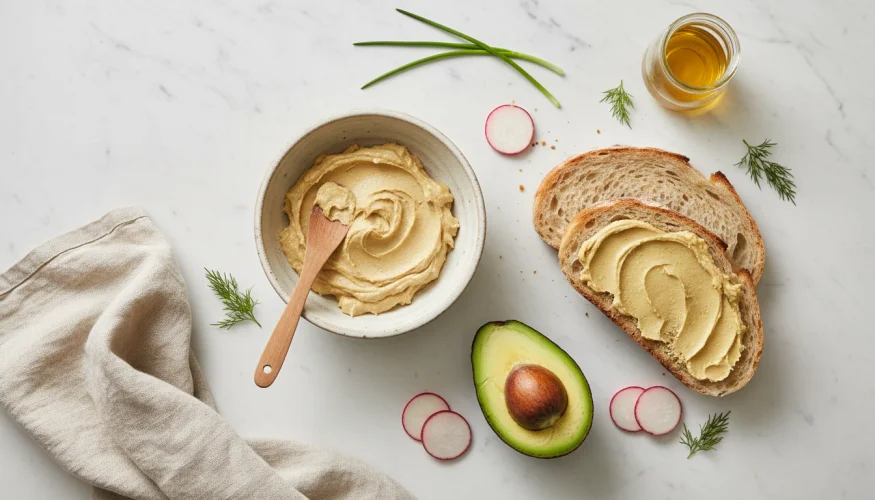
The simplest miso spread can be made in literally two minutes. Simply mix white or light miso (known as shiro miso) with a little softened coconut fat, avocado oil, or plant-based butter, and optionally add a teaspoon of sesame oil for an oriental touch. The resulting mixture has a creamy consistency, spreads easily, and creates a glossy, appealing layer on bread. For those who prefer a stronger flavour, red miso (aka miso) works well, as it has a more intense, robust character due to its longer fermentation period.
The choice of miso paste plays a crucial role in the final flavour of the spread. White miso is milder, slightly sweet, and suits breakfast breads, baked goods, or rice cakes. Red miso, on the other hand, excels in combination with dark rye bread or wholegrain toast, where its earthiness pairs beautifully with a more pronounced base. There is also yellow miso (shinshu miso), which sits somewhere between the two in terms of flavour and is therefore an ideal compromise for beginners.
Interesting inspiration comes from the famous Japanese chef Nobu Matsuhisa, whose philosophy rests on a simple principle: "Miso is like salt – it's everywhere and makes everything better." This idea perfectly captures why miso spread suits such a wide range of dishes. Spread on a slice of sourdough bread with slices of radish and fresh herbs, it makes a refreshing breakfast. Add a boiled egg or slices of avocado, and you have a nutritious and filling snack full of protein, healthy fats, and probiotics.
But miso spread is not limited to bread. It works wonderfully as a base under grilled vegetables, as a sauce for rice bowls, or as a dip for raw vegetables. More culinary-minded individuals also use it as a glaze for baked sweet potatoes or as a base for salad dressings. The versatility of miso paste is truly surprising, and once you get used to its flavour, it is hard to do without it.
A practical example from everyday life: imagine a working mother of two children who every morning faces the question of what to spread on the children's packed lunch bread. Butter is a classic, of course, but one child has a lactose intolerance and the other simply refuses butter. A miso spread mixed with a little tahini and a dash of lemon juice turned out to be a solution the whole family came to love – it is lactose-free, plant-based, tasty, and the children get a portion of beneficial probiotics with every snack. Such a small change in habit can have a surprisingly large impact on everyday wellbeing.
What to watch out for when choosing and storing miso paste
Before diving into making your own miso spread, it is worth knowing a few practical things about miso paste itself. There is an enormous variety of products of varying quality on the market, and not all miso is created equal. When shopping, it is advisable to look for unpasteurised, organic miso without added preservatives and artificial ingredients – only unpasteurised miso contains the live probiotic cultures responsible for the health benefits of fermented foods. Pasteurised miso may taste similar, but its probiotic potential is significantly reduced.
Quality miso should contain only basic ingredients in its list: soybeans, grains (most commonly rice or barley), and salt. Everything else is unnecessary. Organic or Demeter certification guarantees that the ingredients were grown without pesticides and genetic modification, which is an important criterion for many consumers. For those with a soy allergy, there are also alternative versions of miso paste made from chickpeas or other legumes, which offer a similar flavour profile without soy proteins.
Storing miso paste is fortunately straightforward. Once opened, it is kept in the refrigerator, where it will remain in good condition for several months, sometimes up to a year. Thanks to its high salt content, it acts as a natural preservative and miso practically does not spoil – its colour or flavour intensity may change, but it remains safe to eat for a long time. Miso spread itself is best prepared fresh, or stored in a sealed container in the refrigerator for a maximum of one week, to preserve its creamy texture and full flavour.
It is also important to keep the sodium content in mind. Miso paste is naturally rich in salt, and therefore people with high blood pressure or kidney disease should monitor their consumption and consult a doctor or nutritional specialist if necessary. On the other hand, if miso spread is used as a substitute for butter on bread, the amount of paste used is relatively small and the sodium content per serving remains within reasonable limits.
The world of fermented foods is immensely rich, and miso occupies a truly exceptional place within it. It is not merely a fashionable trend or a health food fad – it is a thousand-year-old tradition that is finding a new home in modern kitchens around the world. Miso spread as a savoury substitute for butter on bread is one of the most accessible ways to experience this tradition first-hand. All it takes is buying a quality miso paste, mixing it with a little fat to your own taste, spreading it on your favourite bread, and letting yourself be surprised by how such a simple thing can transform the everyday ritual of breakfast into a small culinary joy. And who knows – what begins as an occasional experiment may become a permanent part of your diet, one that you will find yourself missing the moment you leave it out.