

Morning Routine for a Stiff Body That Will Gently Get You Moving in a Few Minutes
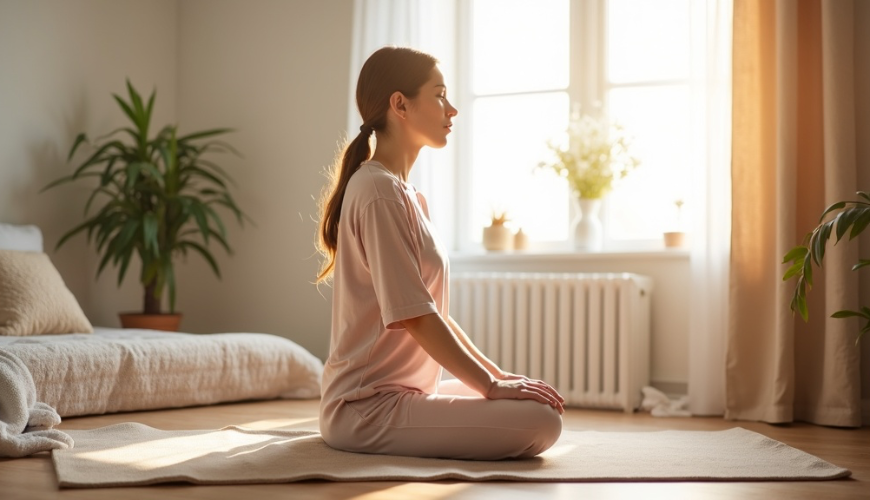
Morning can be a peculiar paradox. The mind is somewhat planning the day, but the body seems to remain in yesterday – stiff back, heavy neck, hips "locked," and a feeling that the first steps around the apartment are more like cautious negotiations than walking. That's why it makes sense to have a morning routine for a stiff body, which isn't about performance or sports ambitions, but about safely "waking up" the joints and muscles so the day doesn’t start with tension.
The good news is that getting moving in the morning doesn't have to mean long workouts, sweat, or complicated routines. For most people, just a few minutes of simple movements can do surprisingly much to restore range, improve circulation, and calm the nervous system. And one more thing: morning stiffness is common. However, if it's significant, persistent, or associated with pain and swelling, it makes sense to discuss it with a physiotherapist or doctor – perhaps because some diseases (like inflammatory ones) typically have worse mornings. A basic orientation can also be provided by the NHS overview of back pain or information about the role of physical activity in musculoskeletal health on the WHO website.
Try our natural products




Why the body is stiff in the morning and why a short morning stretch helps
During sleep, the body regenerates, but it is also in the same position for long hours. Muscles have less opportunity to alternate tension and relaxation, joints aren't "lubricated" by movement, and for more sensitive people, stress can also accumulate, particularly in the neck or lower back. It's not a disgrace or "poor condition" – it's often a combination of a sedentary day, unilateral load, and the fact that the body needs a moment to switch on in the morning.
This is where morning stretching and exercise come into play. It's not about "touching the toes" or immediately getting into deep positions. Morning movement should be more like gently starting an engine: first lightly, smoothly, with breathing. Ideally, after a few minutes, one feels more stable, warmer, and "more in their body," not exhausted.
Interestingly, the effect greatly depends on small details: pace, breath, and attention. When movements are done slowly and with exhalation, the body usually relaxes more easily. And if you don't jump straight into extreme positions but stay within a pleasant range, the result is often paradoxically faster. As they say, "It's not about doing a lot, but doing it in a way that makes the body feel safe."
And one more practical detail: morning rituals often work best when they are simple and repeatable. No app, no props, no guilt if it doesn't happen sometimes. That's the strength of a small routine – it can be maintained even on busy days.
How to get moving in the morning: a set of simple movements that won't take forever
The following tips for a set of simple movements are arranged to progress from gentle "awakening" of the spine to relieving the hips and activating the body's core. They can be done in pajamas and in a space that fits a mat or just a piece of carpet. If the morning is extremely stiff, feel free to do only half – regularity is key, not perfection.
8 steps for morning stretching and exercise (approx. 6–12 minutes)
-
Breathing into the belly and ribs (30–60 seconds)
Stand or sit on the edge of the bed, feet on the ground. Inhale through the nose "to the sides" of the ribs, exhale through the mouth longer than the inhale. The goal is to prevent the shoulders from rising to the ears. Calm breathing often relaxes the neck more than the first attempt to stretch the neck. -
Shoulder circles and neck relaxation (30–60 seconds)
Slow circles with the shoulders backwards, then forwards, without jerking. Then gentle side tilts of the head – only to a comfortable range, no "pushing." If the neck protests, it helps to think of the movement originating from the entire cervical section, not a single point. -
Cat-Cow (60–90 seconds)
On all fours: hands under shoulders, knees under hips. Inhale gently arch, exhale round the back. In the morning, it tends to be small, "cautious" – and that's okay. The spine wakes up segment by segment. -
Child's Pose stretch (30–60 seconds)
From all fours, move the hips towards the heels, hands forward, forehead towards the ground. If knees are sensitive, place a pillow between thighs and calves or stay higher. The important thing is the feeling of space in the lower back and between the shoulder blades, not depth. -
"Chest opening" in kneeling or standing (60 seconds)
Join hands behind the back (or just place palms on the lower back), gently pull the shoulder blades down and together, the chest lifts. Without breaking at the lower back. This is a great counter to sitting, which closes the chest and pushes the shoulders forward. Light chest opening often immediately improves breath. -
Hip lunge with support (60–90 seconds)
One foot forward, the other back (with support from a wall or chair if needed). Slightly tuck the pelvis to stretch the front of the hip of the back leg. Most morning lower back stiffness is also related to the hips, so this can be an "unnoticed game changer." Switch sides. -
Glute bridge (8–10 slow repetitions)
Lie on your back, bend knees, feet on the ground. Exhale lift the pelvis, hold briefly at the top, slowly lower. The goal isn't height, but activation of the glutes and back of the body. When the glutes wake up, the lower back often relaxes. -
Gentle spinal twist lying down (30–60 seconds per side)
On your back, knees bent, slowly lower knees to one side, head can go to the other (if comfortable). The twist should be calm, with breath. After a night, it's often the type of movement that returns "fluidity" to the torso.
This routine can also be done in a shorter version: breathing, Cat-Cow, hip lunge, bridge. And if the morning is very hectic, even just 90 seconds – two minutes of slow movement can do more than nothing.
To make the morning routine work in real life (and not just remain a good intention)
It sounds simple, but everyone who has ever tried to establish a new habit knows that the hardest part is consistency. Morning movement catches on best when it sticks to something that already happens automatically – like the moment after brushing teeth, after the first glass of water, or before making tea. And because Ferwer revolves around sustainability and healthier habits, it makes sense to also consider the environment: a pleasant, non-slip surface, a ventilated room, and clothing that doesn't pinch. Comfort is more important here than sports aesthetics.
It's also helpful to stop chasing "correct" exercise. Morning mobilization should be a range, not a test. Sometimes the body will be more flexible, other times stiffer – depending on sleep, stress, menstruation, yesterday's load, and how much time was spent sitting. Instead of pressure, curiosity works: what happens when you slow down today? What happens when you add a longer exhale?
An example from a typical morning that surprisingly many people know
Imagine a typical situation: a person gets up, quickly checks their phone, hunches over at the coffee machine, and before leaving the house, they already feel a pull in the lower back. In the evening, they tell themselves they "should move more," but in the morning it repeats. Change often doesn't look like a big resolution but a slight adjustment of the scenario: leave the phone aside for the first ten minutes, let the coffee drip, and in the meantime do two slow cycles of Cat-Cow, a short hip lunge, and eight bridges. After a week, many people notice that the first steps in the morning aren't so "wooden" and that the shoulders don't automatically hunch up to the ears. And that's precisely the type of shift that motivates without coercion.
It's fair to add that sometimes morning stiffness also involves the mattress, pillow, or long-term poor ergonomics. If someone regularly wakes up feeling broken, it's worth considering this – and potentially consulting a professional. Similarly, if shooting pain, numbness, limb weakness, or significant morning worsening that doesn't improve occurs, it's better not to "work through the pain."
Meanwhile, it's true that morning stretching and exercise isn't a luxury, but practical movement hygiene. And it can be connected with other gentle habits: a short walk instead of driving, alternating sitting and standing during work, or conscious breaks without screens. Sustainability is not just about things, but also about how sustainable daily rhythms are in the long term.
In the end, the nicest part is that morning mobilization isn't a competition and it's not "all or nothing." Just a few minutes to remind the body that it can move without fear and rush. And when it becomes a quiet ritual – as natural as a glass of water – the morning doesn't have to start with stiffness, but with a sense that the body is cooperating with you. Gentle routine then subtly influences the rest of the day: walking, sitting at the computer, and even how you fall asleep in the evening.