
# Homemade Cleaners Made from 5 Ingredients That Actually Work
Anyone who has ever stood in a drugstore in front of a shelf full of colorful bottles of cleaning products has probably asked themselves one simple question: do I really need all of this? In recent years, interest in homemade cleaning products has been growing, promising effective cleaning with minimal ingredients, a lower environmental footprint, and cost savings. The internet is full of recipes, videos, and enthusiastic recommendations. But there's a thin line between truly functional tips and well-meaning but misleading myths. Let's take a look at what really works, what's more wishful thinking – and whether the whole concept of homemade cleaning products even makes sense.
Try our natural products
Five Ingredients You'll Find in Every Recipe
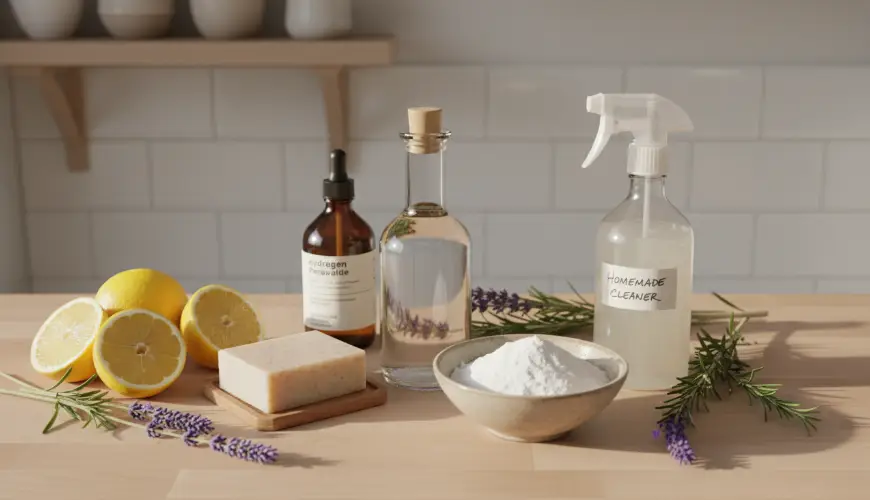
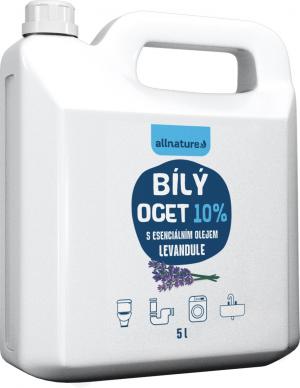
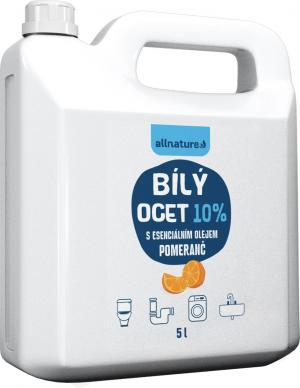
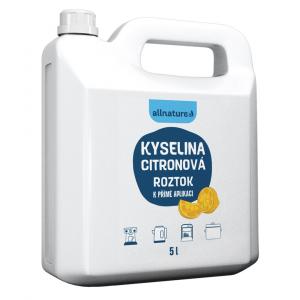
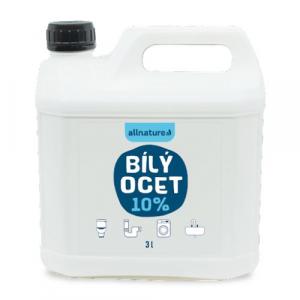
When you dive into guides for homemade cleaning products, five ingredients repeat with such regularity that they could be considered the fundamental pillars of the entire movement: baking soda (sodium bicarbonate), white vinegar, lemon juice, Castile soap, and hydrogen peroxide. Each of them has real cleaning properties backed by chemistry, but at the same time, a number of exaggerated claims circulate around each one.
Baking soda is mildly abrasive and alkaline, making it an excellent agent for mechanically cleaning surfaces, removing odors, and dissolving greasy residue. White vinegar, on the other hand, is acidic – it dissolves limescale, mineral deposits, and works as a mild disinfectant. Lemon juice serves a similar role to vinegar thanks to citric acid, and it smells pleasant as well. Castile soap, traditionally made from plant oils, is a gentle surfactant – a substance that reduces the surface tension of water and allows better dissolution of dirt. And hydrogen peroxide in the commonly available three-percent concentration is a genuine disinfectant with proven effectiveness against bacteria and viruses, as confirmed, for example, by studies from the Centers for Disease Control and Prevention.
At first glance, it seems simple: mix these ingredients in various ratios and you have a solution for everything from kitchen countertops to the toilet bowl. The reality, however, is a bit more complicated.
One of the most widespread misconceptions is the idea that combining baking soda and vinegar creates a super cleaner. Visually, it looks impressive – the mixture fizzes, bubbles, and you get the feeling that something powerful is happening. From a chemical standpoint, however, neutralization occurs: acetic acid reacts with sodium bicarbonate, and the result is essentially weakly salty water with dissolved carbon dioxide. The bubbling effect can mechanically help loosen debris in a drain, but the resulting liquid itself has virtually no cleaning power. It is far more effective to use both ingredients separately – first one, rinse, then the other – rather than mixing them together and hoping for a synergy that simply won't happen.
A similar myth surrounds lemon juice as a universal disinfectant. Yes, an acidic environment is unfriendly to many bacteria, but lemon juice in the concentration we typically use cannot reliably eliminate pathogens such as salmonella or E. coli. For a routine freshening of a kitchen surface after preparing vegetables, it works well, but after handling raw meat, it's wiser to reach for hydrogen peroxide or another proven disinfectant.
Another popular claim is that you can clean practically anything with vinegar. Unfortunately, that's not true. Acidic vinegar damages marble and granite surfaces because it dissolves the calcium carbonate found in natural stone. It can also compromise the seals on certain types of flooring and damage the surface of aluminum items. Before you start cleaning anything, it's worth checking what material the surface is made of.
And then there's the question that few people ask out loud: do homemade cleaning products really work as well as commercial ones? The answer depends on what exactly you're cleaning and what your expectations are. For everyday maintenance – wiping down a kitchen counter, cleaning a mirror, freshening up the bathroom – homemade mixtures are perfectly adequate. Where they hit their limits, however, is removing heavy limescale, stubborn greasy buildup, or true disinfection in the medical sense of the word. Commercial products contain carefully blended combinations of surfactants, chelating agents, and solvents that are optimized for specific tasks. Homemade recipes simply cannot offer this level of sophistication.
That doesn't mean they don't have their place, though. As author and advocate of an eco-friendly lifestyle Bea Johnson once noted: "The best waste is the kind that never gets created." And it is precisely in reducing waste and the chemical burden on the household where the main strength of homemade cleaning products lies.
Does It Make Sense? A Look at Health, Ecology, and Your Wallet
There are usually several reasons at once why people reach for homemade alternatives. The first is the health perspective. Many commercial cleaning products contain substances that can irritate the skin, eyes, and respiratory tract. According to the European Chemicals Agency (ECHA), among the most common problematic ingredients are sodium hypochlorite, ammonium compounds, and synthetic fragrances. People with allergies, asthma, or small children in the household have a legitimate reason to look for gentler alternatives. Homemade products made from a few simple ingredients clearly offer this advantage – you know exactly what's in them and can avoid substances you're sensitive to.
The second reason is ecology. Every plastic bottle from the drugstore eventually ends up as waste. Every product flushed down the drain becomes part of the water cycle. Baking soda, vinegar, and soap break down in nature incomparably more easily than complex synthetic mixtures. Moreover, if you mix your products at home, you eliminate the transportation of finished goods, packaging, and the entire logistics chain associated with their distribution. It's a small step, but across many households, it can have a measurable impact.
The third argument – and for many the decisive one – is finances. A kilogram of baking soda costs a few dozen crowns and lasts for months. A liter of white vinegar comes to a similar amount. Compared to specialized cleaning products that run in the hundreds of crowns per bottle, the savings are obvious. Of course, the comparison isn't entirely fair – a specialized limescale remover will probably be more effective at its specific task than a homemade mixture – but for routine daily maintenance, the price-to-performance ratio of homemade alternatives is hard to beat.
Let's take a concrete real-life example. A family with two children from Brno decided two years ago to switch to homemade cleaning products. They started simply: a universal spray made from vinegar diluted with water in a 1:1 ratio with a few drops of essential oil for kitchen surfaces, a baking soda paste for cleaning the sink and bathtub, and Castile soap for mopping floors. After the first few months, they found that these three products were enough for 90% of their regular cleaning. The only things they kept from the commercial range were a heavy-duty limescale remover for the bathroom and a toilet disinfectant. Their monthly spending on cleaning products dropped by approximately two-thirds, and the amount of plastic waste from the household noticeably decreased.
This story illustrates an important principle: switching to homemade cleaning products doesn't have to be radical and absolute. The most sensible approach is a hybrid one – using homemade mixtures where they work reliably and commercial products where they're truly needed. Dogmatic insistence on purely natural solutions can lead to frustration, inadequate hygiene, or even damage to surfaces in the home.
While we're on the topic of practical advice, there are several tried-and-tested combinations that deserve a place in every household:
- All-purpose cleaning spray: 1 part white vinegar, 1 part water, optionally a few drops of essential oil (lavender, tea tree, or lemon). Great for glass, stainless steel surfaces, tiles, and general wiping of kitchen counters. Do not use on natural stone.
- Cleaning paste for stubborn grime: baking soda mixed with a small amount of water into a thick paste. Excellent for sinks, bathtubs, grout, and burnt pans. Mildly abrasive but gentle on most surfaces.
- Floor cleaner: a tablespoon of Castile soap per bucket of warm water. Simple, effective, and pleasant-smelling.
- Disinfectant spray: three-percent hydrogen peroxide in a spray bottle. Apply to the surface, let it sit for at least one minute, then wipe. Effective against most common household pathogens.
It's important to remember proper storage and labeling. Homemade products don't have an unlimited shelf life – water-based mixtures can become a breeding ground for microorganisms over time. Ideally, prepare smaller quantities and use them within two weeks. Hydrogen peroxide should remain in its original dark bottle because light breaks it down. And if you have children in the household, the same safety rules apply to homemade products as to commercial ones – store them out of children's reach and label them clearly.
The world of homemade cleaning products is a fascinating intersection of chemistry, ecology, and common sense. It's nothing revolutionary – our grandmothers cleaned with vinegar water and baking soda long before it became an internet trend. What is new, however, is the amount of information we have at our disposal, and with it the ability to distinguish proven methods from good-looking but non-functional myths. Five basic ingredients can truly cover most of an ordinary household's needs. You just need to use them correctly, respect their limitations, and not succumb to the illusion that natural automatically means all-powerful. Because it is precisely in that realistic, informed approach where the answer to the question of whether this all makes sense lies. And that answer is: absolutely yes.