

Try baked pumpkin stuffed with rice and nuts
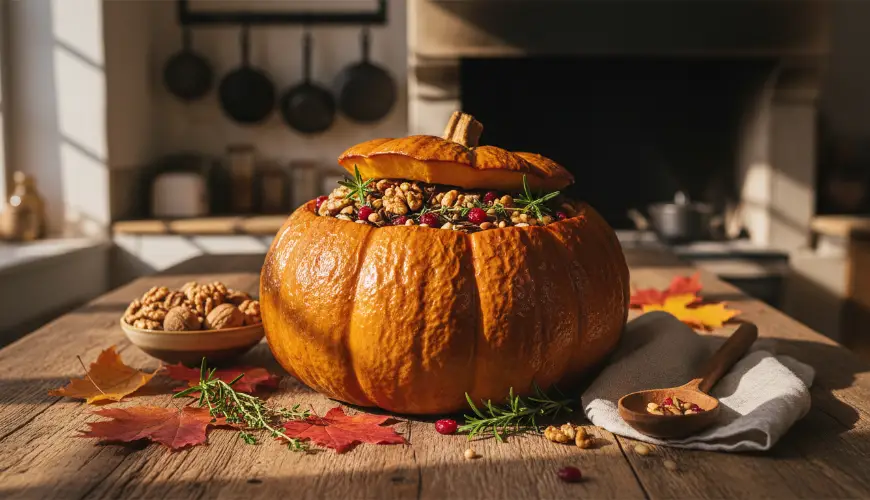
Autumn brings colours, aromas and ingredients to the kitchen that simply aren't available at any other time of year. One of the most beautiful and versatile is undoubtedly the pumpkin – a vegetable that over the past few years has earned a firm place not only at farmers' markets but also in modern healthy cooking. If you're looking for a recipe that combines nutrition, aesthetics and autumnal atmosphere into a single dish, then baked pumpkin stuffed with rice and nuts is exactly what's worth trying.
It's not just a meal – it's an experience. A golden-baked pumpkin with a crunchy filling of rice, nuts and herbs looks like a work of art on the table, yet requires neither a cookery course nor hours standing at the stove. All you need are the right ingredients, a little patience and a willingness to experiment.
Try our natural products
Why pumpkin is such an exceptional ingredient
Pumpkin is one of those vegetables that deserves far more attention than we typically give it. According to the USDA nutritional database, pumpkin is an excellent source of beta-carotene, vitamin C, potassium and fibre – while containing minimal calories. This places it among so-called "nutrient-dense" foods – those that offer maximum nutrients for minimum energy intake.
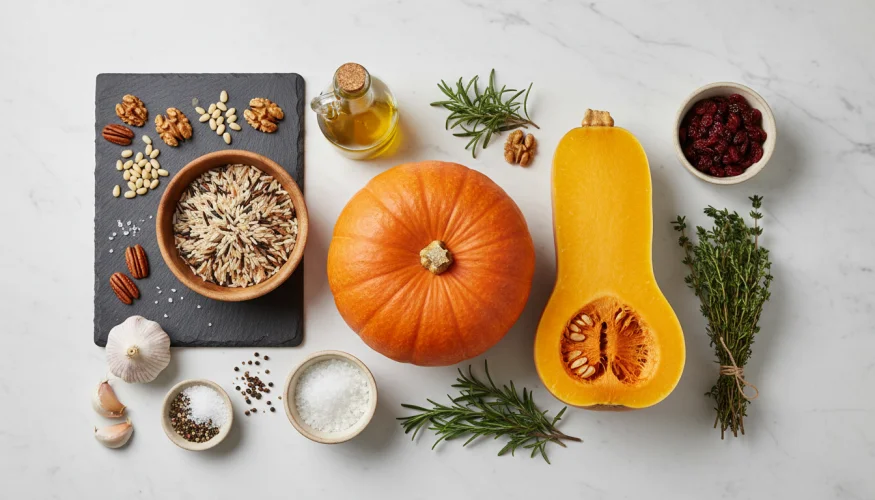
But it's not just about numbers in a table. Pumpkin has a naturally sweet, subtly nutty flavour that pairs beautifully with a wide range of ingredients – from pungent garlic and rosemary to sweet cranberries and earthy nuts and wild rice. It is precisely this flavour versatility that makes it an ideal base for stuffed dishes.
The varieties most suitable for stuffing are those with a firmer skin and hollow centre – for example Hokkaido pumpkin, butternut squash or muscat pumpkin. Each has a slightly different flavour and texture. Hokkaido is smaller, has an edible skin and a more intense flavour. Butternut is creamier and more delicate. Muscat pumpkin offers more flesh and is suitable for larger portions. The choice depends on personal preference and the number of diners – small Hokkaido pumpkins are ideal for individual portions, while larger varieties serve as a shared dish for the whole family.
Sustainability also plays a role. Pumpkins are grown locally in the Czech Republic and their season runs from September to November, so buying a pumpkin in autumn is simultaneously an environmentally responsible choice. Less transport, fewer emissions, more flavour.
How to prepare baked pumpkin stuffed with rice and nuts
Preparing this dish is not particularly complicated, but it holds a few secrets that can transform an ordinary dinner into something the whole family looks forward to every week. The key to success lies in properly preparing the pumpkin itself and making a good filling that complements it without overpowering it.
The pumpkin must first be cut in half, or the top sliced off like a lid – depending on the chosen serving method. The seeds are scooped out with a spoon, though it would be a shame to throw them away: once rinsed and salted, they can be roasted separately as a healthy crunchy snack. The inside of the pumpkin is brushed with olive oil, seasoned with salt and pepper, and optionally a little garlic or nutmeg is added. It then goes into the oven preheated to approximately 180–200 °C, where it bakes for around 25–35 minutes until the flesh softens and the edges begin to caramelise slightly.
While the pumpkin is baking, the filling is prepared. The base consists of cooked rice – ideally wild rice, brown rice or a combination of both, as these provide an interesting texture and a more pronounced flavour compared to standard white rice. In a pan, onion and garlic are sautéed in olive oil, the rice is added, and then comes the most interesting part: the nuts.
Nuts are the key element in this recipe that elevates the entire dish to another level. Walnuts contribute a mild bitterness and healthy fats, pine nuts bring a gentle sweetness, and pecans add a caramel note. They can be combined, dry-toasted in a pan and added to the filling along with herbs – thyme, rosemary or sage all work beautifully. For greater flavour complexity, dried cranberries or apricots can be added, along with a little soy sauce or a dash of balsamic vinegar.
The finished filling is spooned into the par-baked pumpkin and the whole dish is returned to the oven for a further 10–15 minutes, allowing everything to meld together and the surface of the filling to turn lightly golden. The result is a dish that smells of autumn, looks as though it came from a restaurant menu, and yet required minimal effort.
Consider Markéta, a young mother from central Bohemia, who was looking for a recipe that would appeal to the whole family – including her ten-year-old son, who as a rule gives vegetables a wide berth. Baked pumpkin stuffed with rice and nuts became her trump card: her son was delighted by the colourful presentation and crunchy nuts, her partner appreciated how satisfying the dish was, and Markéta was pleased that she had dinner on the table in under an hour.
Nutritional value and customisation options
One of the greatest strengths of this dish is its natural flexibility. The basic recipe is vegan and gluten-free, making it suitable for a wide range of dietary needs. It can also be easily adapted to suit whatever you have at home or whatever you enjoy.
For those wishing to increase the protein content, an excellent option is to add lentils or chickpeas to the filling. Both legumes complement rice and nuts beautifully, making the dish even more nutritious. Cheese lovers can finish the dish with a scattering of crumbled feta or goat's cheese – this adds a salty contrast to the sweetness of the pumpkin. If you want a spicier dish, simply add chilli flakes or a teaspoon of harissa.
As nutritional therapist Margit Slimáková, a pioneer of healthy eating in the Czech Republic, says: "The best food is the kind that tastes good even to those who think they don't want to eat healthily." Baked pumpkin stuffed with rice and nuts fulfils this definition perfectly – it is a dish that needs no apology for being healthy.
From a nutritional perspective, the combination of rice and nuts is particularly interesting. Rice provides complex carbohydrates as an energy source, nuts add healthy unsaturated fats, fibre and minerals such as magnesium and zinc. The pumpkin itself then contributes antioxidants and vitamins. This is therefore a dish that truly nourishes – rather than merely filling you up.
The method of preparation also plays an important role. Oven baking is one of the healthiest cooking methods, as it requires little fat and preserves natural nutrients. Research published in the specialist journal Food Chemistry has repeatedly shown that appropriate heat treatment of vegetables can actually increase the bioavailability of certain nutrients, such as lycopene and beta-carotene.
From an ecological standpoint, choosing seasonal local pumpkin, legumes and nuts from sustainable sources is a step towards more responsible consumption. A plant-based diet generally leaves a significantly lower carbon footprint than a diet rich in animal products – and a recipe like baked pumpkin stuffed with rice and nuts demonstrates that sustainable food need not be dull or austere.
An interesting option is also making use of leftovers. If any of the filling remains after dinner, it works wonderfully as the base for a soup the following day – simply blend it with a little vegetable stock and you have a creamy pumpkin soup with a hint of nuts. Or it can be used as a filling for pitta bread or a tortilla. Nothing is wasted, everything is put to good use.
Baked pumpkin stuffed with rice and nuts is a dish that naturally answers the question of how to eat better without compromising on flavour. It is a meal for everyone – for those who care about their health, for those who love good food, and for those seeking inspiration to breathe new life into their autumn menu. And perhaps it is precisely this versatility that makes it one of the very best autumn recipes of all.