
# Co dělají vlhčené ubrousky s kanalizací ## Problém vlhčených ubrousků v kanalizaci Vlhčené ubrou
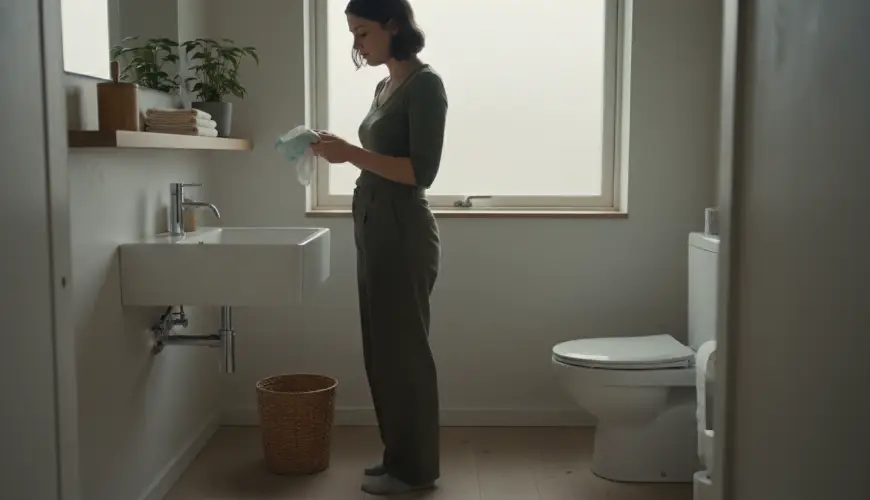
Few products have managed to penetrate the everyday life of households as significantly over the past twenty years as wet wipes. We find them in bathrooms, kitchens, children's rooms and handbags. They are practical, quick and convenient – but it is precisely this convenience that has a dark side that rarely gets discussed. What actually happens to wet wipes after we flush them down the toilet? And why should we even care?
The answer is surprisingly complex and touches not only on the state of urban sewage systems, but also on environmental health, the quality of water in rivers and, last but not least, the thickness of our wallets.
Try our natural products
Why wet wipes are bad for sewage systems
The fundamental problem lies in the material from which wet wipes are made. Unlike toilet paper, which breaks down very quickly in water into small fibres, wet wipes are made from strong synthetic or semi-synthetic fibres – most commonly polyester, polypropylene or viscose. These fibres are deliberately engineered to withstand mechanical stress during use, meaning they do not fall apart when wiping. This very property, which is an advantage during use, becomes a nightmare in the sewage system.
When toilet paper comes into contact with water, it begins to disintegrate within seconds. A wet wipe, by contrast, barely breaks down in water at all – even after hours of soaking it retains its structure. Research conducted in various European countries has repeatedly shown that wet wipes account for up to 90% of all solid waste captured at wastewater treatment plants. That is a figure that speaks for itself.
The journey of a wipe through the sewage system is far from straightforward. At first it may seemingly pass through without issue – flushing carries it into the waste pipe. But at points where the pipe diameter changes, where there is a bend or where the flow of water slows down, the wipe begins to lose momentum. It catches on irregularities on the pipe walls or wraps itself around a pump. And because more wipes follow behind it, along with kitchen grease, hair and other debris, compact masses gradually form that are known in professional circles as "fatbergs."
Fatbergs are one of the most serious problems facing modern sewage infrastructure. London's metropolitan sewer system deals with them on a regular basis – in 2017, a fatberg measuring over 250 metres in length and weighing more than 130 tonnes was discovered in the London district of Whitechapel. Its removal took workers several weeks and cost hundreds of thousands of pounds. Similar cases are not uncommon in Czech cities either – they simply do not receive much media coverage.
A practical example is easy to imagine: a family with two children uses wet wipes every day – for nappy changes, after meals, for removing make-up. Each family member flushes an average of one to two wipes per day, amounting to roughly a thousand wipes per year. Each one behaves in the sewage system like a small seed of a future blockage. Multiply that by the number of households in an average apartment block and it becomes clear why sewage system managers are sounding the alarm.
What science says and what manufacturers say
The situation surrounding wet wipes is all the more complicated by the fact that products labelled as "flushable" or "water-dispersible" exist on the market. Unfortunately, this labelling is very misleading in practice. The label "flushable" does not mean that the wipe will break down in water as quickly as toilet paper. It simply means that it can physically be flushed into the sewage system without immediately blocking the toilet.
Independent tests conducted by consumer protection organisations and scientific institutions have repeatedly demonstrated that even products labelled as flushable break down considerably more slowly in water than toilet paper and cause similar problems in the sewage system to their "non-flushable" counterparts. A study published in the academic journal Water Research found that none of the tested "flushable" wipes met the criteria for genuinely safe flushing as defined by the expert community.
Wet wipe manufacturers naturally push back and point out that their products comply with applicable standards. However, these standards in many countries – including the Czech Republic – remain insufficiently strict and do not require genuine biodegradability in an aquatic environment within an acceptable timeframe. The European Union has tightened regulation of single-use plastic products in recent years through the Single-Use Plastics Directive, but wet wipes are only marginally affected by these measures.
As British water management expert Paul De Zylva noted in one interview: "The problem is not what people deliberately do wrong – the problem is what manufacturers allow them to think is acceptable." This statement perfectly captures the essence of the entire debate.
Microplastics and the hidden environmental problem
Another dimension of the whole story, which has been coming increasingly to the fore in recent years, is microplastics. Wet wipes containing synthetic fibres may not break down whole in the sewage system, but they gradually release tiny fibres that pass even through the filters of wastewater treatment plants and enter rivers, lakes and ultimately the sea. Research by the Plastic Soup Foundation and other environmental organisations shows that wet wipes are among the most significant sources of microfibres in European waterways.
Microplastics are currently one of the most widely discussed topics in environmental science. Their presence has been detected in fish, in drinking water, in soil and in the human body. Although the precise health effects of microplastics on the human organism are still the subject of research, there is scientific consensus that their accumulation in ecosystems is undesirable and potentially dangerous.
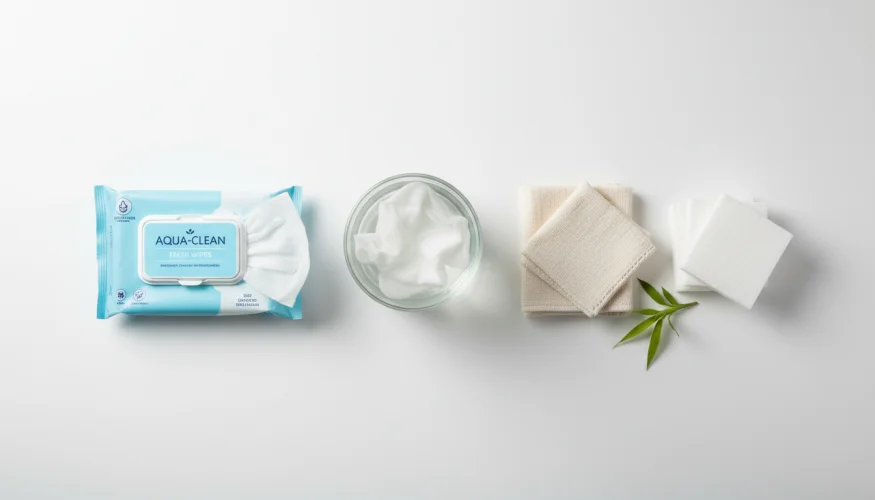
Wet wipes made from natural materials such as bamboo or organic cotton largely eliminate this problem – when disposed of correctly, they break down without leaving microplastics behind. Even these natural alternatives should not be flushed down the toilet, however, unless they are explicitly and demonstrably certified as biodegradable in an aquatic environment.
Proper disposal of wet wipes is straightforward. Regardless of whether they are labelled as flushable or not, they belong in the bin – ideally in a general waste container. This seemingly small change in habit has a very tangible impact: it reduces the risk of domestic pipe blockages, saves on sewage repair costs (which are ultimately passed on to consumers through wastewater charges) and reduces the amount of microplastics released into the environment.
It is worth noting that sewage network operators across Europe are launching public awareness campaigns focused precisely on this issue. In the Czech Republic, water companies are also getting involved in similar initiatives, pointing out that the costs of clearing blockages caused by wet wipes and other inappropriately flushed items run into millions of crowns every year – and these costs are reflected in water and wastewater charges for all residents.
When it comes to alternatives to wet wipes, there is now a wide range of options. Reusable cloth wipes made from organic cotton or bamboo can be washed and used again – they are not only more environmentally friendly but also significantly more economical in the long run. For those who cannot or do not wish to give up a disposable solution, a suitable alternative is wipes made purely from cellulose without synthetic fibres, which genuinely break down quickly in water. It is always important to check the product's composition and the disposal instructions printed on the packaging.
The whole story of wet wipes and their relationship to the sewage system is ultimately a story about how modern convenience brings costs that are not immediately visible. They are not visible at the moment of purchase, they are not visible at the moment of use and they are not visible when something is flushed away. They only become apparent when an emergency service arrives to deal with a blocked drain, when microplastic fibres appear in a river or when an annual price increase shows up on a water and wastewater bill. Making an informed decision when buying wet wipes – choosing natural materials and disposing of them in the bin rather than the toilet – is one of the simplest ways to contribute to a more sustainable household and a more sustainable municipal system as a whole. And all without any great effort or significant sacrifice of comfort.