
# What Causes Diarrhea During Menstruation Diarrhea during menstruation is a **very common problem*

Most women know that unpleasant feeling – the first days of menstruation arrive, and along with abdominal cramps come digestive troubles. Diarrhea during menstruation is neither rare nor a taboo subject that shouldn't be discussed. On the contrary, it is a physiological phenomenon with a very specific biochemical explanation. And that explanation lies in prostaglandins – substances that most people have never heard of, even though they play an absolutely crucial role in the female body.
Take Kateřina, for example, a thirty-year-old teacher from Brno who takes the first day of her period off work every month. Not because of pain, but because she can't stray far from the bathroom. For a long time, she thought it was just a coincidence or a poorly chosen dinner the night before. It wasn't until she spoke with her gynecologist that she discovered her troubles were caused by entirely natural processes in the body – and that she was far from alone in experiencing them.
Try our natural products



What are prostaglandins and why does the body produce them?
Prostaglandins are a group of lipid compounds that the body produces from arachidonic acid. They are not hormones in the classical sense – they are not produced by any specific gland and do not travel through the bloodstream to distant organs. They act locally, directly at the site of their formation, and their effects are rapid and intense. The body uses them in inflammation, wound healing, blood pressure regulation, and during childbirth.
In the context of the menstrual cycle, prostaglandins of the E2 and F2α series are particularly important. These substances are produced in the lining of the uterus – the endometrium – and their primary function is to trigger contractions of the uterine muscle. It is thanks to them that the uterine lining is shed and bleeding begins. It is an elegant biological mechanism, but it has one drawback: prostaglandins are not particularly selective. If more of them are present in the body than needed, they begin to affect surrounding organs – and one of the most sensitive is the intestine.
The intestines and the uterus are anatomically and physiologically very close to each other. The smooth muscle of the intestines responds to prostaglandins similarly to uterine muscle – it begins to contract. The result is accelerated intestinal peristalsis, which does not give the body enough time to absorb water from digested food, leading to diarrhea. This phenomenon is also described in research published in the specialist journal Prostaglandins & Other Lipid Mediators, which has long focused on the role of these substances in the human body.
Let us add one more factor: prostaglandins can activate receptors in the digestive tract, causing not only diarrhea but also nausea, vomiting, and a general feeling of weakness. This is why many women describe the first days of menstruation as a combination of cramps, back pain, fatigue, and digestive problems – all of these are manifestations of the same biochemical process.
As gynecologist and author of The Menopause Manifesto, Dr. Jen Gunter, aptly puts it: "Prostaglandins are like little matches – they ignite exactly where they should, but sometimes the sparks fly further than is desirable."
Diarrhea during menstruation – when is it normal and when should you be concerned?
Occasional diarrhea at the start of menstruation is therefore entirely natural and medically speaking gives no cause for concern. The problem arises when digestive troubles are very intense, last longer than the first two days, or are accompanied by other symptoms such as blood in the stool, high fever, or significant weight loss. In such cases, endometriosis may be the cause – a condition in which tissue similar to the uterine lining grows outside the uterus, for example on the intestines or ovaries.
Endometriosis is estimated to affect approximately 10% of women of reproductive age, and one of its lesser-known symptoms is precisely significant digestive problems tied to the menstrual cycle. According to World Health Organization data, it takes an average of 7 to 10 years for endometriosis to be correctly diagnosed – partly because symptoms such as diarrhea or bloating are often attributed to other causes or dismissed as a "normal part of menstruation."
Distinguishing whether the issue is a normal response to prostaglandins or a symptom of a deeper condition is best done by a gynecologist. As a general rule, if digestive problems significantly reduce quality of life, it is always appropriate to seek professional help – and not to be dismissed with the response that "it just comes with the territory."
In addition to endometriosis, other factors can worsen menstrual diarrhea. Women suffering from irritable bowel syndrome (IBS) generally have more sensitive intestines, and menstruation typically worsens their difficulties. Stress – which often accompanies menstruation – also affects intestinal motility. Diet also plays a role: fatty foods, alcohol, caffeine, and excessive amounts of sugar can further aggravate digestive problems during critical days.
What helps and how to cope naturally?
The good news is that there are many ways to reduce diarrhea during menstruation – and many of them require no medication at all. The key is to understand that it is a response to prostaglandins and to focus on their natural regulation.
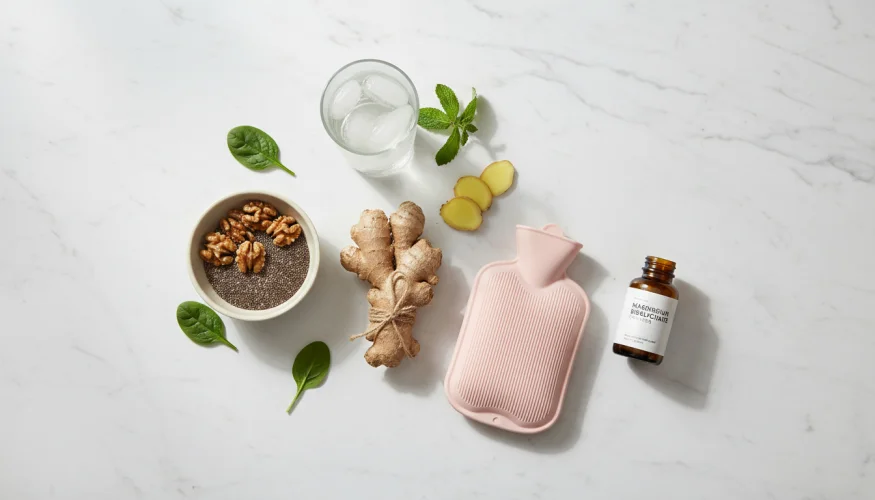
One of the most thoroughly studied approaches is dietary modification. Foods rich in omega-3 fatty acids – such as flaxseeds, walnuts, chia seeds, or fatty sea fish – naturally reduce the production of pro-inflammatory prostaglandins. Conversely, arachidonic acid, from which prostaglandins are formed, is found primarily in animal fats, so reducing red meat and full-fat dairy products in the week before menstruation may bring relief.
Magnesium is another substance worthy of attention. This mineral naturally relaxes muscle tissue – both uterine and intestinal – and adequate intake can reduce both cramps and episodes of diarrhea. Magnesium is naturally found in leafy vegetables, legumes, nuts, and whole grains. For those who lack it in their diet, quality dietary supplements are also an option – for example in the form of magnesium bisglycinate, which is well absorbed and gentle on the stomach.
Ginger is a traditional remedy for digestive problems, and science supports its use – a study published in the journal Pain Medicine demonstrated that ginger can reduce prostaglandin levels and alleviate menstrual pain. Fresh ginger tea or ginger capsules can be a practical solution for women seeking a natural alternative to medication.
Physical activity is not feasible during severe diarrhea, but regular exercise throughout the entire cycle has been shown to reduce the intensity of menstrual symptoms, including digestive problems. Yoga, swimming, or brisk walking help regulate hormonal balance and reduce the overall inflammatory burden on the body.
In terms of pharmacological options, non-steroidal anti-inflammatory drugs – ibuprofen or naproxen – are most commonly used. These medications work by blocking the COX enzyme, which is essential for the production of prostaglandins. If taken before the onset of menstruation or at its very beginning, they can significantly reduce both painful cramps and diarrheal problems. However, it is important to follow the recommended dosage and not use them long-term without consulting a doctor.
Hormonal contraception – particularly the combined pill – suppresses ovulation and reduces prostaglandin production in the endometrium, significantly alleviating menstrual symptoms for many women. This option is of course an individual matter that should be discussed with a gynecologist.
For day-to-day care of intestinal health throughout the entire cycle, it is worth paying attention to the gut microbiome. A healthy gut flora helps regulate inflammatory processes in the body and may contribute to milder menstrual symptoms. Fermented foods such as kefir, sauerkraut, or kimchi, or quality probiotic supplements, can be a valuable part of a daily routine.
Hydration plays an even greater role during critical days than usual. Diarrhea causes a loss of fluids and minerals, so it is important to drink plenty of water and replenish electrolytes – for example through coconut water, diluted fruit juices, or electrolyte drinks without added sugar. Caffeine and alcohol, on the other hand, are unsuitable on these days, as they irritate the intestinal lining and further worsen dehydration.
Heat is a traditional but scientifically supported remedy. Applying a heat pad or warming patch to the lower abdomen relaxes both intestinal and uterine muscle and relieves cramps. A warm bath has a similar effect and additionally helps reduce stress, which worsens digestive problems.
It is worth noting that cultural and dietary habits demonstrably influence the intensity of menstrual symptoms. Studies comparing women in different parts of the world suggest that women following a predominantly plant-based diet rich in fiber and omega-3 fatty acids suffer from menstrual problems less than women consuming a diet high in animal fats and processed foods. This is not an argument for a radical lifestyle change overnight, but rather a reminder that what we eat every day has a far-reaching impact on our bodies – and the menstrual cycle is no exception.
Diarrhea during menstruation is therefore a topic that deserves open discussion – among women themselves, but also with doctors. Too many women still regard it as an inevitable evil that simply has to be endured, without knowing that there are ways to reduce it or prevent it. Understanding the role of prostaglandins is the first step toward allowing women to make informed decisions about their bodies and to experience menstruation with as much comfort as possible – whether that means adjusting their diet, taking appropriate supplements, or simply knowing that they are not alone in this.