

# Postpartum Recovery Without Pressure to Get Back in Shape --- Porod je jednou z největších fyzic
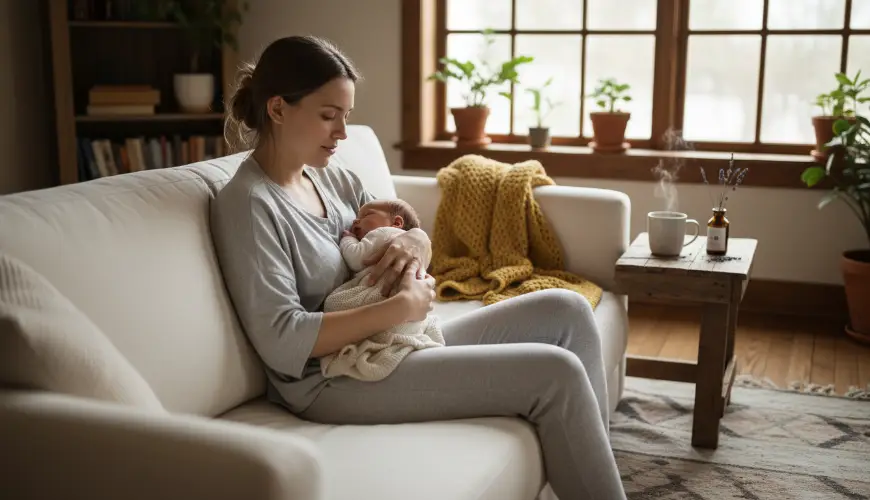
Childbirth is one of the most demanding things the human body can go through. And yet new mothers very often find themselves in a situation where they are – whether from those around them, social media, or their own minds – bombarded with questions and comments about how quickly they "look like themselves again." This pressure for rapid physical recovery and a return to a pre-pregnancy figure is not only unrealistic, but in many ways harmful. True postpartum recovery is a much deeper, more complex, and more personal process than what celebrity photos six weeks after birth would have us believe.
Pregnancy lasts approximately forty weeks. During that time, a woman's body changes in ways that are literally physiologically astonishing – the uterus expands, organs shift, the hormonal environment changes, the kilograms necessary for the healthy development of the baby are gained, and ligaments and joints loosen. Childbirth itself – whether vaginal or caesarean section – then represents a physical feat comparable to peak athletic performance. Yet our culture has entrenched the myth that the body should "recover" within a few weeks and return to its original state. Where did this myth come from, and why is it time to let it go?
Try our natural products
The body after birth needs time, not a challenge
Immediately after birth, the female body undergoes turbulent changes. Levels of estrogen and progesterone drop sharply, prolactin begins to form for breastfeeding, and the uterus gradually contracts back to its original size – this process, called involution, takes approximately six to eight weeks. The pelvic floor, which bore the weight of the growing belly throughout pregnancy and was subjected to extreme stress during birth, requires targeted care and rehabilitation. The same applies to the abdominal muscles, which may have been separated by a condition called diastasis – a separation of the rectus abdominis muscles that occurs in a large proportion of women after birth.
A physiotherapist specialising in the pelvic floor can help you far more in this regard than any fitness programme focused on the "postpartum body." The World Health Organization and professional gynaecological societies recommend that women undergo a pelvic floor examination before beginning any more intensive exercise – ideally around the sixth week after birth, but later is fine too. Yet many women never receive this basic recommendation, because the system of postnatal care for mothers remains inadequate in many countries.
Interestingly, in some cultures, postpartum recovery is understood in an entirely different way. In China, there is a tradition called "zuò yuèzi" – literally "sitting the month" – in which a new mother rests for four to six weeks, is surrounded by family care, and does not engage in physical activity or household tasks. Similar traditions exist in Mexico, India, and Japan. While these approaches have their particularities and are not always scientifically supported in every detail, their underlying philosophy – that the body needs time and care, not immediate performance – is at the very least thought-provoking.
Imagine a mother named Lenka, who gave birth to her first child by caesarean section. Six weeks after the birth, she received a comment from those around her that she "could start exercising to get back into shape." Yet Lenka was still experiencing pain in her scar, was suffering from sleep deprivation, and was struggling with the beginnings of postpartum depression. Nevertheless, she felt guilty for "doing nothing." Yet she was doing the most important thing – healing, breastfeeding, caring for a newborn, and slowly learning to be a mother. This is the reality that Instagram photos do not show.
Psychological recovery is just as important as physical recovery
To speak about postpartum recovery without mentioning mental health would be like describing an iceberg only by what is visible above the surface. Postpartum blues – a transient state of sadness, tearfulness, and emotional lability in the first days after birth – affects up to 80% of women. More serious postpartum depression affects approximately one in five to seven mothers. And yet it is still talked about far too little.
The pressure for rapid physical recovery and "getting back into shape" further worsens this psychological state. When a woman feels guilty that her body looks different from before pregnancy, or that she lacks the energy to exercise, she adds unnecessary psychological burden at a time when her nervous system is already severely overloaded. Research shows that negative body image after birth is closely associated with a higher risk of postpartum depression and anxiety. This relationship is bidirectional – depression worsens body image and negative body image deepens depression.
As British midwife and author Ina May Gaskin once said: "Your body is not a problem to be solved." This statement is enormously important in the context of the postpartum period. A woman's body after birth is not "damaged" or "out of shape" – it is a body that has just accomplished an extraordinary feat and deserves respect, not repair.
Psychological recovery also includes accepting a new identity. Becoming a mother is a transformation that psychologists call "matrescence" – an analogy to adolescence, a turbulent transitional period full of changes in identity, values, and relationships. This transformation takes years, not weeks. And it is entirely normal for a woman to feel lost, uncertain, or sad, even when the baby is healthy and loved.
What true postpartum recovery involves
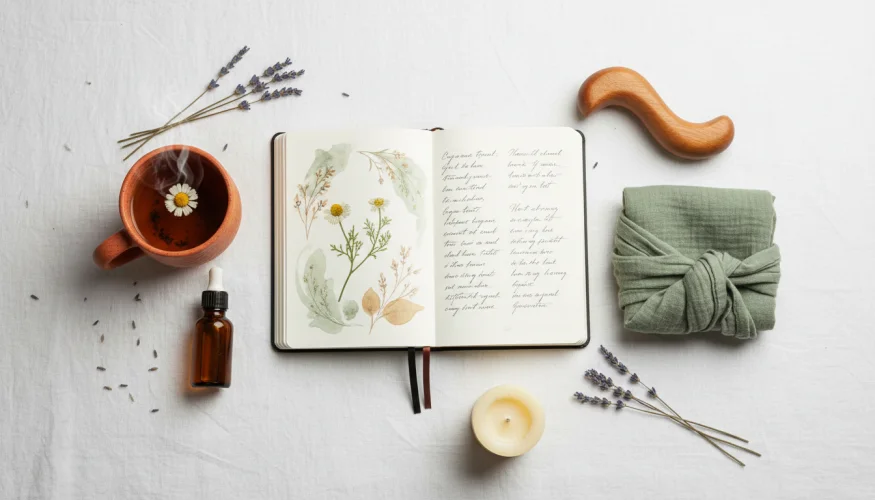
True self-care in the postpartum period does not look like a morning run or a diet plan. It looks like sleeping whenever possible. Like nourishing, warm meals without guilt. Like a conversation with a partner or a close person about how you truly feel. Like seeking professional help – from a physiotherapist, psychologist, or lactation consultant – without feeling weak.
Nutrition in the postpartum period is an area that is receiving increasing attention. A body that is breastfeeding needs approximately 400 to 500 more calories per day than usual. It needs sufficient iron, calcium, omega-3 fatty acids, vitamin D, and other nutrients. Strict diets during this period are not just unnecessary – they are dangerous. Yet many women turn to restrictive eating plans under the pressure of a desire for rapid transformation.
Movement has its place in postpartum recovery – but at the right time and in the right form. Walks in the fresh air are excellent from the first days, if the woman feels well. Gentle yoga, breathing exercises, or light stretching can be beneficial after a few weeks. More intensive exercise – running, strength training, HIIT – should wait for approval from a physiotherapist and gynaecologist, regardless of what fitness influencers say on social media. The American College of Obstetricians and Gynecologists (ACOG) recommends a gradual return to physical activity with consideration of each woman's individual condition.
Social support is also an important part of care. The isolation that very often affects new mothers – especially in the first months, when caring for a newborn is exhausting both in terms of time and energy – deepens the sense of loss of one's own identity and increases the risk of psychological difficulties. Groups for new mothers, whether in-person or online, can be enormously valuable. So too is open communication with a partner about sharing care and the needs of both.
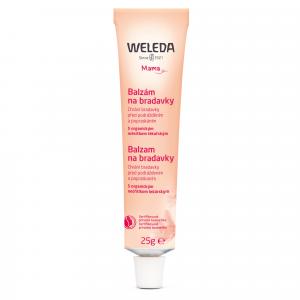
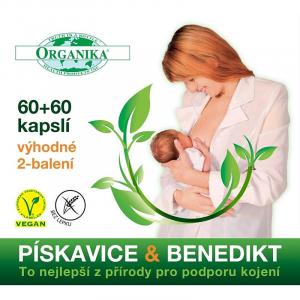
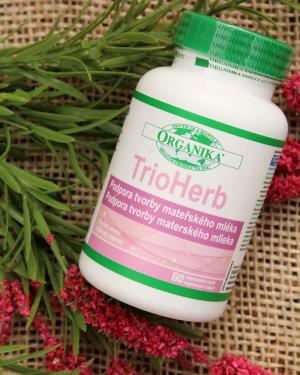
A sustainable approach to self-care during this period also includes choosing products that are gentle on both the body and the environment. New mothers come into contact with a wide range of cosmetic and hygiene products – from scar care to breastfeeding – and the natural composition of products plays a genuine role during this period. The body after birth is sensitive, hormone levels are unstable, and skin reacts differently than usual. Choosing products without unnecessary chemicals, fragrances, and potential allergens is a sensible choice in this regard, not a passing trend.
Likewise, the clothing a woman wears in the postpartum period should serve her comfort, not an aesthetic ideal. Comfortable, quality, and sustainably produced pieces that respect the changing shape of the body are an investment in wellbeing – and wellbeing is key during this period. There is no need to rush back into old jeans. The body changes, and that is perfectly fine.
How many weeks, months, or years does postpartum recovery take? The honest answer is: it differs for every woman. Research suggests that complete recovery – both physical and psychological – can take a year or more. A study published in the Journal of Midwifery & Women's Health showed that many women experience physical difficulties related to childbirth even a year after the birth, and that these difficulties are chronically underestimated within the healthcare system.
Stopping measuring postpartum recovery by the speed at which the body "gets back into shape", and instead measuring it by how a woman truly feels – physically, psychologically, and emotionally – is a shift in perspective that can have a fundamental impact on maternal health. Because a body that has given birth is not a body that has failed. It is a body that has accomplished something extraordinary. And that deserves care, patience, and respect – not a stopwatch and a set of scales.