

# How to Deal with Scratches on a Glass-Ceramic Hob
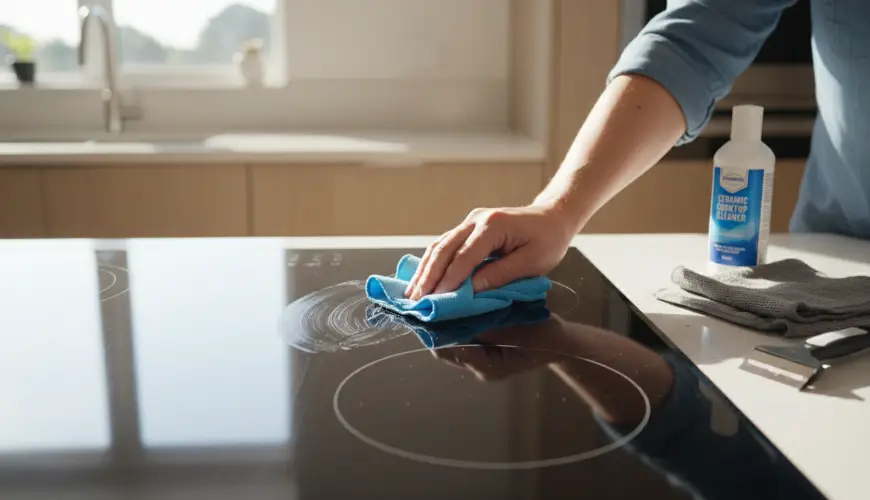
A ceramic hob is for many households a symbol of the modern kitchen – elegant, easy to clean, and aesthetically undemanding on the surrounding space. But that smooth, glossy surface that looks so perfect in a catalogue is actually surprisingly sensitive to everyday use. Scratches on a ceramic hob are among the most common frustrations for owners of these appliances, and although it may seem like a trivial matter, it raises a whole range of questions: can they be removed? How can you prevent them? And when is the situation serious enough to consider a replacement?
Ceramic glass is neither glass nor conventional ceramic – it is a special material with very low thermal expansion that withstands sudden temperature changes. Nevertheless, its surface is prone to scratching, because although the hardness of this material is high, it is not infinite. Many people don't realise that all it takes is dragging a pot with a rough base across it, or leaving a grain of salt under a pan, and a fine scratch will appear on the surface. This is not a manufacturing defect or a poor-quality appliance – it is a physical reality that anyone using this technology has to deal with.
Try our natural products




Why do scratches occur in the first place?
There are surprisingly many causes. The most common culprit is pots and pans with rough or damaged bases – cast iron cookware, pots with stuck-on residue, or cheap pieces with uneven bases. But even seemingly innocent behaviour at the hob is not without risk. Who among us hasn't slid a full pot across the surface instead of lifting it? This very movement is responsible for a large proportion of the scratches that accumulate on the surface over time.
Another problem is cooking with coarse-grained ingredients directly on the hob – salt, sugar, or sand from insufficiently washed vegetables can act as an abrasive. A ceramic hob and salt are a combination best consciously avoided. Aluminium cookware is equally dangerous, as it can leave metallic marks when heated that look like scratches at first glance, but are actually deposited metal – and this is an important distinction, because metallic deposits can generally be removed.
Cleaning also plays a role. Abrasive sponges, wire wool, or unsuitable cleaning products can damage the surface just as reliably as the wrong pot. The irony is that the effort to clean the hob can itself be the cause of further damage.
Scratches have another tricky characteristic – they are significantly more visible on dark hobs, which are the most common today. On lighter or stainless steel surfaces they are less noticeable, while black ceramic glass puts every scratch on display, especially in raking light or after the hob has been cleaned and dried.
Can scratches really be removed from a ceramic hob?
Here it is necessary to be honest: deep scratches that penetrate the structure of the material are permanent and cannot truly be removed. No home remedy or professional product can fill physical damage to a ceramic hob so that it looks like new. This is a reality that every owner must come to terms with.
That said, the situation is not hopeless. There is a whole range of methods that can significantly reduce scratches, minimise their appearance optically, or at least prevent them from spreading further.
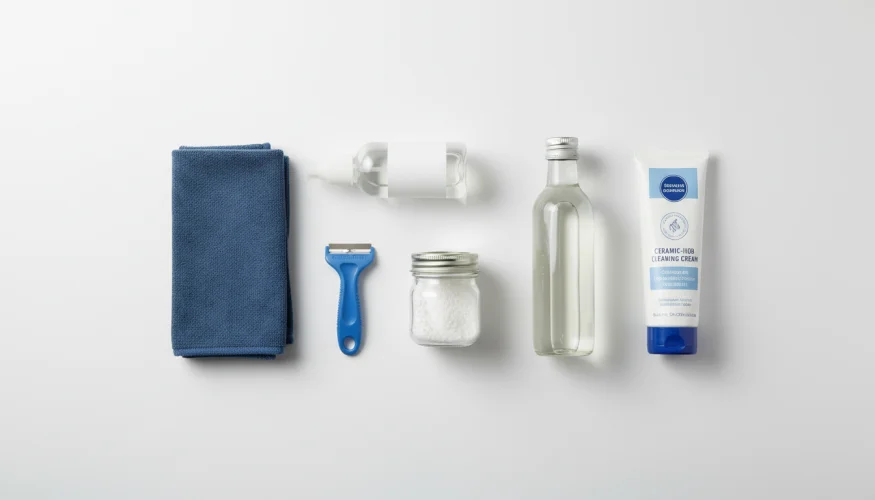
One of the most frequently recommended methods is using specialist creams and pastes designed specifically for ceramic glass surfaces. These products work on the principle of fine abrasion – they smooth the area around the scratch and fill microscopic irregularities so that the mark is less noticeable. Products such as Cerama Bryte or HG ceramic glass cream are popular with users precisely because they deliver visible results without the risk of further damage. It is important to apply them with a soft microfibre cloth using circular movements with gentle pressure.
Home enthusiasts sometimes recommend a paste made from bicarbonate of soda and water, sometimes combined with white vinegar. This approach can have a cosmetic effect on very fine surface marks, but will not help with deeper scratches. Care is also needed – excessive rubbing can make the situation worse. Toothpaste (without whitening agents) works similarly, as it contains a fine abrasive and can optically even out the surface.
An interesting alternative is using a specialist ceramic glass wax or polish, which temporarily "fills" scratches and creates a protective layer. This solution is not permanent – after a while and further use, the process needs to be repeated – but for the everyday aesthetics of the kitchen it may be sufficient.
It is also important to distinguish whether you are actually dealing with a scratch or a metallic deposit. As already mentioned, aluminium or stainless steel pots can leave dark marks on the surface that look like scratches but are simply deposited metal particles. These can be removed with a specialist ceramic glass cleaner or a fine scraper – and the results are surprisingly good. Many people needlessly panic about "scratches" that are actually just metallic marks and will disappear with the right cleaning.
A practical example: one household was dealing with prominent dark marks left by an old cast iron pot, which looked like deep scratches. After applying the recommended ceramic glass cream and gently polishing with a microfibre cloth, it turned out that most of the "damage" was actually metallic deposits. After treatment, the hob looked almost like new – without any expense on servicing or replacement.
How to prevent scratches and care for your hob properly
Prevention is clearly better than cure in this case. And it doesn't involve anything complicated – just a few habits that, over time, become a natural part of cooking.
The fundamental rule is always to lift pots and pans rather than drag them. This single habit eliminates the vast majority of scratches that form on ceramic hobs. It sounds trivial, but in practice it is a change that requires conscious effort – especially with heavy pots full of water or with quick movements during cooking.
Equally important is the choice of cookware. Ideal are pots with smooth, flat bases free of burrs or residue. It is advisable to regularly check the bases of cookware and remove any stuck-on remnants. Cast iron cookware is excellent for cooking but requires extra care precisely because of the rough surface texture. Pots with stainless steel or enamelled bases are an excellent choice, as they are gentler on ceramic hobs.
Cleaning the hob should be regular and gentle. Ideally after each use – once the hob has cooled sufficiently – a damp microfibre cloth and a drop of ceramic glass cleaner is all that is needed. Never use wire wool, abrasive sponges, or scouring powders. For burnt-on residue, there are specialist scrapers with a razor blade, designed precisely for this purpose and, when used correctly, will not damage the surface.
According to recommendations from manufacturers such as Schott AG – the German manufacturer of Ceran ceramic glass material, which is used in most hobs – the key to a long surface life is a combination of the right cookware and regular care. Schott emphasises in its materials that the Ceran surface is resistant to heat and sudden temperature changes, but not to mechanical damage caused by abrasive materials or unsuitable cookware.
It is also worth mentioning one lesser-known tip: after cleaning the hob, it can be treated with a thin layer of specialist ceramic glass cream, which creates a protective film. This film not only makes the next cleaning easier, but also partially protects the surface from minor abrasions. It is a process similar to treating a car with wax – unobtrusive, but very effective in the long term.
Environmentally conscious households will appreciate that gentle care for a ceramic hob can be achieved without aggressive chemical products. A mixture of white vinegar and water in a spray bottle removes greasy marks and limescale without damaging the surface. For lighter cleaning, a damp cloth and a little patience is sufficient. Such an approach is not only kinder to the hob, but also to the environment – and this is precisely the spirit of the sustainable household philosophy, which prioritises long-term care for things over their unnecessary replacement.
Sometimes scratches are so deep or extensive that the aesthetics of the hob genuinely suffer. In such a case, it is worth considering consulting a service technician – not because the hob has stopped working, but because deep cracks or fractures in the ceramic glass can be a safety hazard. As the British consumer portal Which? warns, a cracked ceramic hob should not be used, as there is a risk of electric current leakage or heat escape. Fine scratches are an aesthetic problem, but cracks are a safety problem – and this distinction is crucial.
It is worth closing with words that apply to the care of most things in the home: "The best repair is the one that was never needed." A ceramic hob will last for many years in good condition if it is treated with an awareness of its properties and limitations. Scratches are unpleasant, but in most cases they are more of a visual problem than a functional one. And with a little care, the right products, and a few small changes in cooking habits, their occurrence can be significantly reduced – and existing ones at least minimised enough for the kitchen to look the way it should.