
Clamshell will strengthen your glutes and protect your knees
Knee pain is among the most common movement-related complaints that people encounter regardless of age or level of physical activity. Whether it's runners who cover hundreds of kilometres a year or office workers who spend hours sitting at a desk, the knees are a joint that bears an enormous load and very quickly signals when something isn't working as it should. Yet the cause of the pain is surprisingly often hidden far from the joint itself – specifically in weak or underused gluteal muscles, particularly the gluteus medius.
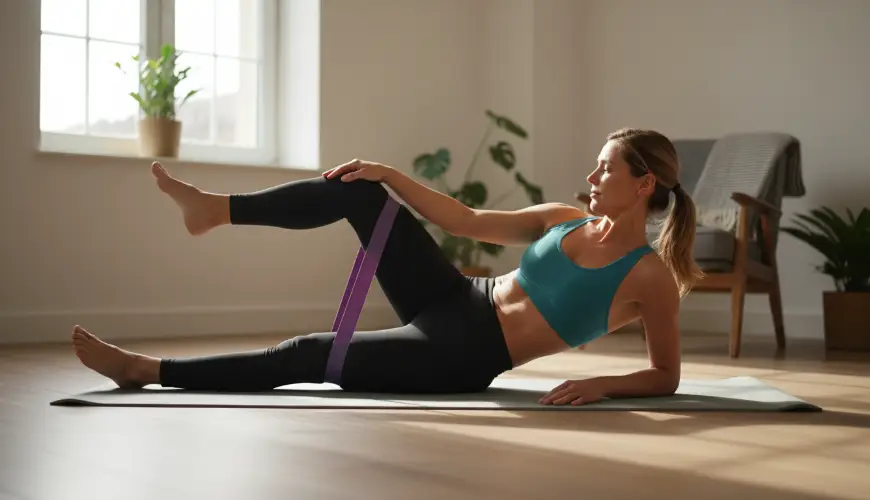
This is precisely where a exercise with a somewhat unusual name – the clamshell – comes into play. It's a movement that at first glance looks almost too simple to be truly effective. You lie on your side, bend your legs, and then simply raise your knee like an opening shell. And yet this unassuming exercise can fundamentally change the functioning of the entire lower body musculoskeletal system.
Try our natural products
Why You Should Look to Weak Glutes for the Cause of Knee Pain
To understand why the clamshell helps with knee pain, it's necessary to pause for a moment on anatomy. The gluteus medius (musculus gluteus medius) lies on the outer side of the pelvis and its primary role is to stabilise the hip joint during movement. Whenever a person stands on one leg – whether walking, running or climbing stairs – it is this muscle that prevents the pelvis from dropping to the opposite side.
The problem arises when the gluteus medius is weakened or insufficiently activated. The pelvis then loses stability, the knee begins to deviate inward, and the entire biomechanics of the lower limb are disrupted. The result is increased loading of the knee joint, which over time manifests as pain. This phenomenon is well documented in the scientific literature – a study published in the Journal of Orthopaedic & Sports Physical Therapy repeatedly points to the connection between hip abductor weakness and painful knee syndromes, including patellofemoral pain syndrome and iliotibial band syndrome.
In other words, the knee itself may not be the primary problem. It is rather the victim of a poorly functioning system higher up – and the gluteus medius plays a key role in this system.
The experience of physiotherapists around the world confirms this theory in practice every day. Take the example of a thirty-five-year-old woman who took up running to improve her fitness. After a few weeks of training, she began experiencing pain in her left knee, particularly when descending stairs and after longer runs. An orthopaedic examination found no structural damage. However, a physiotherapist identified significant weakness in the left gluteus medius and incorporated the clamshell into her rehabilitation plan. After four weeks of regular exercise, the pain had significantly subsided – and after eight weeks, it disappeared entirely.
How to Perform the Clamshell Correctly and What to Avoid
Correct technique is crucial, because with poor form other muscles engage in the movement and the gluteus medius is once again left out. The basic version looks like this: lie on your side, extend the lower arm beneath your head or bend it for support. The legs are bent at the hips at approximately 45 degrees and at the knees at 45 to 90 degrees, with feet together. From this starting position, raise the upper knee as high as possible while keeping the feet together throughout. The movement resembles an opening shell – hence the name.
When performing the exercise, several principles are important to observe. The pelvis must not rotate backwards – this is the most common mistake, where a person thinks they are raising the knee higher but is actually just rotating the trunk. The movement should be slow and controlled, without any momentum. When performed correctly, a distinct pull should be felt on the outer side of the glute and thigh.
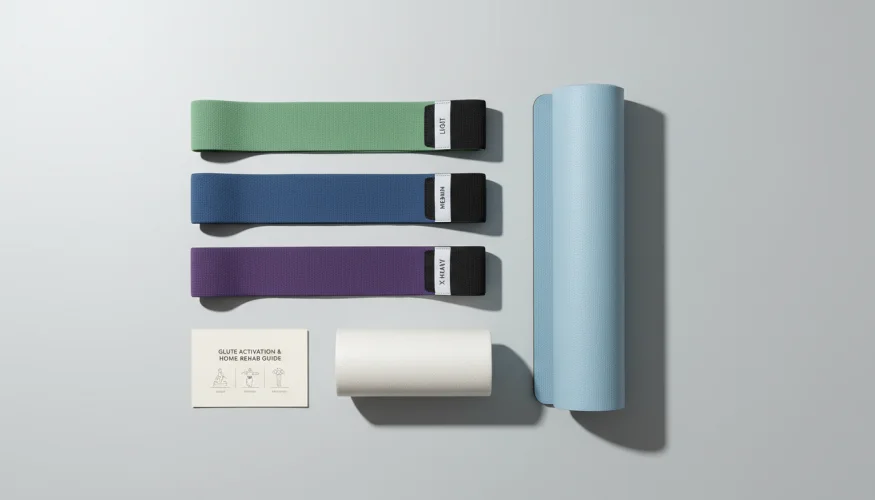
Beginners typically work with their own body weight, which is perfectly sufficient to start with. Once the exercise becomes too easy – that is, when it can be repeated thirty times in a row without fatigue – it's time to progress. A resistance band placed just above the knees is the most common way to make the exercise more challenging. Different levels of resistance allow for gradual loading of the muscle and are also accessible for home exercise.
As physiotherapist and movement medicine populariser Kelly Starrett reminds us: "Hip strength and stability are the foundation of healthy movement throughout the body. Without them, problems will inevitably shift elsewhere." This thought captures the essence of why the clamshell is such a valuable exercise – it doesn't just address the symptom, but works on the cause.
For those who want to develop the exercise further, there are a whole range of more advanced variations. The side plank clamshell combines trunk stabilisation with the hip movement itself and significantly increases demands on coordination. Another option is performing the exercise standing with a resistance band, where the movement more closely resembles real functional situations such as walking or running.
When and How to Incorporate the Exercise into Your Daily Routine
One of the greatest advantages of the clamshell exercise lies in its accessibility. It requires no equipment, no gym membership and no large space. All that is needed is a mat or carpet and a few minutes of time. This makes it an ideal choice for home exercise, rehabilitation or as part of a warm-up before more demanding training.
In terms of dosage, physiotherapists most commonly recommend two to three sets of fifteen to twenty repetitions on each side. It is important to exercise both sides equally, even if pain or weakness is only apparent on one of them – an imbalance between sides is itself a risk factor. Frequency depends on the goal: for rehabilitation, daily or every-other-day exercise is recommended; for strength development, three to four times per week is sufficient.
The clamshell works very well as part of an activation warm-up before lower body training, but it also functions equally well as a standalone exercise within a rehabilitation programme. Many sports physiotherapists include it in protocols for treating patellofemoral pain syndrome, iliotibial band syndrome, or as prevention of anterior cruciate ligament injuries. The American Academy of Orthopaedic Surgeons and numerous other professional organisations confirm that strengthening hip abductors is a key component of comprehensive knee health care.
The exercise is suitable for virtually everyone – from older adults who want to improve walking stability, to recreational athletes and competitive athletes. The only group that should proceed with caution is people with acute hip joint inflammation or who have recently undergone surgery in the hip area. In such cases, consultation with a physiotherapist or doctor is always appropriate.
Interestingly, the clamshell also finds application outside the sporting and rehabilitation context. People who work predominantly in a seated position have a chronically weakened and inhibited gluteus medius – a phenomenon known in English as "dead butt syndrome", which contributes to a whole range of painful conditions from the lumbar spine through the hips to the knees. Regularly incorporating the clamshell exercise into a daily routine can significantly improve this condition, even for those who do not engage in sport at all.
Another reason to focus on this exercise is its contribution to proprioception – that is, the body's ability to sense the position of its own joints in space. The slow and controlled movement that the clamshell requires trains the neuromuscular connection and improves coordination, which is essential for safe movement in everyday life. Older adults who regularly strengthen hip stabilisers demonstrate better balance and a lower risk of falls, as shown by research published in, for example, the British Journal of Sports Medicine.
If anyone thinks that such a simple exercise cannot have a significant impact, they need only look at how widely it is used by professional athletes and their support teams. The clamshell is a firmly established part of the preparation for footballers, basketball players, tennis players and runners at the elite level – precisely because it can specifically activate a muscle that other exercises easily overlook.
Musculoskeletal health is the result of many small decisions that accumulate over time. Regularly strengthening the gluteus medius through the clamshell exercise is one of those decisions whose benefits may be less visible than the results of strength training or cardio exercise, but in terms of pain prevention and maintaining joint function, it is at least equally valuable. The knees deserve this care – and the gluteus medius is ready to provide it, we just need to give it the opportunity.