

# What causes anger toward one's own parents in adulthood Anger toward parents in adulthood is a **
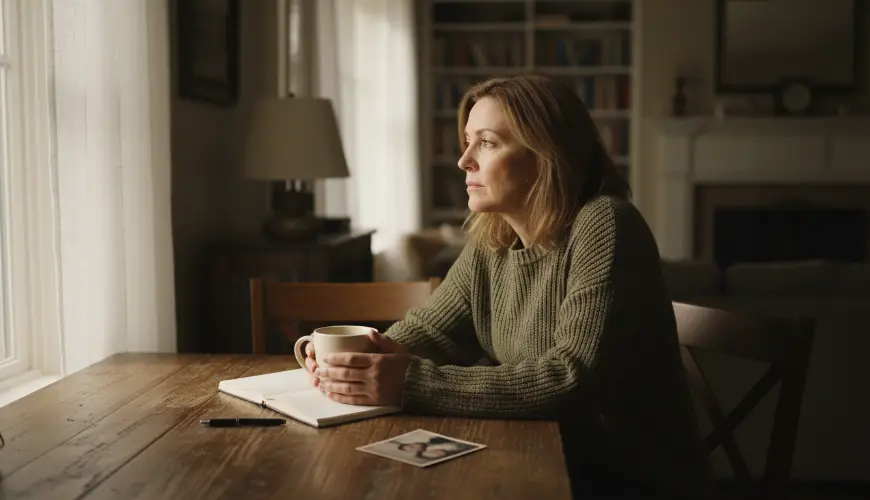
Few people talk about it out loud. At family celebrations, we smile, we share photos with our parents on social media and wish them happy birthday. And yet – somewhere deep inside – something we're afraid to name may be smoldering. Anger toward one's own parents in adulthood is a topic that remains taboo in many families, even though a surprisingly large number of people experience it. It is not weakness or ingratitude. It is a human experience that deserves attention, understanding, and above all, space in which it can be processed.
Adulthood brings a paradox. A person thinks they have long since come to terms with their childhood, and then a seemingly innocent family dinner or a phone call with their mother arrives, and suddenly emotions awaken within them that do not belong to an adult sitting at a table, but rather to a child who once felt misunderstood, overlooked, or hurt. This leap in time is not accidental. It is the way our psyche stores unresolved emotional burdens from the past.
Try our natural products




Where does this anger actually come from?
Psychologists agree that the relationship with one's parents is the cornerstone of our emotional identity. Attachment theory, developed by British psychiatrist John Bowlby, shows that the way we were loved, held, and perceived in childhood shapes our ability to relate to ourselves and others throughout our entire lives. If this bond was not secure – whether due to a parent's emotional unavailability, excessive criticism, neglect, or outright trauma – it leaves traces in the adult that can manifest precisely as anger.
It is important to distinguish between different forms of this anger. Sometimes it is a response to specific, clearly definable wrongs – physical or emotional abuse, neglect, abandonment. In these cases, anger is an understandable and justified response to objectively painful experiences. At other times, however, the situation is more complex. Parents may have been "good enough" in the sense that they provided for basic needs, yet still left emotional gaps in the child – perhaps because they themselves could not express love, were consumed by their own problems, or simply did not know how to parent differently. Anger toward parents who "didn't do anything so terrible" is paradoxically the hardest to process, because it is accompanied by a feeling of guilt for experiencing it at all.
Let us consider a specific case: Jana grew up in a family where emotions were never discussed. Her parents worked, took care of the household, never hit her or subjected her to overt trauma. And yet, as an adult, Jana finds that she has enormous difficulty expressing her own feelings, cannot say "no," and suffers from a chronic sense of not being good enough. When she first touched on her anger toward her parents in therapy, she felt terrible – after all, they had "taken care of her." But it was precisely this silent disregard for her emotional world that had shaped her. And the anger she felt was a legitimate response to a real loss – the loss of the possibility of being fully seen and accepted as a child.
Similar stories are not the exception. According to various surveys focused on adult children and their relationships with their parents – such as those regularly published by Psychology Today – a significant proportion of adults report experiencing ambivalent or negative feelings toward their parents, with anger being among the most common yet least acknowledged emotions.
Anger also serves a function. It is not merely an unpleasant feeling to be suppressed as quickly as possible. From a psychological standpoint, anger is a signal that a boundary has been crossed or a need has been violated somewhere. When we ignore it or feel ashamed of it, it does not disappear – it simply moves. It can manifest as depression, chronic anxiety, relationship problems, or psychosomatic complaints. Suppressed anger is like a pressure cooker without a valve – sooner or later it will make itself known, just not always where we would expect.

How to work with anger without drowning in it
Becoming aware of anger is the first step, but it is not enough. Many people get stuck in the phase where they know the anger, can name it, but cannot move forward from it. They repeatedly replay grievances in their minds, return to pains from the past, and feel trapped. As American psychotherapist and author Harriet Lerner says: "Anger is a signal and it's worth listening to." But listening to anger does not mean succumbing to it – it means using it as information.
One of the most important steps is distinguishing between what can be changed and what cannot. Parents very rarely change in the ways we would like. Waiting for the day when they will come, apologize, and fully understand what they caused us is an understandable wish, but in many cases an unfulfillable one. And yet it is precisely this waiting on which many adult children expend enormous amounts of energy. Processing anger therefore does not mean waiting for an apology – it means finding a way to carry and transform it regardless of what parents do or do not do.
Therapy – particularly psychotherapeutic approaches such as EMDR, schema therapy, or psychodynamic therapy – can play a key role in this process. The goal is not for the therapist to confirm that the parents were bad, nor to defend them. The goal is for the person to have a safe space in which they can experience the anger, explore its roots, and gradually integrate painful experiences into their story in a way that constrains them less. The Czech Psychotherapeutic Society offers an overview of accredited therapists and approaches that can be helpful in such a situation.
Alongside therapy, working with boundaries also plays an important role. Anger toward parents in adulthood very often signals that boundaries within the relationship are not set in a healthy way. Perhaps parents still interfere in their child's romantic relationship, comment on their life choices, or expect constant availability. Learning to say "this is unacceptable to me" – and saying it repeatedly, calmly, and without reproach – is a skill that is learned slowly, but whose results are deeply liberating. It is not rebellion or ingratitude. It is an adult way of caring for the relationship and for oneself at the same time.
Forgiveness is a special chapter – a word that tends to be greatly misused in this context. Forgiveness does not mean that what happened was acceptable. Nor does it mean that we must restore a close relationship with a parent who hurt us. Forgiveness is first and foremost an act for ourselves – a release from the bond of constantly replaying grievances that ties us to the past and prevents us from living in the present. Some experts therefore prefer to speak of "release" or "acceptance" rather than forgiveness, because these words better capture what is at stake: not giving the other person a "free pass," but freeing ourselves.
It is also important not to forget context. Parents are people with their own stories, traumas, and limitations. This does not mean that we excuse their behavior or minimize its impact. But understanding that a father who could not express love perhaps grew up in a family where love was not expressed can open space for something other than pure anger. This is not always possible, and it is not always the appropriate step – it depends on how deep the wounds are and what stage of processing the person is at. But where it is possible, viewing parents as imperfect people rather than deliberate wrongdoers can bring relief.
The relationship with parents in adulthood is a living organism that changes. Some people come to establish a new, more authentic relationship with their parents – this time on different foundations. Others find that limiting or completely cutting off contact is necessary for their mental health. Both paths are legitimate and both can be the result of deep and honest self-knowledge, rather than a mere reaction to pain. The key is not the specific decision, but whether it was made consciously and from a place of personal freedom, rather than out of fear or fury.
Anger toward one's own parents in adulthood is not a sign that we are bad people or ungrateful sons and daughters. It is a signal that we are people with our own history, our own needs, and our own right to emotional truth. Naming it, exploring it, and learning to work with it is one of the bravest and most adult steps a person can take – for themselves, but ultimately also for the relationships that matter to them.