
# Hidden Sources of Clutter We Keep Overlooking
Everyone knows that feeling. You've just cleaned the entire flat, everything is in its place, the surfaces are dust-free, and you finally breathe a sigh of relief – but a few days later, it's different again. The mess has returned as if it never left. And yet you haven't done anything out of the ordinary. You've simply been living normally. But the problem may not lie in how you clean, but in what you don't see at all – in the hidden sources of clutter that most of us systematically overlook.
It's no mystery or magic. It's a combination of habits, spaces, and objects that escape our attention because we've grown so accustomed to them that our eyes have stopped registering them. Psychologists call this "habituation" – the brain stops evaluating stimuli that repeat too regularly. In other words: we see a pile of newspapers on the table for so long that we stop perceiving it as clutter. It becomes part of the scenery.
Try our natural products



Places we clean but don't see
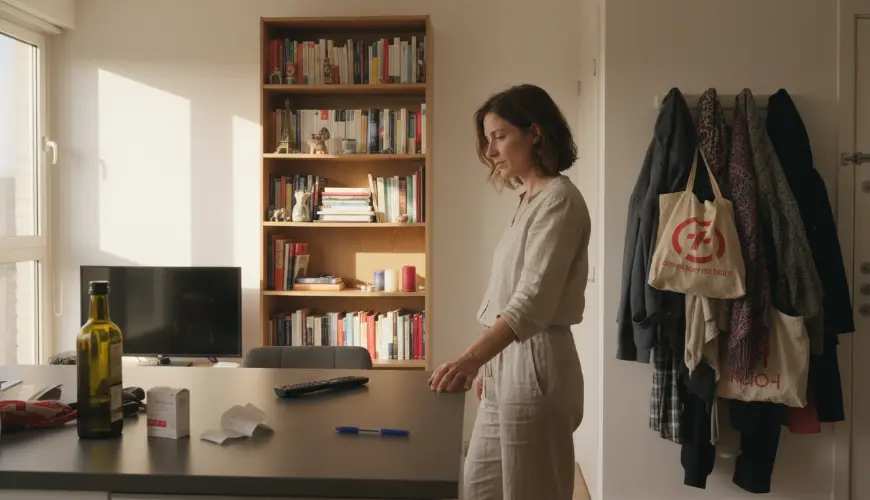
Let's start at the entrance to the home. The hallway or corridor is the first place where the quiet drama of everyday clutter unfolds. Shoes, bags, keys, umbrellas, shopping bags – all of this arrives with every return home and rarely goes back to where it belongs. The coat hook gradually becomes an overloaded structure holding not just jackets, but also scarves from last winter, a bag from the last trip, and a pharmacy bag that was forgotten about. And yet it is precisely the entrance space that sets the tone for the entire home – if it's overcrowded, stress transfers further into the flat before you've even sat down.
Another classic graveyard of things is the kitchen counter and especially the area around the hob. Oil, salt, pepper, a blender that's "handy to have within reach" – all of this settles on the work surface and gradually colonises it. But a kitchen work surface is meant to function as a work surface, not a storage area. Every item that stands there permanently takes up space and simultaneously attracts more things. It works like a magnet. You put a receipt from the shop next to the oil, then a pen joins it, then a medication you took at breakfast, and suddenly you have a small museum of random objects.
Shelves in the living room or bookcases work in a very similar way. They originally serve a specific purpose – storing books, decorations, photos – but over time they become universal dumping grounds. A figurine brought back from holiday, five different candles, three remote controls, a handful of small coins, and a bookmark from a book you read two years ago. Each object has its own story, but together they create visual noise that tires the mind and causes a feeling that "it's somehow overcrowded in here," without you being able to say why.
A special category consists of so-called "transit zones" – places where we put things temporarily, but this temporary becomes permanent. The dining table is a classic example. If it doesn't serve for eating every day, it quickly becomes a work surface, a postbox, a drop zone for shopping, and a space for things we "don't yet know where to put." The corner section of the sofa, the stairs in the house, or an empty chair in the bedroom work similarly.
Clutter that isn't seen, but felt
But there is another category of hidden clutter – one that doesn't concern physical objects, but spaces we clean only rarely or not at all. These are places where dust, bacteria, food remnants, or chemical residues from cleaning products accumulate, and yet we rarely open them or bend down to reach them.
The lower parts of kitchen cupboards and the spaces behind appliances are a perfect example. Behind the fridge, under the oven, or behind the dishwasher, dust, grease, and dirt accumulate over months, sometimes years. The same applies to the space under the bed – a classic refuge for dust, but also for things that get "hidden" there because they don't fit anywhere else. Research in the field of indoor air quality repeatedly shows that the air inside homes can be more polluted than outdoor air, with dust and mites from hard-to-reach places playing a significant role.
The bathroom is another example. We wash the surfaces, scrub the shower cubicle, but the soap dispenser, the grout between floor tiles, or the bottom of the shower curtain – these are places where mould and bacteria settle in peace and unnoticed. Similarly with the waste bin, which we empty but rarely wash, or the toilet paper holder, which doesn't touch a cloth for an entire year.
As the writer and minimalism guide Joshua Becker once noted: "Clutter is the result of deferred decisions." And that is precisely the key to understanding why these hidden zones exist. It's not about laziness; it's about the fact that we constantly make decisions as quickly as possible – and put things where it is easiest, not where it makes the most sense.
Digital clutter as a new form of chaos
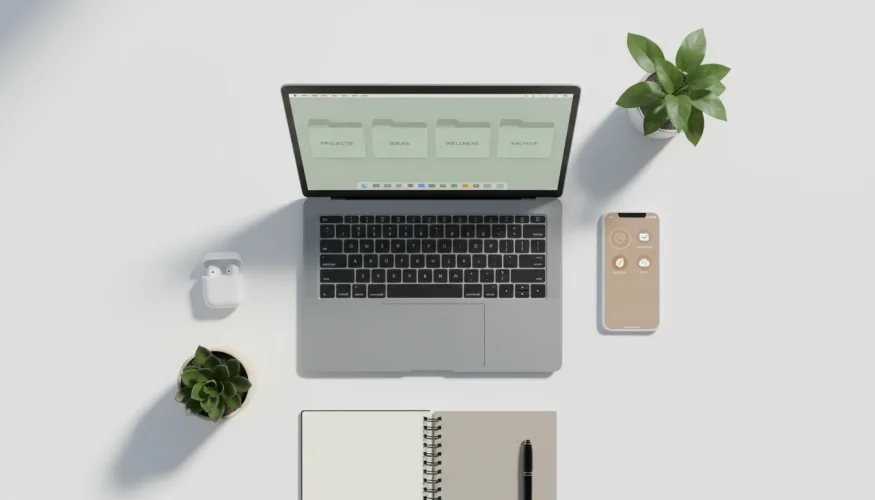
It would be a mistake to talk about hidden clutter without mentioning its digital counterpart. An overflowing email inbox, hundreds of unnamed photos on the computer desktop, apps on the phone we don't use but haven't deleted, folders named "miscellaneous" or "old desktop 2021" – all of this forms the digital equivalent of physical clutter. And just like physical clutter, it costs us energy, time, and mental capacity without us realising it.
A study published in the Journal of Environmental Psychology demonstrated a direct link between a chaotic environment – physical and digital alike – and elevated levels of cortisol, the stress hormone. In other words: clutter we don't even see stresses us. And stress we cannot name is harder to manage.
Think about how many tabs you currently have open in your browser. How many emails in your inbox are marked as "unread," even though you've read them – you just haven't had time to deal with them? These small things create a quiet, constant pressure that doesn't look like clutter, but works in exactly the same way.
Why we overlook it and how to work with it
The answer to why we overlook these hidden sources of clutter is largely psychological. The brain is an incredibly efficient machine that conserves energy by ignoring stimuli it doesn't consider an immediate threat or novelty. A pile of papers that has been sitting there for three weeks has ceased to be relevant information for the brain. We see it, but we don't perceive it.
Added to this is the phenomenon known as "clutter blindness" – literally blindness to clutter. People who live in an overcrowded space for a long time stop perceiving it as overcrowded. It is only when a visitor arrives, or when they move somewhere else and return, that they see their original home through fresh eyes.
The practical solution is not a big weekend clean after which everything returns to its original state within two weeks. More effective is a systematic change of habits – specifically, introducing the rule of "once and in its place." Every item that enters the home gets a clear place where it belongs, and it is returned there immediately, not "in a moment." It sounds trivial, but it is one of the most effective ways to break the cycle of constant accumulation.
Another step is regular review of hidden zones – occasionally stopping deliberately and looking at places we usually ignore. Behind appliances, under the bed, in the drawer of "miscellaneous things," in folders on the computer. Not to throw everything away, but to become aware of what we actually have there and whether we truly want it there.
Conscious selection of objects that enter the home in the first place can also help. Every new item – whether a decoration, a kitchen gadget, or clothing – brings with it the space it will occupy and the care it will require. Quality, durable items made from sustainable materials that we actually use and that bring us joy are a better long-term choice than a pile of cheap objects, half of which will end up in hidden corners of the flat before a year has passed.
Take a specific example: a family that decided to move to a smaller flat suddenly discovered they had seven different blenders and whisks – each purchased in a different situation, none of them particularly bad, but none truly irreplaceable either. All of them were taking up space in kitchen cupboards and creating visual and physical chaos. It took moving house to force them to look at their possessions with a fresh perspective. And yet, from the start, all it would have taken was buying one quality appliance capable of handling everything needed.
A conscious approach to the home is not about perfectionism or minimalist aesthetics for Instagram. It is about ensuring that the spaces we live in serve us – and not the other way around. Hidden sources of clutter exist in every house and every flat, because they are the natural result of everyday life. The key is not to eliminate them once and for all, but to learn to see them before they become part of the wallpaper. And that is a skill that can be cultivated – like any other.