
# Minimalistické žehlení: Co vynechat a co raději vyžehlit ## Co klidně vynechat ### Oblečení, kte
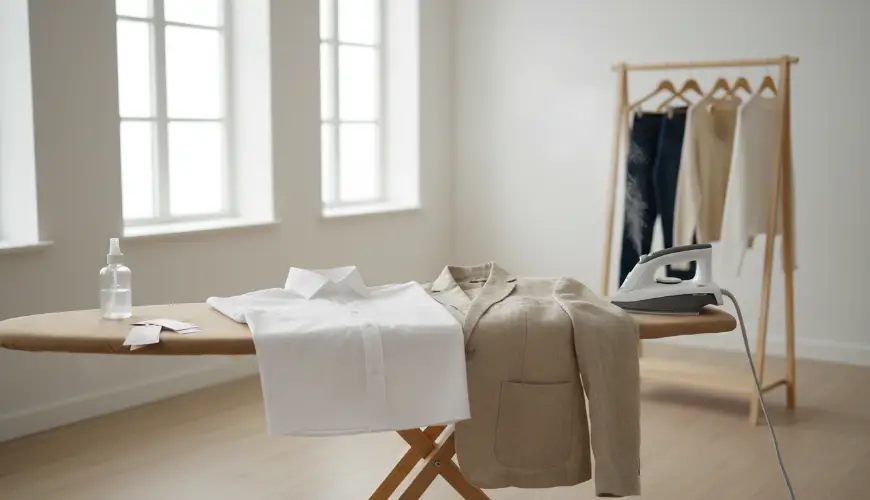
There are few household chores that people postpone with such inventiveness as ironing. The mountain of laundry on the ironing board becomes a silent, reproachful symbol of every weekend, with most people suspecting that at least part of that mountain doesn't actually need to be there. And they're right. The modern approach to ironing increasingly favours selectivity - that is, carefully choosing what is truly worth ironing and leaving the rest alone. This isn't about laziness, but about common sense and mindful management of both time and energy.
The average household spends approximately one hour per week ironing, which adds up to over fifty hours a year. If this time can be reduced by at least a third without laundry looking creased or untidy, that represents a genuinely meaningful saving. The key is understanding how different materials respond to heat, wearing and washing - and adjusting your habits accordingly.
Try our natural products
What you really don't need to iron
Let's start with the most important point: a large portion of the laundry that regularly ends up under the iron doesn't need to be there at all. Bed linen is a classic example. Pillowcases and sheets quickly crease again after the bed is made, so all that effort is undone within the first night. Exceptions may include special occasions or when guests are staying overnight, when first impressions matter - in such cases, ironing makes sense. Otherwise, it's sufficient to pull laundry straight from the drum immediately after washing and carefully fold or hang it.
Terry cloth items - towels, bath sheets, bathroom mats - are in a similar position. Ironing actually damages terry fibres, compressing the loops and reducing the material's absorbency. An ironed towel may look smooth, but it's less functional in use. Simply shake towels thoroughly after washing and hang them straight - the air will do the rest.
Another candidate for liberation from the iron is underwear and socks. These items are hidden beneath layers of other clothing, nobody sees them, and any creasing has no effect on overall appearance. Moreover, underwear naturally "smooths out" on the body when worn. Time spent ironing bras or socks is time truly wasted.
Interestingly, jeans and workwear trousers made from sturdy cotton generally don't need ironing either, provided they are dried correctly. Simply pull them by the legs after washing, straighten the seams and hang them on a hanger. The weight of the damp fabric will naturally even out most of the creases. The same applies to knitted jumpers and knitwear - these could actually become distorted through ironing, as knitted structures aren't designed for direct contact with a hot iron.
Modern technical and sportswear made from polyester, nylon or elastane not only doesn't need ironing, it actively rejects it. Synthetic fibres are sensitive to heat and an iron can permanently damage them - melting, distorting or destroying the elastic properties of the material. Manufacturers of such clothing explicitly advise against ironing, and if it must be done, then only on the lowest temperature setting with a protective cloth.
Smart tricks for avoiding ironing altogether
Before we get to what is genuinely worth ironing, it's worth mentioning several practical methods that help prevent laundry from creasing in the first place. Proper handling of laundry from the very beginning - from washing machine settings through drying to storage - can significantly reduce the need for ironing.
The washing machine should never be overfilled. An overcrowded drum means laundry has no room to move freely, resulting in deep creases that can't be smoothed out even without an iron. It's equally important to remove laundry from the machine as soon as the programme ends - damp clothing left in the drum for even an extra hour creases considerably more.
Drying on hangers rather than in a tumble dryer or laid flat on a drying rack is another simple step. Shirts, blouses or dresses hung on a hanger immediately after washing dry in a straight shape and require almost no attention once dry. There are also special travel-sized spray bottles - a light misting of creased clothing and smoothing it with your hands can work wonders without a single touch of heat.
Some people swear by the bathroom steaming method - hanging creased clothing in the bathroom while showering and letting the humid air naturally release the creases. This trick works surprisingly well, particularly for suit jackets, shirts or dresses that can't be ironed too aggressively.
What is actually worth ironing
After all these liberating discoveries, it's time for honesty: there are things where ironing genuinely makes sense and where the difference in overall appearance is clear. Formal shirts and blouses come first. The collar and cuffs of a shirt are the most visually prominent elements of the entire outfit - a creased collar immediately creates an impression of carelessness, even if the rest of the outfit is perfect. Here, ironing undeniably serves its purpose.
Suit jackets or trousers for formal occasions are in a similar position. A jacket with sharp unwanted creases or crumpling on the sleeves spoils the overall impression of an otherwise perfect combination. Trousers with a crisp centre crease - the so-called press crease - are one of those details that distinguish self-care from slovenliness.
Linen clothing is a category unto itself. Linen is a material that creases by nature - this is a property of the fibre, not a fault in washing or drying. Although the "natural" creasing of linen is an accepted and aesthetically valued characteristic in fashion, more formal linen pieces such as shirts or jackets look better when ironed. Ironing linen is relatively straightforward, as it tolerates high temperatures and creases disappear quickly.
Curtains and drapes present an interesting case. After washing they are almost always creased, and hanging them in that state looks unpleasant. Ironing or at least steam-treating curtains significantly improves the overall appearance of a room - and since this is something washed only a few times a year, the time investment is proportionate to the result.
The "worth ironing" category also includes children's clothing for special occasions, uniforms or work attire where a neat appearance is part of a professional or social norm. A doctor in a creased shirt or a waiter in an unironed waistcoat creates a different impression than their well-groomed colleagues - and this impression has a real effect on how their professionalism is perceived.
A good real-life example is a situation familiar to many parents: the morning rush before a school concert, when it turns out that the children's formal outfit is creased after being unpacked from a bag. This is precisely the moment when it pays to know what actually needs an iron and what just needs to be hung in the bathroom for five minutes. A dress made from lighter fabric will release its creases on its own, while a boy's cotton shirt genuinely needs ironing - and five minutes at the ironing board makes a crucial difference in this case.
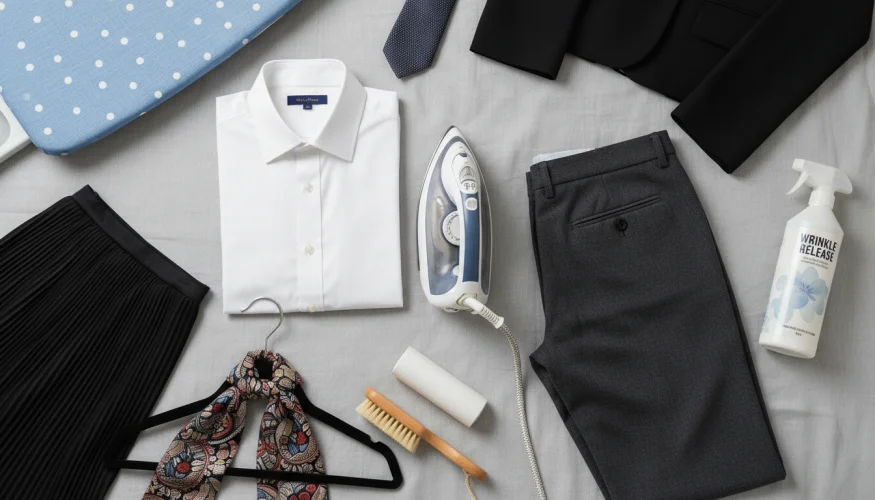
How to choose the right approach to ironing based on material
The foundation of a minimalist approach to ironing is understanding materials. Every fabric has different properties and responds differently to heat, moisture and mechanical stress. Knowing what each fabric needs saves time, energy and the clothing itself.
Cotton and linen are materials that tolerate ironing best and where the results are worthwhile. Synthetics, wool and silk, on the other hand, require caution or should avoid ironing altogether. The British consumer testing organisation Which? has long highlighted that incorrect ironing is one of the most common causes of clothing damage in the home - an overheated iron on synthetic material can cause irreversible damage.
The symbols on care labels are not merely a formality. The iron icon with temperature dots or a crossed-out iron are precise instructions from the manufacturer on how to treat the material. Yet a large proportion of people ignore these symbols or don't understand them. A useful guide can be found at dTest's explanation of laundry symbols on care labels, where all the icons are clearly described in Czech.
As British fashion designer and sustainable fashion advocate Orsola de Castro aptly noted: "The most sustainable garment is the one you already own - and care for properly." Proper care doesn't mean maximum care, but appropriate care - knowing when to iron, when not to, and how to treat clothing so it lasts as long as possible.
A minimalist approach to ironing is not a compromise between convenience and neatness - it is rather a reassessment of established habits that developed at a time when materials were different and aesthetic standards were stricter. Today's fabrics are designed to handle everyday wear with minimal maintenance, and this is reflected in what they actually need. The result is less time at the ironing board, lower energy consumption and, paradoxically, better-maintained clothing - because where ironing truly makes sense, we give it our genuine attention.