

What Causes Extrasystoles and When to See a Doctor

Suddenly it happens – a mysterious "skip" or "flutter" somewhere deep in the chest. The heart seems to forget to beat for a moment, then returns with an even stronger thud. Many people experience this sensation only occasionally and never give it a second thought. Others are so alarmed that they immediately call emergency services. The truth lies somewhere in between – and understanding what is actually happening in the body is the first step toward a calmer mind and a healthier heart.
Extrasystoles, or premature cardiac contractions, are among the most common cardiological findings of all. It is estimated that the vast majority of people will experience them at some point in their lives, and in many cases they occur entirely without symptoms. Yet that characteristic feeling of a skipped heartbeat is one of the most common reasons people in the Czech Republic visit a cardiologist or their general practitioner. And although the topic is well mapped medically, a number of misconceptions still persist in the general population.
Try our natural products

What extrasystoles are and why they occur
The heart is an electrically controlled organ. Every heartbeat begins with an electrical impulse generated in the sinoatrial node – a kind of natural pacemaker located in the right atrium. This impulse travels through the heart muscle and causes its coordinated contraction. However, sometimes another part of the heart – a cell in the atrium, the ventricle, or the conduction system – "fires" its own impulse before the regular one arrives. This creates a premature contraction that interrupts the normal rhythm.
After this premature contraction, a brief compensatory pause follows – the heart seems to "wait" for the normal rhythm to resume. And it is precisely this pause that people perceive as a skipped heartbeat. In reality, the heart has not skipped anything – on the contrary, it has added an extra beat. But because the premature contraction is not strong enough to be clearly felt, and the subsequent pause is longer than usual, the brain interprets the whole thing as a gap. Then comes a strong "return" beat, which many people describe as a thump or a kick in the chest.
There are many reasons why extrasystoles occur. These include stress and anxiety, excessive consumption of caffeine or alcohol, lack of sleep, smoking, and hormonal changes – for example during pregnancy or the menopause. In athletes, extrasystoles occur fairly frequently, and paradoxically both during intense exertion and at rest after training, when the heart slows down. Electrolyte imbalances also play a role, particularly deficiencies of magnesium and potassium – minerals whose intake tends to be chronically underestimated in the modern diet.
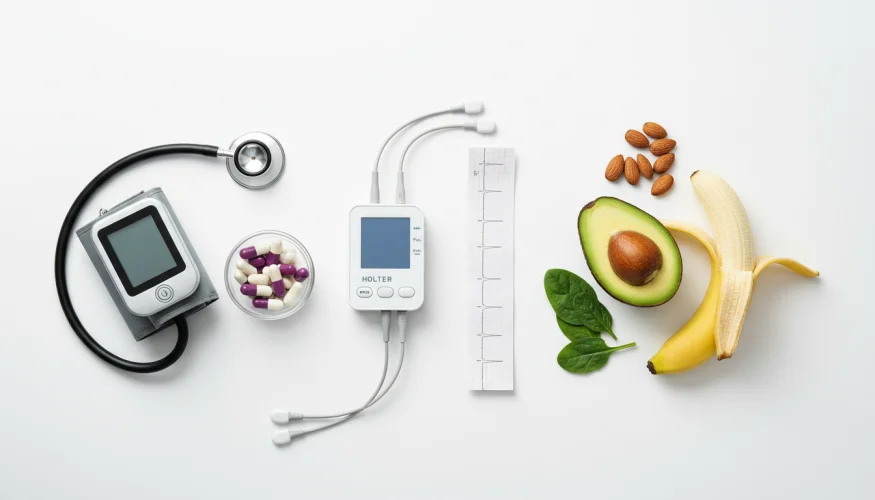
Interestingly, extrasystoles occur in healthy people far more often than most of us realise. Holter ECG monitoring – an examination in which the patient wears a portable device recording cardiac activity for 24 or 48 hours – repeatedly shows that even a completely healthy person can have dozens to hundreds of extrasystoles throughout the day without being aware of it.
Consider Martina, a forty-four-year-old teacher from Brno, who one afternoon while reading a book suddenly felt her heart "skip". Although she had never had any cardiac problems, a wave of anxiety prompted her to seek medical attention immediately. Tests – including an ECG and Holter monitoring – revealed no structural heart disease. The diagnosis was: benign ventricular extrasystoles, likely aggravated by stress and three cups of coffee a day. After adjusting her lifestyle, her symptoms improved significantly. Her story is not unusual – on the contrary, it is very typical.
When to pay closer attention
Although the vast majority of extrasystoles are harmless, there are situations that warrant closer attention. Cardiologists distinguish between atrial and ventricular extrasystoles – with ventricular ones potentially being more serious in certain contexts. The key factor is whether any structural heart disease underlies the extrasystoles. In a person with a healthy heart, even frequent extrasystoles are generally benign. In a patient with ischaemic heart disease, heart failure, or cardiomyopathy, the same findings may indicate a higher risk.
Signs that should prompt an early visit to a doctor include situations where the feeling of a skipped heartbeat is accompanied by dizziness, fainting or near-fainting, chest pain, marked breathlessness, or a rapidly beating heart lasting more than a few seconds. It is also advisable to seek examination if extrasystoles occur very frequently, are worsening, or appear for the first time in a person over fifty with no previous history of similar complaints.
The World Health Organization and leading cardiology societies emphasise that the subjective feeling of a skipped heartbeat alone is not sufficient for a diagnosis – objective examination is always necessary. The Czech Society of Cardiology offers clear information on its website about how the diagnosis of cardiac arrhythmias is carried out, and recommends that people with recurring symptoms should not hesitate to seek specialist help.
The diagnosis of extrasystoles is relatively straightforward. The foundation is an ECG, which can capture premature contractions directly during the examination. If symptoms occur irregularly, the aforementioned Holter monitoring comes into play. In some cases, the doctor will recommend echocardiography – an ultrasound examination of the heart – to rule out structural causes. Blood tests can then help identify any metabolic or hormonal abnormalities.
How to approach life with extrasystoles
If tests reveal no serious underlying condition, treatment of extrasystoles generally consists primarily of lifestyle adjustments. And this is where space opens up for truly meaningful changes whose impact extends far beyond merely suppressing symptoms.
One of the best-documented causes of worsening extrasystoles is chronic stress. Cortisol and adrenaline, hormones released during the stress response, directly affect the electrical activity of the heart and increase its excitability. Regular relaxation, meditation, yoga, or simply getting enough quality sleep are therefore not merely a passing trend – they have solid physiological justification. As cardiologist and author Herbert Benson of Harvard Medical School noted: "The relaxation response is the precise physiological opposite of the stress response."
Nutrition is equally important. As mentioned, magnesium and potassium play a crucial role in regulating heart rhythm. Magnesium is naturally found in dark leafy vegetables, nuts, seeds, and whole grains, while potassium is found in bananas, avocado, legumes, and potatoes. The modern diet, rich in industrially processed foods, provides these minerals in insufficient quantities – and research repeatedly links their deficiency to an increased incidence of cardiac arrhythmias. If dietary intake is inadequate, it may be worth considering high-quality supplements, ideally after consulting a doctor.
Caffeine is another factor worth considering. While moderate coffee consumption – one to two cups a day – does not significantly worsen extrasystoles in most people, higher doses can be problematic. The same applies to energy drinks, strong tea, and certain over-the-counter medications that contain caffeine. Alcohol affects heart rhythm in a more complex way – acute consumption can trigger arrhythmias, and this phenomenon is so widespread that it has its own name: "holiday heart syndrome", named after the increase in cardiac arrhythmias following weekends and public holidays.
Physical activity is a topic that deserves separate mention in the context of extrasystoles. Regular moderate-intensity exercise – brisk walking, swimming, cycling – demonstrably reduces overall cardiovascular risk and improves the autonomic regulation of the heart. Conversely, extreme endurance sports can paradoxically worsen extrasystoles in predisposed individuals. The key is therefore balance and moderation – and of course consultation with a doctor if symptoms worsen during exertion.
The psychological dimension deserves a chapter of its own. Many people who once become aware of their extrasystoles find themselves caught in a vicious cycle: they begin to monitor their heart constantly, every sensation in the chest causes concern, anxiety rises – and anxiety itself worsens extrasystoles. This mechanism is well described in the specialist literature and sometimes requires not only cardiological but also psychological support. Cognitive behavioural therapy can be very effective in such cases.
Natural heart care therefore does not rest on a single pillar, but on an entire network of mutually interconnected factors – nutrition, exercise, sleep, stress management, limiting stimulants, and regular medical check-ups. None of this is surprising, but therein lies the greatest challenge in that apparent simplicity: these things actually need to be done, not merely known about.
The feeling of a skipped heartbeat can be unsettling, but for the vast majority of people it is not a cause for panic. It is a signal – sometimes just a reminder that the body needs more care, less stress, and better nutrients. And sometimes it is a prompt to finally pick up the phone and make an appointment with a doctor. In either case, it is a message worth listening to.