

Rowing machine is one of the most underrated cardio machines
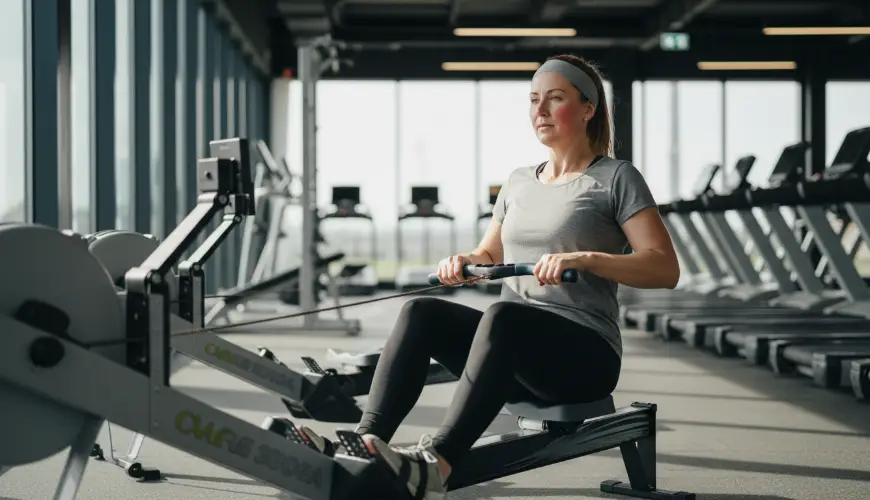
There is one cardio exercise that ends up in the corner of gyms, rarely the first choice anyone reaches for, and yet it ranks among the most effective physical activities of all. The rowing machine - or as some call it, an ergometer - stands quietly next to rows of treadmills and elliptical trainers, waiting. While people patiently occupy every free treadmill, the rowing machine sits empty. It is a paradox of modern fitness centres, because this very piece of equipment offers what most gym-goers are looking for: a comprehensive full-body workout, minimal joint stress, and a surprisingly high calorie burn.
So why does the rowing machine rank among the most underrated cardio exercises of our time? And why should that change?
Try our natural products



What actually happens when you sit down on a rowing machine
Many people think rowing is all about the arms. This myth is probably one of the reasons why the rowing machine gives the impression that it is only suitable for rowing enthusiasts or elite athletes. In reality, the opposite is true. Proper rowing technique engages approximately 60% of the muscles in the lower body, particularly the glutes, thigh muscles and calves, with the remaining work carried out by the back, shoulders and arms. It is therefore one of the few cardio machines that truly works the entire body at once.
The movement on a rowing machine consists of four phases: the leg drive, the trunk lean back, the arm pull, and the return to the starting position. Each of these phases activates a different muscle group, while the entire cycle flows smoothly and rhythmically. The result is a workout that builds strength and endurance simultaneously - a combination that most cardio machines come nowhere close to achieving. As Cleveland Clinic notes, rowing on a machine is one of the most comprehensive cardiovascular exercises because it simultaneously strengthens muscles and improves heart and lung fitness.
Also interesting is how much the perception of effort differs from actual output. Rowing feels subjectively less exhausting than running, yet measured by heart rate or calorie burn, it matches or even surpasses it. This makes the rowing machine an ideal choice for those who want to train intensely but without feeling like the exercise is destroying them.
Take Martina, a thirty-five-year-old accountant from Brno, who after years of on-and-off exercise was looking for an activity that would not aggravate her aching knees from an old volleyball injury. Running was painful, cycling was boring, and group classes did not fit her schedule. On the recommendation of her physiotherapist, she tried the rowing machine. After three months of regular training three times a week, she improved her fitness enough to complete her first half-marathon - walking and running, but she completed it. Her knees did not hurt. This experience is not exceptional; thousands of people who discovered the rowing machine as their second chance at exercise share similar stories.
Why so many people overlook it
The answer is surprisingly simple: technique. Unlike a treadmill, where you simply step on and start moving your legs, the rowing machine requires a certain basic knowledge of correct movement. And it is precisely this apparent barrier that puts off a large portion of potential users. Nobody wants to look clumsy at the gym, and if someone does not know how to sit properly, how to execute the stroke, or how to breathe, they will reach for a machine they already know.
Yet learning the basics of rowing takes literally fifteen minutes. There are countless instructional videos, fitness trainers are happy to explain rowing technique, and manufacturers like Concept2 - the world standard in rowing machines - offer detailed guides directly on their website. Once a person understands and internalises the basic movement pattern, rowing becomes natural and intuitive.
Another factor is visual appeal. A treadmill or a spinning bike evoke dynamism, speed, modernity. A rowing machine looks static, less exciting. Yet this very "dullness" is its strength - rowing requires no coordination, balancing or complex adjustments. Just sit down, set the resistance and start.
The third reason is a lack of awareness. The fitness industry massively promotes running, cycling and HIIT workouts. The rowing machine remains in the shadows, even though expert studies repeatedly confirm its exceptional benefits. According to research published in the Journal of Strength and Conditioning Research, rowing on a machine at moderate intensity activates more muscle groups and achieves comparable cardiorespiratory stress to running, while significantly sparing the musculoskeletal system.
Who benefits most from the rowing machine
It would be a mistake to claim that the rowing machine is ideal for everyone in every situation. But the list of people for whom it is exceptionally well-suited is surprisingly long. First and foremost are people with joint problems - knees, hips or ankles. Rowing is a low-impact activity in which the feet rest on fixed footrests and the body does not create the impact forces associated with running. This makes it a popular rehabilitation tool used by physiotherapists after surgery or in the treatment of chronic pain.
Then there are people who want to lose weight effectively and without monotony. An hour of rowing at moderate intensity can burn between 400 and 600 calories depending on body weight and pace - comparable to running, but without the joint stress. Moreover, engaging a greater number of muscles means the body continues to burn calories even after the workout ends, thanks to the so-called EPOC effect (excess post-exercise oxygen consumption), meaning increased oxygen consumption after exercise.
The rowing machine is also an excellent choice for strength athletes and weightlifting enthusiasts who need cardio but do not want to lose muscle mass. High-intensity running can be catabolic - meaning that under certain conditions it contributes to the breakdown of muscle tissue. Rowing at a moderate pace, on the other hand, supports recovery, increases blood flow to the muscles and improves cardiovascular capacity without jeopardising the results of strength training.
And then there are beginners. People who are just getting into exercise and are looking for an activity that will not destroy them on the very first day, but will deliver visible results. The rowing machine can be set to minimum resistance and the pace adjusted to one's own capabilities. There is no such thing as a "wrong" pace - every stroke is beneficial.
As British Olympic rower Steve Redgrave, a five-time Olympic champion, once said: "Rowing is the most complete sport there is - it engages the mind and body simultaneously and knows no shortcuts." These words apply equally to training on a rowing machine: results come, but they require consistency and the right approach.
On a practical note, for those considering purchasing home cardio equipment, the rowing machine is worth serious consideration. Unlike a treadmill, it takes up less space - most models fold and can be stored under a bed or in a cupboard - and the purchase price of a quality machine is comparable to the average elliptical trainer. Brands such as Concept2, WaterRower and Hydrow offer various price ranges and technological features, from simple mechanical models to connected machines with online training programmes.
When it comes to workout structure, the rowing machine offers enormous variety. Basic options include, for example:
- Endurance rowing - constant pace for 20–45 minutes, ideal for fat burning and improving fitness
- Interval training - alternating intense intervals with active recovery, suitable for improving performance and boosting metabolism
- Power rowing - high resistance, slow pace, focused on building muscular strength
- Pyramid training - gradually increasing and decreasing intensity, popular among advanced athletes
The key to success, as with any training, is consistency. Three times a week for thirty minutes will deliver results within a month that are both visible and measurable - whether in the form of better fitness, a lower resting heart rate, or simply the pleasant feeling of climbing stairs more easily.
The rowing machine is not a passing trend or a niche pursuit for sports enthusiasts. It is a proven, scientifically supported tool for improving physical fitness that deserves far more attention than the fitness community has given it so far. Perhaps it is high time to walk past the empty ergometer at the gym, stop, and sit down. The results might be surprising.