

What Egg Freezing Involves and How Much It Costs
Imagine a thirty-five-year-old woman who has just completed her doctorate, is building a career, and has not yet found a partner with whom she would like to start a family. Or a woman whose doctors have given her a diagnosis requiring chemotherapy. Both face the same question – what about their wish to have children someday? It is precisely for these situations that a method exists which has been gaining increasing attention in recent years: egg freezing, professionally known as oocyte cryopreservation. It is a way for women to preserve their fertility for the future – whether for medical or personal reasons.
Interest in this method is growing worldwide and in the Czech Republic. According to data from the European Society of Human Reproduction and Embryology (ESHRE), the number of social egg freezing cycles in Europe increases every year, particularly among women aged 30 to 38. The reasons vary – postponing motherhood for professional or personal reasons, the absence of a suitable partner, but also growing awareness that a woman's fertility declines faster than many realise.
Try our natural products





How the entire process works and what to expect
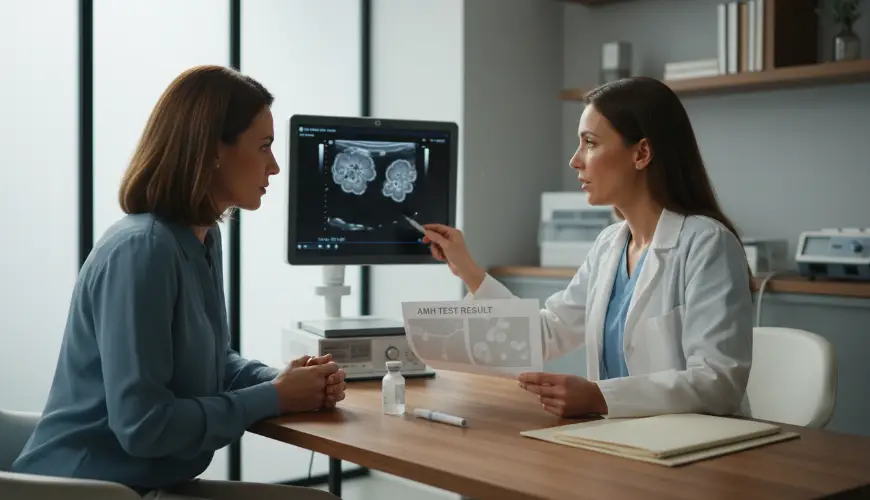
Egg cryopreservation is not a simple procedure, but neither is it a particularly dramatic process. It begins with a thorough gynaecological examination, during which the doctor assesses the ovarian reserve – that is, the supply of eggs a woman has. This involves an ultrasound examination and blood tests measuring the level of the AMH hormone (anti-Müllerian hormone), which is a reliable indicator of fertility. This phase is crucial, because the test results determine whether it makes sense to continue the process and what strategy to choose.
If the results are favourable, hormonal stimulation of the ovaries follows. This lasts approximately ten to fourteen days and involves daily hormone injections that stimulate the ovaries to produce a larger number of eggs at once. The woman typically administers the injections herself at home, while attending regular check-ups at the clinic throughout the stimulation period. The entire process requires a certain degree of patience and determination, but most women manage it without significant difficulties.
Once optimal follicle maturity has been achieved, the egg retrieval itself takes place on an outpatient basis under general anaesthesia or deep sedation. The procedure takes approximately twenty minutes, after which the woman spends several hours at the clinic for observation before being able to go home. The retrieved eggs are immediately frozen using the vitrification method – ultra-rapid freezing that prevents the formation of ice crystals that damage cells. This modern technique has significantly improved the success rate of the entire process compared to older slow-freezing methods.
The frozen eggs then wait in liquid nitrogen at a temperature of −196°C until the woman decides to use them. Their viability, when stored correctly, is practically unlimited – scientific studies confirm that eggs preserved for ten or more years retain a quality comparable to their condition at the time of freezing.
For whom is egg freezing truly suitable?
The answer to this question is not as straightforward as it might seem. Generally speaking, the earlier a woman freezes her eggs, the higher the probability of success – for the simple reason that egg quality decreases with age. The ideal age for cryopreservation is between 25 and 35, with the best results coming from procedures performed before the age of 32. This does not mean, however, that women over 35 have no chance – it simply means that realistic expectations are necessary and the situation should be carefully discussed with a doctor.
There are two main groups of women for whom this method is intended. The first consists of women facing a medical threat to fertility. This includes patients diagnosed with cancer who will undergo chemotherapy or radiation therapy – both treatments can permanently damage the ovaries. It also includes women with endometriosis, premature ovarian failure, or genetic predispositions to early menopause. For these women, egg freezing is medically indicated and in many countries is covered by health insurance, though the situation in the Czech Republic is not yet as favourable.
The second group consists of women who decide for so-called social reasons – because they have not yet found a suitable partner, are focused on their career, or simply are not yet ready for motherhood. This group has grown significantly in recent years and is changing society's perspective on family planning. As bioethicist and reproductive medicine author Anna Smajdor says: "Egg freezing is not giving up on motherhood – it is a way of preserving it as an option."
It is important to also mention groups of women for whom this method may not be suitable or whose chances of success are low. If the ovarian reserve is already significantly reduced – which can happen even in women around thirty – the egg yield at retrieval may be very small and the entire process may not deliver the expected result. This is precisely why the initial examination is so essential.
How much does egg freezing cost and what does the price include?
The financial aspect is a deciding factor for many women. In the Czech Republic, the cost of one complete egg cryopreservation cycle ranges approximately from 40,000 to 80,000 Czech crowns, with this amount typically covering hormonal medications, monitoring examinations, the egg retrieval itself, and the freezing. Prices vary depending on the clinic, the medications used, and the individual stimulation protocol.
To this must be added the annual storage fee for the frozen eggs, which ranges between 3,000 and 8,000 crowns per year. If the woman ultimately uses the eggs and proceeds to embryo transfer, additional costs are incurred for fertilising the eggs with a partner's or donor's sperm and the actual transfer of the embryo into the uterus – this can cost a further 20,000 to 40,000 crowns.
It is important to bear in mind that one cycle may not be sufficient. Experts recommend that a woman have at least fifteen to twenty quality frozen eggs available for the chance of successful pregnancy to be realistic. With an average yield of eight to twelve eggs per retrieval, it may be necessary to undergo two or more cycles – and this naturally increases the overall costs.
Health insurance companies in the Czech Republic do not yet standardly cover cryopreservation for social reasons. The exception is when egg freezing is indicated prior to oncological treatment – in such cases, the insurer may reimburse part of the costs, but this depends on the specific insurer and individual assessment. The situation is, however, evolving, and pressure from both the professional community and the general public for greater accessibility of this method is growing.
Some foreign companies – particularly in the USA and the United Kingdom – have begun offering egg freezing as an employee benefit. This trend is slowly making its way into Europe and signals a changing perception of women's health and reproductive rights in the workplace.
When choosing a clinic, it is advisable to focus not only on price but above all on the facility's experience, the number of cycles performed, and the success rate. The Czech Republic has several reputable reproductive centres with internationally recognised results, for example in Prague, Brno, or Ostrava. Before making a decision, it is worth attending consultations at several facilities and comparing not only prices but also the doctors' approach and the overall clinic environment.
Women's health is a complex topic that encompasses not only caring for the body in the present, but also thoughtful decision-making about the future. Egg cryopreservation is one of the tools that helps keep that future open. It is not a miraculous solution or a one-hundred-percent guarantee – but for many women it represents an important psychological and practical safeguard.
The decision to freeze eggs should never be rushed or made under pressure from others. The ideal path is an open conversation with a gynaecologist or reproductive medicine specialist, who can assess the individual situation and provide a realistic perspective on the possibilities and risks. Information is more accessible than ever before – for example, the Czech Gynaecological and Obstetrical Society or the international organisation ESHRE offer quality, verified resources for anyone wishing to better understand the topic.
Fertility is part of women's health that is still talked about far too little – both in doctors' offices and in society more broadly. The more women have access to information, the better they can make decisions about their own bodies and lives. And that is a value that transcends any financial cost.