
Why it pays to get a steam iron that saves both time and energy when ironing
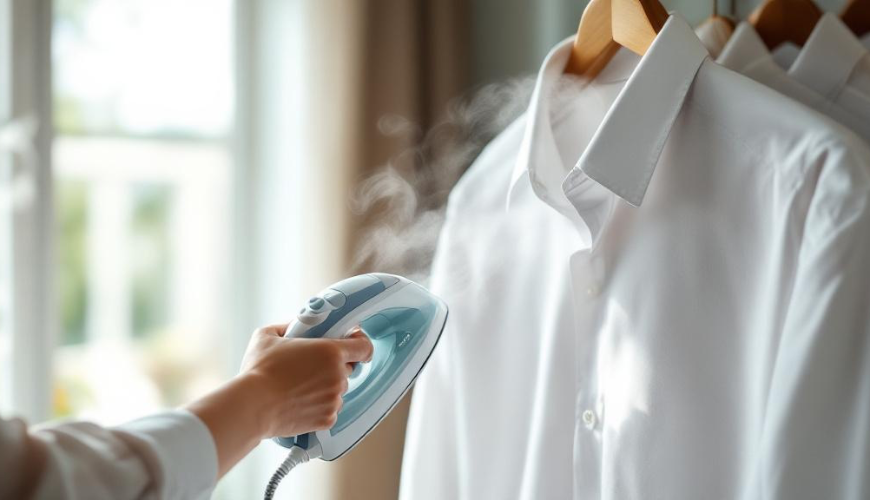
Ironing is one of those household chores that few people genuinely love, but almost everyone appreciates the results. A freshly ironed shirt, smooth bed sheet, or carefully pressed dress can transform not only the appearance of clothing but also how the person wearing it feels. Yet many people squirm at the sight of an ironing board and put off the task indefinitely. But what if there were ways to not only simplify ironing but even enjoy it a little? And what if a steam iron offered more than just smoothing out wrinkles?
Before we dive into practical tips and the advantages of modern ironing, it's worth considering why we actually iron. It's not just about aesthetics, although that obviously plays a crucial role. Ironing has a history stretching back thousands of years – in ancient China, pans filled with hot coals were already used to smooth fabrics. Today the situation is understandably different, but the principle remains: heat and pressure can work wonders with textile fibers. From a practical standpoint, ironing extends the lifespan of clothing because it straightens fibers back into their natural structure, thereby reducing the risk of premature wear. Moreover, the high temperature during ironing kills bacteria and dust mites, which is especially important for bed linens and children's clothing. As the World Health Organization states, textile hygiene in the home is one of the often underestimated factors in preventing allergies and skin problems.
And then there's the aspect that few people realize – the psychological effect of well-kept clothing. Studies in social psychology repeatedly show that people who wear neat and clean clothing feel more confident and come across as more professional to those around them. It's not superficiality – it's simply how nonverbal communication works. A wrinkled T-shirt at a job interview sends a different signal than a carefully ironed shirt. Ironing, then, is not just an annoying obligation – it's an investment in how we present ourselves to the world and to ourselves.
Try our natural products
Why It's Worth Switching to Steam Ironing
Traditional ironing with a dry iron certainly has its place, but the steam iron has taken the entire process to a completely different level. The principle is simple: the iron heats water in an integrated reservoir and releases steam that penetrates deep into textile fibers. As a result, creases and wrinkles are removed faster, more easily, and more gently than with mere contact from a hot soleplate.
The benefits of steam ironing are surprisingly diverse. First, there's the question of efficiency – steam softens fibers from the inside, so there's no need to press down as hard on the iron or repeatedly go over the same spot. This saves both time and energy – literally – as lower electricity consumption from shorter ironing sessions will eventually show up on energy bills. Another advantage is gentleness on materials. While a dry iron can damage delicate fabrics like silk, linen, or synthetic blends at higher temperatures, steam works more gently. Many modern steam irons also feature adjustable settings for different fabric types, significantly reducing the risk of scorching or leaving shiny marks on clothing.
Also worth mentioning is vertical steaming, a feature offered by most quality steam irons today. It allows you to iron clothes right on the hanger without having to set up an ironing board. This is a huge time-saver, especially in the morning when you're rushing to work and discover your shirt looks like someone slept in it. Just hang it up, run the steamer over it, and in a few minutes it looks like new. Vertical steaming is also great for curtains, drapes, or upholstery, where traditional ironing simply isn't practical.
The hygienic aspect of steam ironing is also interesting. Hot steam at around 100°C effectively kills most bacteria, viruses, and dust mites. For allergy sufferers and families with small children, this can be a decisive argument. Instead of chemically treating textiles, regular steaming is all it takes – eco-friendly, simple, and effective. In the context of a sustainable household, it's an approach that fits perfectly into the philosophy of reducing environmental impact.
One real-life experience says it all: Markéta from Brno, a mother of two small children, had long been putting off ironing because it seemed endless. When she switched to a steam iron with a large water tank, she found that ironing an entire basket of laundry took her roughly a third less time than before. "The biggest surprise for me was that I didn't have to keep spraying water and going back and forth. The steam does most of the work for me," she described her experience. She also appreciated that children's clothing was more hygienic after steaming, without having to use any chemical products.
How to Make Ironing Easier and Turn It into a More Pleasant Ritual
Ironing doesn't have to be torture. There are plenty of tricks and techniques that can turn it into an almost meditative activity – or at least something that doesn't hurt as much as it used to.
Let's start with the basics, which means proper washing and drying. Most wrinkling doesn't actually occur during wearing but during washing and improper drying. If you take laundry out of the washing machine immediately after the cycle ends, shake it out, and carefully hang or lay it flat on a drying rack, you'll significantly reduce the amount of wrinkling. Many modern washing machines offer programs with lower spin speeds, which are slightly less effective at removing water but leave laundry smoother. This small compromise pays off because the time saved at the ironing board is many times longer than the extra time spent drying.
Another key factor is a quality ironing board. It may sound trivial, but the difference between a cheap, wobbly board and a stable, well-padded one is enormous. An ergonomically correctly set board height saves your back and shoulders, which is especially important during longer ironing sessions. The board cover should be smooth, heat-resistant, and ideally have a reflective layer that bounces heat back into the fabric, thereby speeding up the entire process.
The order in which you iron individual pieces of clothing also matters. A proven approach is to start with more delicate materials that require lower temperatures and gradually move to more durable fabrics like cotton or linen. An iron heats up faster than it cools down, so this approach is more energy-efficient. For shirts, it pays to start with the collar and cuffs, then move to the shoulders, and finally the front and back panels – this method minimizes the risk of wrinkling one part while ironing another.
Ironing water and steam stations represent another way to make the job more pleasant. Distilled or demineralized water not only protects the iron from limescale buildup but also ensures cleaner and more even steam. Some steam irons and steamers allow you to add a few drops of essential oil – lavender, eucalyptus, or citrus – to the reservoir, giving laundry a subtle natural fragrance without the need for synthetic fabric softeners. This is an approach that resonates with the philosophy of an eco-friendly household and sustainable lifestyle.
For those who truly dislike ironing, there's one more trick: combine ironing with something enjoyable. Playing a favorite podcast, audiobook, or playlist can turn twenty minutes at the board into time you actually enjoy spending. As American organizational expert Marie Kondo said: "Caring for your belongings is a way of expressing gratitude for what you have." And even though ironing may seem like a necessary evil at first glance, it can be precisely that moment of calm in an otherwise hectic day.
We also shouldn't overlook modern materials and clothing that doesn't require ironing. Sustainable fashion increasingly works with materials designed to wrinkle minimally – whether it's specially woven cotton blends or natural materials like bamboo and Tencel. Investing in quality clothing made from these materials can significantly reduce time spent ironing in the long run. On the other hand, even such clothing occasionally needs a light steaming to look truly flawless, and this is exactly where a steam iron or handheld steamer becomes an indispensable helper.
When you think about it, ironing is actually one of the few household chores whose results are immediately visible and tangible. Unlike washing dishes, which fill the sink again in a few hours, or vacuuming, whose effect disappears within a day, ironed clothing maintains its neat appearance for a relatively long time. Perhaps that's where its hidden appeal lies – in the sense of completed work, in the transformation of a wrinkled piece of fabric into something that looks and smells like new.
A steam iron isn't just a tool – it's a gateway to a more efficient and enjoyable way of caring for textiles. Whether it's everyday shirts, formal dresses, or baby onesies, the right technique and modern equipment can transform ironing from a dreaded task into a routine that takes less time and delivers better results. And if you add a mindful approach to washing, drying, and choosing materials, the entire process can become a natural part of a sustainable and healthy household – one where belongings are cared for with respect and where every piece of clothing gets the chance to look its best for as long as possible.