
Effective Apartment Winter Preparation with Sealing and Curtains
Every year, as soon as the days begin to noticeably shorten and the first morning frost appears on the windows, it's time to think about how your apartment is actually doing. Is it well sealed? Does it retain heat? Or do you pay astronomical heating bills every year without knowing why? Preparing your apartment for winter is no rocket science – but it requires a certain amount of attention and a willingness to spend a few weekend hours on preventive measures that will pay off many times over.
The Czech Republic is among the countries with a distinctly continental climate, where temperatures can drop well below zero during the winter months. Yet many households still rely on outdated heating methods or ignore the places where heat escapes from the apartment. According to data from the State Energy Inspection, heat losses caused by poor insulation of windows and doors account for up to 30% of the total heat losses of the housing stock in the Czech Republic. That is a figure that should give every apartment owner or tenant pause for thought.
Try our natural products





Where heat actually escapes and how to stop it
The first step towards a warm and energy-efficient apartment is understanding where heat is being lost. The most common culprits are windows, doors and various gaps in the building structure. Old windows without double glazing or with damaged seals can be a literal money drain – the heat from your heating simply escapes outside and you end up paying to warm the street.
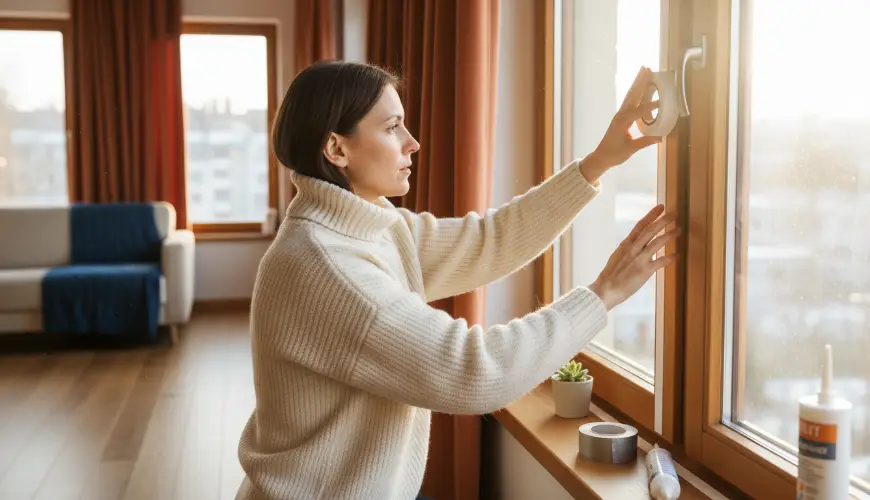
Sealing windows and doors is one of the most accessible and quickest investments you can make in your apartment. Self-adhesive sealing strips made of foam rubber or silicone are inexpensive, readily available, and their installation is something anyone can manage. Simply clean the window frames, degrease the surface and carefully apply the seal into the groove of the frame. The result is immediate – draughts disappear and the room starts to heat up more quickly. A similar principle applies to entrance doors, where draughts tend to be particularly unpleasant. Here you can also use so-called door brushes or threshold seals to prevent cold air from flowing in from the stairwell or hallway.
An interesting real-life example: A family from Brno found that after installing new seals on four windows in their living room and bedroom, their monthly heating costs dropped by nearly 15%. The investment in materials came to less than 500 crowns, while the savings over a single winter season exceeded 2,000 crowns. Few financial investments could match that kind of cost-to-return ratio.
Another area that is often overlooked is electrical sockets and switches on exterior walls. Cold air can flow through them directly from the outdoor insulation. The solution is special sealing inserts that are placed directly behind the socket cover – their cost is negligible, but the effect is noticeable. The same applies to pipe penetrations, ventilation openings or television cable entry points, where it is worth using acrylic or silicone sealant.
Don't forget about floors either. If you live on the ground floor or above an unheated space, the floor can be a source of significant heat loss. Thick carpets or insulating underlays beneath laminate flooring can considerably improve the situation. Similarly, door mats – not only do they catch dirt, but they help reduce the influx of cold air from the hallway.
Curtains as an underestimated tool for winter comfort
Few people think of curtains as having a real impact on thermal comfort in an apartment, yet their role is surprisingly important. Heavy, well-fitting curtains can act as an additional insulating layer between the cold window and the heated room. The air between the glass and the fabric forms an insulating cushion that slows the transfer of cold to the interior.
When choosing winter curtains, their length and the density of the material are key. Curtains should ideally reach from ceiling to floor, or slightly beyond it, with minimal gaps at the sides. The less space there is for air to flow between the curtain and the window, the better the insulating effect. Materials such as velvet, wool or specialist thermal fabrics are significantly more effective in this regard than light cotton or linen fabrics, which are excellent for summer but offer little help in winter.
As British household energy-saving expert Martin Lewis noted: "The right curtains are one of the cheapest forms of insulation available to you – and yet most people don't even consider them." This statement holds just as true in the Czech heartland as it does on the British Isles.
The rhythm of their use also matters. During the day, when the sun is shining, it pays to draw the curtains back and let the sunlight naturally warm the room – even in winter, the sun can deliver a considerable amount of heat through a window. Once the sun sets, draw the curtains and seal the warmth inside. This simple habit can reduce heat loss through windows by tens of percent.
If you want to go even further, there are specialist thermal roller blinds or window films that adhere directly to the glass and significantly reduce its thermal conductivity. These are no longer just transparent films with minimal aesthetic impact – today, variants are available that look elegant while still performing their function. Combined with quality curtains, a window can cease to be the thermal weak point of your apartment.
Have you ever thought about how much energy escapes simply because you have thin net curtains and draughty windows? The answer might surprise you.

Smart energy saving without major investment
Preparing your apartment for winter does not have to mean costly renovation. A large proportion of the measures are accessible to everyone, regardless of whether they own their home or rent it. In addition to sealing and curtains, there are a whole range of further steps that together form a meaningful whole.
One of the most important is proper ventilation. Paradoxically, it is precisely the desire to save energy that leads many people into a mistake – they do not ventilate sufficiently, which causes moisture to condense on cold surfaces, leads to the growth of mould and deteriorates air quality. The correct approach to winter ventilation is short but intensive – so-called shock ventilation for 5 to 10 minutes with windows fully open. The air temperature in the room then drops quickly, but the walls and furniture retain their warmth and the room heats up again rapidly. By contrast, ventilating all day through a slightly open window causes the walls to cool down, meaning it then takes much longer to reheat the room and consumes considerably more energy.
Heating regulation is another key topic. Thermostatic radiator valves are standard today, but many households either don't have them or don't use them correctly. Reducing the temperature by just one degree Celsius can, according to the Energy Regulatory Office, cut heating costs by approximately 6%. Lowering the temperature at night in the bedroom to 18 degrees and during the day in unoccupied rooms to 15 degrees are measures that will make a significant difference to the annual heating bill. Smart thermostats then automate this process and allow different temperature profiles to be set for different times of day and week.
The radiators themselves also play a non-negligible role. If reflective panels are placed behind them – specialist foil that reflects heat back into the room rather than allowing the exterior wall to be heated – their efficiency increases significantly. Installing such a panel takes an hour and the cost is in the order of a few hundred crowns per panel.
Another tip worth mentioning is reconsidering the arrangement of furniture. A sofa or wardrobe standing directly in front of a radiator blocks the spread of heat into the room. Moving furniture just 20 to 30 centimetres away from the radiator can noticeably improve the circulation of warm air.
For those looking for a more ecological approach to winter comfort, sustainable textiles and natural insulating materials are also worth considering. Wool blankets, organic flannel bedding or carpets made from natural fibres are not merely a fashion trend – they have genuine thermoregulatory properties that synthetic materials cannot fully replicate. Wool, for example, can absorb moisture without feeling wet, while retaining its insulating properties. Investing in a quality wool throw or a thick natural rug is therefore not just an aesthetic decision, but also a practical step towards a more energy-efficient and comfortable winter.
All things considered, preparing your apartment for winter is a mosaic of smaller and larger steps that together form a meaningful whole. You can easily start with the simplest ones – check window seals, get heavier curtains, set the thermostatic radiator valves. Each such step contributes not only to lower energy bills, but also to greater thermal comfort, better sleep and a healthier home environment. And at a time when energy prices continue to rise and climatic conditions are becoming ever less predictable, taking care of the energy efficiency of your own home is one of the most sensible things a person can do – regardless of whether they live in an old panel-block apartment or a newly built property.