
Grey water in the household is not waste but a resource
Every day, tens of liters of water drain away from a typical Czech household without most people even noticing. Water left over from cooking vegetables, rinsing pasta, washing dishes, or from the bathroom – all of it disappears down the drain, even though it could be used once more, or even twice. This seemingly invisible waste has a name: grey water. And its reuse has in recent years become a topic that extends beyond the boundaries of ecological activism and enters completely ordinary households.
Grey water is the term for wastewater that does not come from the toilet and is therefore not contaminated with faecal matter. It includes water from sinks, showers, baths, washing machines, and kitchen sinks. Unlike so-called black water, which drains from toilets, grey water is relatively clean and, with minimal treatment or even without it, suitable for further use. According to estimates, grey water accounts for up to 65% of all wastewater generated in an average household – a figure worth reflecting on.
The question is: why, then, do we so massively waste this water when we have it literally at our fingertips?
Try our natural products
Cooking Water as an Overlooked Treasure
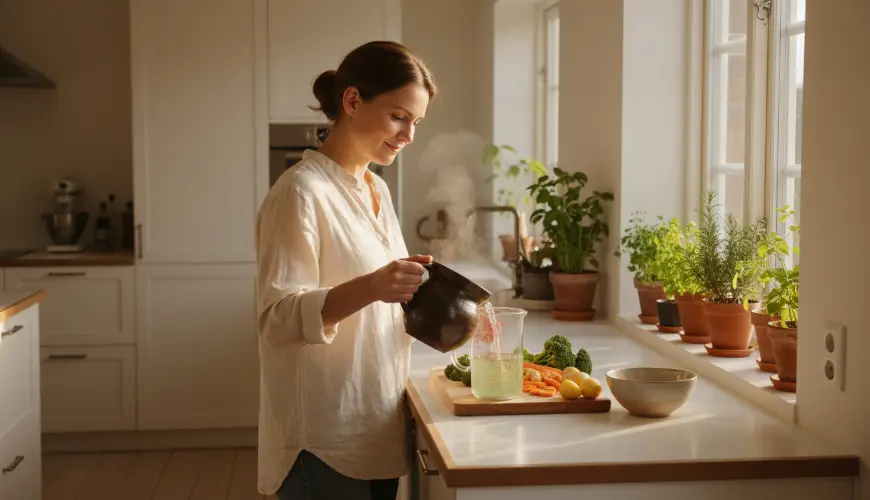
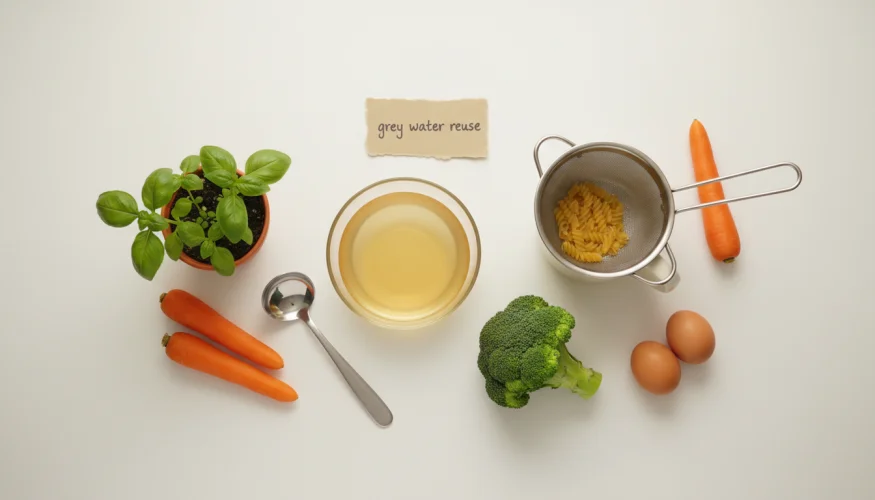
One of the simplest and most accessible sources of grey water in the home is the water produced during everyday cooking. Whether it is water left over from boiling eggs, potatoes, vegetables, or pasta – this liquid contains a range of substances that make it surprisingly useful. Water from cooking vegetables contains minerals, vitamins, and trace elements released from plant tissues during the heating process. Pasta water is rich in starch. Both of these liquids have specific applications, not only in the kitchen but beyond it as well.
The best-known example is watering houseplants or garden beds. Vegetable cooking water with no added salt is literally nutritious for plants – it delivers nutrients that they would otherwise have to draw from the growing medium or from fertiliser. Gardeners and houseplant enthusiasts know this trick, but in ordinary households it remains underappreciated. Simply let the water cool to room temperature and use it to water your flowers or a windowsill herb garden.
Pasta water, on the other hand, has a completely different use. Thanks to its starch content, it can act as a natural binder in sauces – Italian cooks have always known this and add it to ragù or aglio e olio for better consistency. This practice is not just a culinary trick, but also a way to reduce the amount of water that needlessly goes down the drain. As experienced cooks say: "Pasta water is gold." And that is no exaggeration.
Water from boiling eggs can be treated similarly. It contains calcium released from the shells and, once cooled, can serve as an excellent fertiliser for plants that prefer a more alkaline environment – such as tomatoes or peppers. This method of recycling water is so simple that it requires no special equipment or knowledge.
How to Use Grey Water Systematically Throughout the Home
Reusing cooking water is a great start, but the true potential of grey water in the home extends much further. With a little organisation and minimal investment, it is possible to significantly reduce the consumption of drinking water for activities that do not require it at all.
Laundry water, if eco-friendly detergents without aggressive chemicals are used, can be used to flush the toilet. In countries such as Australia or Israel, where water is a scarce resource, grey water recycling systems are a standard feature of new buildings. In the Czech Republic, this practice is only beginning to enter public awareness, but interest in it is growing – particularly in connection with recurring dry summers and rising water and sewage prices.
Water from the shower or bath, if not excessively contaminated with chemical products, can be used to water the garden or to flush the toilet. A simple collection tank connected to the shower drain is not science fiction – relatively affordable solutions exist for both family houses and apartments. For example, Water UK or Czech initiatives within the programmes of the State Environmental Fund offer overviews of available technologies and subsidy options for households wishing to reduce their water consumption.
A practical real-life example might look like this: a family with two children in a house on the outskirts of Brno began collecting water from cooking and the shower into a large garden tank two years ago. The result? They watered their vegetable garden throughout the entire summer without once turning on the drinking water tap. Their annual savings on water and sewage bills exceeded two thousand crowns – and all without a single major investment.
Another easy step is collecting rainwater, which is technically not grey water, but plays a similar role in the context of household water management. Rainwater barrels are accessible and inexpensive, yet they can cover a large portion of garden needs throughout the entire growing season.
For clarity, it is worth listing the most common ways of reusing grey water in the home:
- Vegetable cooking water – watering plants and garden beds, adding to sauces
- Pasta water – binding agent in sauces, watering plants (without salt)
- Egg cooking water – natural fertiliser for vegetable plants
- Shower and bath water – watering the garden, flushing the toilet (when eco-friendly products are used)
- Laundry water – flushing, washing floors or outdoor surfaces (again, only with eco-friendly products)
The key rule for all of these approaches is not to use grey water that has come into contact with aggressive chemical substances, bleaching agents, or heavily fragranced products. Such water can damage both plants and soil.
Why It Matters More Than Ever
The Czech Republic is, paradoxically, among the European countries with one of the lowest rainfall reserves per capita. As the Czech Hydrometeorological Institute notes, recurring hydrological droughts over the past decade have significantly affected both agriculture and groundwater reserves, on which drinking water for millions of people depends. Yet the average Czech household consumes around 90 litres of drinking water per person per day – and a large portion of that is for purposes for which grey water would be perfectly adequate.
Managing grey water is not only a matter of ecology, but increasingly of economics as well. Water and sewage prices in the Czech Republic have been rising steadily and, according to forecasts, this trend will continue. Every litre of grey water that can be reused is therefore not only a benefit for the environment, but also a direct saving in the household budget.
Interestingly, interest in this topic is growing across generations. While older generations remember times when water was conserved out of necessity, younger people are approaching resource management consciously, as part of a broader lifestyle focused on sustainability. Both approaches lead to the same outcome – less waste and greater household self-sufficiency.
The change does not have to be dramatic or costly. It is enough to start with the simplest step: next time you cook broccoli or carrots, let the water from the pot cool and use it to water the plants on your windowsill. Or set aside a cup of pasta water before draining it – and use it in your sauce. These are small things that require no investment or major change of habits, yet they have a real impact.
Grey water in the home is a resource that has always been there – we have simply stopped noticing it. And precisely at a time when drought, rising prices, and ecological responsibility are pushing households to reconsider their habits, reusing water from cooking and other sources may be that first, small, but meaningful step towards a truly sustainable way of life.