

# Ideas for Using Large Quantities of Zucchini
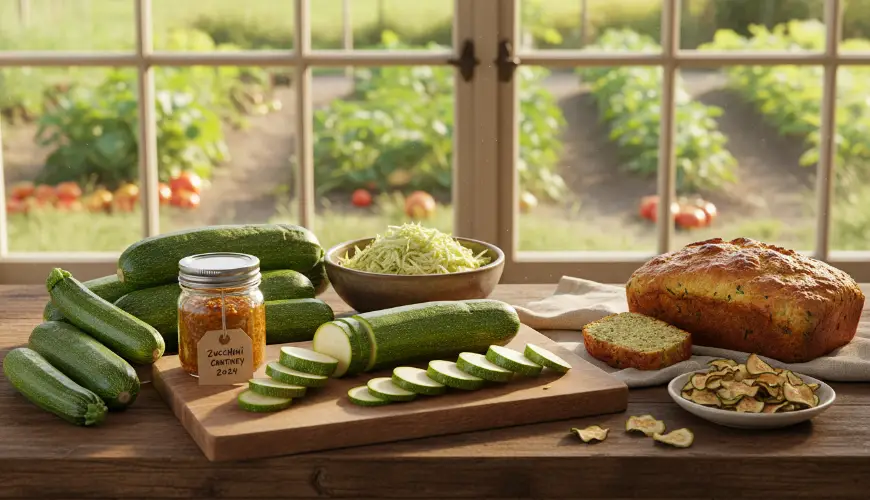
Everyone who has ever grown zucchini knows that peculiar moment when a single unassuming plant becomes an unstoppable force of nature. At the start of summer, you plant a few seedlings with hope; a few weeks later, you harvest the first beautiful fruits — and then comes that week in August when zucchini seem to grow literally overnight. Suddenly they're everywhere: on the kitchen counter, in the basket by the door, in the bag the neighbours brought over because they don't know what to do with theirs either. A surplus of zucchini at the end of summer is a phenomenon that virtually every gardener in the Czech Republic knows well.
But this is no reason for panic, or for quietly leaving enormous specimens behind the fence. Zucchini is, in fact, one of the most versatile vegetables Czech cuisine has to offer — and if you know how to handle it, you can turn a summer surplus into supplies, pleasure, and inspiration for the entire autumn and winter.
Try our natural products





Why there are always more zucchini than expected
Zucchini is one of those vegetables that is deceptively prolific. A single healthy plant can produce twenty or more fruits in a season, and if the gardener doesn't harvest regularly every two or three days, the fruits quickly overgrow. An overgrown zucchini can weigh several kilograms, yet it doesn't differ significantly from smaller ones in terms of taste or nutrition — it simply has a tougher skin and larger seeds in the middle.
That is precisely why it's important to know that overgrown zucchini are not a failure, but an opportunity. They are excellent for stuffing, for making zucchini "spaghetti" with a spiralizer, or for various preserves and spreads. Small, young zucchini, on the other hand, taste best fresh or lightly cooked, so both groups have their place in the kitchen.
Interestingly, zucchini is a nutritionally very light food — it contains over 90% water, is low in calories, and rich in potassium, vitamin C, and antioxidants. According to information from the USDA nutritional database, 100 grams of raw zucchini provides approximately 17 calories, so eating it in larger quantities places no burden on digestion or weight.
The question, then, is not whether to process the zucchini, but how to do so cleverly, so they don't go to waste and you get the most out of them.
The best ways to process large quantities of zucchini at once
When the moment arrives and there are five, eight, or even ten zucchini in the basket at once, it's good to have a plan ready. Experienced gardeners and cooks alike agree on several tried-and-tested methods that allow you to process large quantities of vegetables quickly, economically, and without unnecessary waste.
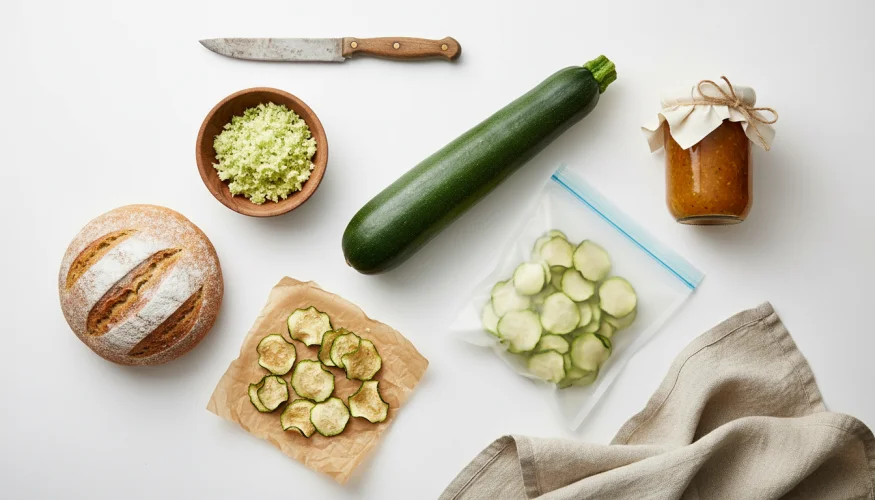
Freezing is probably the simplest way to preserve zucchini for winter. They don't need to be cooked or blanched if you plan to use them in soups, sauces, or baked goods. Simply grate them finely, salt them lightly, leave them to rest for about twenty minutes, then squeeze out the excess water and divide them into bags or containers in portions. Grated zucchini prepared this way will keep in the freezer for six to eight months and is ideal for zucchini bread, muffins, soups, or as a base for vegetable fritters.
If you want to freeze zucchini cut into rounds or cubes, brief blanching is recommended — that is, immersing them in boiling water for two to three minutes and immediately cooling them in ice water. This process preserves the colour, texture, and some of the vitamins, and prevents the vegetable from collapsing into mush when thawed.
Canning and preserving is another traditional method that has been experiencing a notable revival in recent years. Zucchini chutney, spicy zucchini relish, zucchini spread with peppers and garlic, or zucchini jam with lemon and ginger — these are just some of the options that allow you to transform kilograms of vegetables into long-lasting delicacies. Properly sealed jars will keep in a dark cellar or pantry for up to a year, making this a truly long-term solution.
When canning, it is important to follow basic hygiene rules — sterilise the jars, use fresh lids, and monitor the temperature correctly. If anyone is unsure about the process, they can refer to the tried-and-tested procedures described in the safe canning guide from the National Center for Home Food Preservation, which, while in English, contains precise time and temperature tables.
Drying is a method that has fallen somewhat into obscurity in Czech households, but deserves attention. Zucchini sliced into thin rounds or strips can be dried in an oven at a low temperature (around 60–70°C) or in an electric food dehydrator. The result is light, crispy chips that make a healthy snack, or dried vegetables that can be added to winter soups and stewed dishes. Dried zucchini lose most of their volume, so a kilogram of fresh vegetable yields only a small handful of dried — but that is precisely what makes them ideal for storage in small spaces.
Beyond these preservation methods, it is of course possible to simply cook and eat zucchini every day in various forms. Zucchini soup, zucchini risotto, stuffed zucchini baked in the oven, zucchini purée as a side dish, zucchini noodles with pesto or sauce — the possibilities are truly endless. Some cooks swear that zucchini is the best vegetable precisely because it takes on the flavour of whatever it is cooked with.
A real-life example comes from Jana from the Vysočina region, who harvests dozens of kilograms of zucchini from her parents' garden every year. A few years ago, she began experimenting with zucchini bread — a recipe where part of the flour is replaced with grated zucchini — and today she bakes it regularly every week throughout autumn. "Zucchini in bread retains moisture, so the bread stays fresh longer than a classic loaf," she says. It's also a way to add vegetables to meals unobtrusively, without anyone even noticing.
A sustainable approach to summer vegetable surplus
Processing a surplus of zucchini is not merely a matter of practicality or frugality. It is also a conscious decision about how to handle what nature offers. Food waste remains an enormous problem in Europe — according to data from the European Commission, approximately 59 million tonnes of food are discarded in the EU every year, with a significant portion of this waste originating directly in households.
Growing your own vegetables and processing them thoroughly is one of the most concrete steps an individual can take to reduce their ecological footprint. Zucchini that would otherwise end up in the compost or the bin can be transformed into food supplies for the entire winter — without any chemicals, unnecessary packaging, or the carbon footprint associated with food transport.
This approach naturally aligns with the values of a sustainable lifestyle, which encompasses not only choosing eco-friendly products, but also consciously managing what one already has. Seasonal eating, home preserving, and minimising food waste are topics that have been gaining increasing prominence in recent years — and a summer vegetable surplus is the perfect opportunity to put these principles into practice.
For those who wish to go a step further, surplus zucchini can be given to neighbours, family, or a local food bank. In many Czech towns, community sharing groups operate on social media, where people pass on garden surpluses free of charge. It is simple, costs nothing, and brings joy to both sides.
For those who want to take their sustainable approach to the household even further, it is natural to seek out products that support this way of life — from quality preserving jars and food dehydrators to eco-friendly kitchen tools that last for years and are not made from single-use plastics. Products like these can be found in the range at Ferwer, where a commitment to quality, ecology, and the practicality of everyday life come together.
Every year, summer tips past its peak and gardens begin to slowly surrender their harvest. At that moment, zucchini is one of the most generous gifts a garden can offer — provided you approach it with thoughtfulness, creativity, and a little foresight. A freezer full of grated zucchini, a shelf lined with jars of homemade chutney, and a freshly baked zucchini loaf from the oven are the reward for work that is well worth it. And next summer? The zucchini will come again — and this time, you'll be ready.