

Learn to read ovulation tests correctly
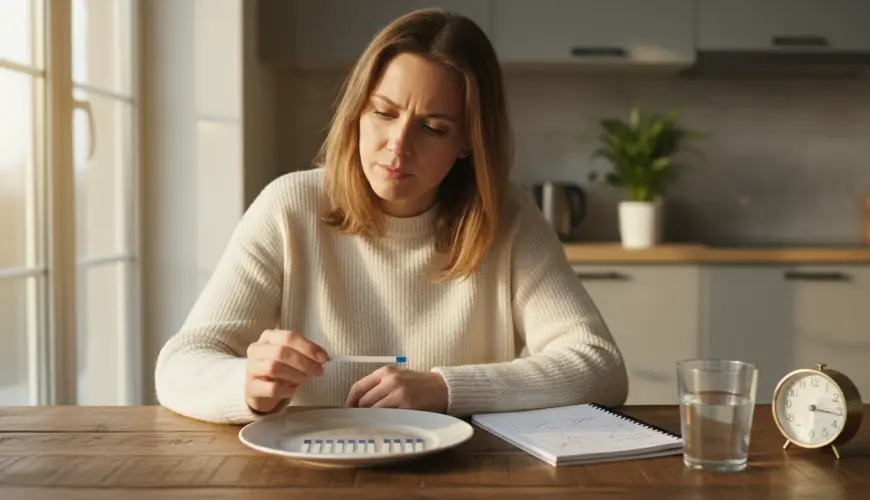
Ovulation tests are today among the most widely used tools for women who are planning a pregnancy or want to better understand their cycle. Yet many women still encounter uncertainty – two lines, one line, a lighter strip, a darker strip. What does it actually mean? And how do you correctly read an ovulation test so that the result has real informational value? The answers are not as complicated as they might seem at first glance, but they require a little understanding of what happens in the body during ovulation.
Ovulation is the moment when the ovary releases a mature egg ready for fertilisation. This egg remains viable for approximately 12 to 24 hours, while sperm can survive in the female body for up to 5 days. This means that the so-called fertile window – the period during which conception is possible – lasts approximately 5 to 6 days during each cycle. Identifying this window as precisely as possible is the key to success, and this is exactly where ovulation tests play their role.
Try our natural products
What an ovulation test measures and why it matters
Ovulation tests work on the principle of detecting luteinising hormone, abbreviated as LH, in urine. This hormone is naturally present in the body throughout the entire cycle, but approximately 24 to 48 hours before ovulation, a significant surge occurs – this phenomenon is professionally referred to as the LH surge. It is precisely this rise that signals ovulation is approaching, and the test responds to it with a change in the intensity of the second strip.
It is important to understand that an ovulation test does not confirm that ovulation has occurred, but signals that it will likely occur within the coming hours. It is therefore more of a prediction than a retrospective confirmation. This distinction is crucial, because many women take the test, see a positive result, and assume that ovulation is happening right now – in reality, they still have a window of 12 to 36 hours ahead of them, which is the most important period for planning intimate life.
How ovulation tests work from a technical standpoint is described in detail, for example, by the World Health Organization in its materials on reproductive health, where it emphasises that a correct understanding of the hormonal cycle is the foundation of effective family planning.
How to correctly read an ovulation test result
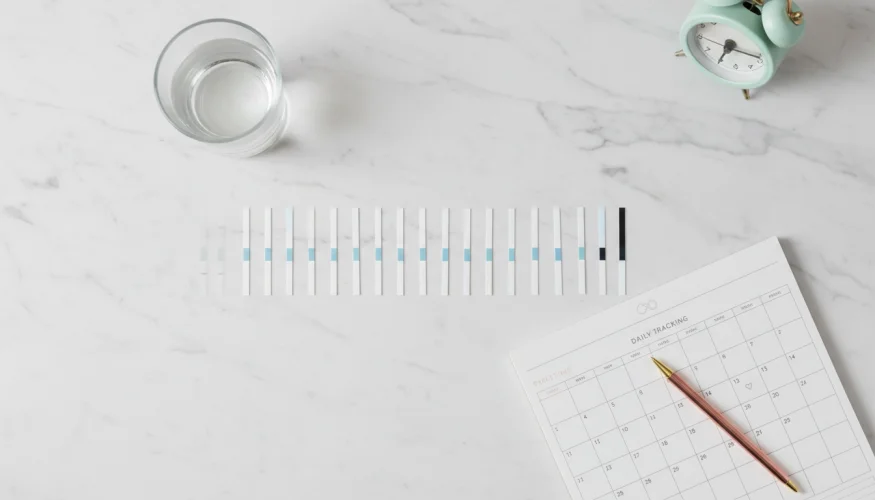
This is the part that causes the greatest confusion. Unlike a pregnancy test, where the simple rule applies that "any second line = positive", ovulation tests do not work this way. The result is evaluated by comparing the intensity of two strips – the control strip and the test strip.
The control strip (marked with the letter C) should always be visible and serves as a reference point. The test strip (marked T) shows the level of LH hormone in the urine. If the test strip is lighter than the control strip or barely visible, the test is negative – the LH level is low and ovulation is not expected in the near future. If the test strip is as dark as or darker than the control strip, the test is positive – the LH surge is occurring and ovulation will very likely follow within 24 to 36 hours.
It is precisely this comparison of strips that causes difficulties for many women. Let us take an example from real life: Jana, a thirty-year-old teacher from Brno who was trying to conceive, described her experience as follows – she tested every day, saw the second strip, and considered it a positive result. It was only after several cycles that she understood the test strip must actually be just as dark or darker than the control strip. Before that, she had only been detecting the naturally low level of LH, not the actual LH surge. This confusion is very common and leads to women either panicking unnecessarily or, conversely, missing the actual fertile window.
So how should one proceed in practice? It is recommended to test every day at approximately the same time, ideally between 10 a.m. and 8 p.m., when the level of LH in the urine is most stable. Testing first thing in the morning immediately after waking is not particularly recommended, as the urine tends to be too concentrated and the result may be distorted. It is also advisable to limit fluid intake approximately two hours before testing, so that the urine is not too diluted.
When to start testing and how long to continue
The timing of when to begin testing depends on the length of the menstrual cycle. The general recommendation is that testing should begin approximately in the middle of the cycle, specifically around day 10 to 14 from the first day of menstruation for women with an average 28-day cycle. For women with a shorter cycle (for example, 24 days), it is advisable to start earlier, around day 7; conversely, for a longer cycle (32 days or more), it is better to wait until day 14 or 15.
However, cycles can vary not only between different women, but also from month to month in the same woman. Stress, travel, illness, lifestyle changes, or sleep deprivation can shift ovulation or suppress it entirely in a given cycle. This is precisely why it is important to test regularly and not give up after the first negative result. Every woman's body is different and the cycle lives by its own rhythm.
If a woman tests and does not detect the LH surge even after day 20 of her cycle, this can have various causes – from an anovulatory cycle (a cycle without ovulation) to too short a testing period or incorrect technique. In such a case, it is advisable to consult a gynaecologist, who may recommend ultrasound monitoring of follicles or hormonal testing.
Interestingly, according to research published in the academic journal Human Reproduction, up to 30% of women of reproductive age have at least one anovulatory cycle per year without being aware of it. Ovulation tests can therefore provide valuable information not only for pregnancy planning, but also for an overall understanding of reproductive system health.
As American midwife and women's health expert Aviva Romm says: "The menstrual cycle is the fifth vital sign – just like blood pressure or pulse, it tells us essential things about a woman's overall health." Regularly monitoring the cycle using ovulation tests is one way of actively obtaining this information.
In addition to reading results, it is worth knowing that ovulation tests have their limitations. Women with polycystic ovary syndrome (PCOS) may have persistently elevated LH levels, which can cause false positive results or repeated LH surges without actual ovulation. Similarly, women in perimenopause – the transitional period – may have fluctuating LH levels that are difficult for tests to interpret. In these cases, self-testing alone is insufficient and needs to be combined with medical care.
Another factor that influences results is the quality of the test itself. There is a wide range of ovulation tests on the market – from simple strip tests to digital devices that display the result as a smiley face or text. Digital tests are more straightforward for many women, as the subjective assessment of strip intensity is eliminated. Strip tests, on the other hand, are more economical and equally reliable when used correctly. It is always essential to carefully read the instructions of the specific manufacturer, as the sensitivity of tests varies – some detect LH from 20 mIU/ml, others from 40 mIU/ml, which can affect how early before ovulation you capture a positive result.
A very useful strategy is to combine ovulation tests with other methods of fertility monitoring. Measuring basal body temperature every morning before getting up can confirm that ovulation has actually occurred – after ovulation, the temperature rises slightly and remains elevated until the next menstruation. Monitoring cervical mucus, which becomes clear and stretchy around ovulation (resembling raw egg white), is another natural indicator of fertility. Combining these methods gives a woman a more comprehensive picture of what is happening in her body and significantly increases the accuracy of identifying the fertile window.
For women who want to go even further, there are modern cycle-tracking apps such as Natural Cycles, which was the first digital contraceptive to receive FDA certification and combines basal temperature measurement with an algorithm for predicting ovulation. These technologies naturally do not replace ovulation tests, but can meaningfully complement them.
Finally, it is important to note that reading ovulation tests is a skill that improves with practice. The first cycles tend to be the most uncertain, but gradually a woman begins to notice patterns – when the strips start to darken, how quickly the LH surge arrives and subsides, and how long her personal cycle tends to be. This self-observation is not only practically useful, but also brings a deeper understanding of one's own body, which has value in itself – regardless of whether the goal is to conceive or simply to better understand one's own health.